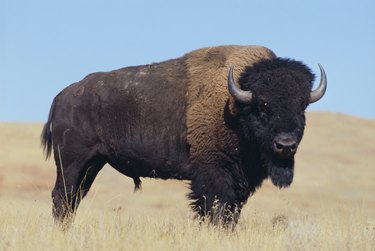
Buffalo meat, more commonly referred to as bison meat, can be used in most recipes that call for beef. Bison meat is one of the leanest, most nutritious meats available, and you can use it for burgers, roasts, steaks and stew. Because most meat bison are raised on open ranches and fed grass, the meat contains far fewer -- if any -- artificial antibiotics, hormones and steroids than beef and other more common meats.
Calories
Video of the Day
A 100 grams serving of bison meat -- about 3.5 ounces , or about 1/4 pounds -- contains about 146 calories. This makes it one of the lowest-calorie meats. A similar serving of 90 percent lean beef contains about 176 calories, while pork contains about 218 calories and turkey contains about 149 calories. Even venison, another very lean meat, contains more calories per serving, with 158.
Video of the Day
Fat and Cholesterol
One serving of buffalo meat contains 7.21 grams of fat, and about 55 milligrams of cholesterol. To put that in perspective, the same size serving of 90 percent lean beef contains about 10 grams of fat, and about 65 milligrams of cholesterol. This means bison is a very lean meat and also means that you will get more value for your money by purchasing bison meat because less of the weight is getting trimmed or drained off as fat.
Protein
Bison contains fewer calories and less fat than many other meats, such as beef and chicken, but that does not mean that it is less satisfying or nutritious. The protein content is slightly higher, with 20.23 grams in a serving of bison, compared to a serving of 90 percent lean beef, with 20 grams. Pork contains 17.99 grams of protein, with turkey containing 17.46 grams.
Allergies
Buffalo meat is a common dietary choice for individuals who have allergies to more common meats -- it is considered non-allergenic. According to Cowboy Free Range Meat, there have been no recorded cases to date of individuals having an allergic reaction to bison meat.