







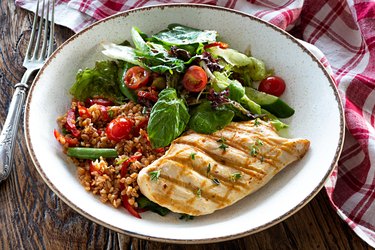

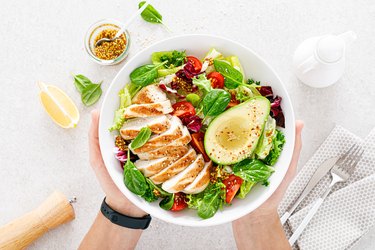



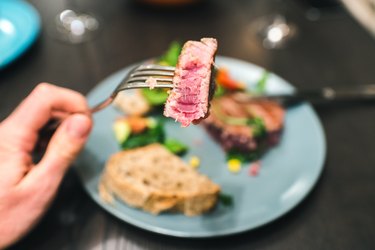







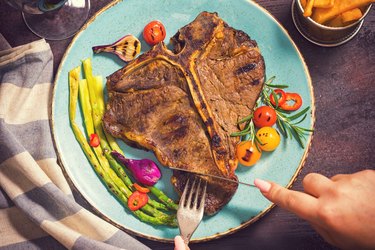











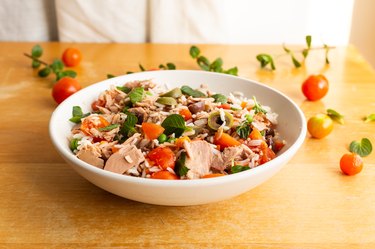












L Taurine is a derivative of the sulfur-containing amino acid cysteine. Technically, speaking, L Taurine isn't itself an amino acid because it lacks a carboxyl group. It is a main component of bile and is also found in the tissues of most animals. Concentrated sources of taurine are seafood and meat. Thus, a strict vegan diet may be devoid of this substance. Nowadays, taurine is added to many energy drinks at levels of 1,000 mg to 2,000 mg per serving. As of November 2010, no properly conducted scientific study has shown that taurine is energy-giving.
Brain
A paper by M.F. Olive from the University of California reports that taurine is one of the most abundant amino acids in the central nervous system and plays important roles in regulating osmosis and the protection and function of neurons, or nerve cells. The author also documents that taurine can alter some of the effects of alcohol and that taurine supplementation can reduce alcohol self-administration and relapse to drinking in both animals and humans.
A study by A. El Idrisi and colleagues from the City University of New York found that injected taurine had significant antiepileptic effects in mice. A reduction in occurrence of tonic seizures was observed, together with a reduced duration of convulsions and mortality rate following the seizures. The same study also found that taurine also protected neuronal cells in the hippocampus, a major component of the brain which enables long-term memory and spatial navigation.
Obesity
N. Tsuboyama-Kasaoka and colleagues at the Tokyo National Institute of Health and Nutrition investigated the relation between blood taurine concentrations and obesity. They found that both high-fat diet-induced and genetically obese mice had low blood taurine concentrations. These mice also had low levels of an enzyme which is essential in the synthesis of taurine in the body. When taurine was supplemented to these mice, the incidence of high-fat diet-induced obesity was reduced, and an increase in resting energy expenditure was observed. The researchers concluded that taurine deficiency in obesity may create a vicious circle promoting obesity. In contrast, dietary supplementation of taurine interrupts this vicious circle and may prevent obesity.
Exercise
M. Zhang and colleagues at the Toyama Medical and Pharmaceutical University investigated the protective effects of taurine supplementation on exercise performance and exercise-induced oxidative stress in cyclists. Researchers discovered that subjects supplemented with taurine could cycle for longer and were more efficient at taking up oxygen. These subjects also had lower exercise-induced DNA damage, thus indicating that taurine exerts an antioxidant effect
References
- PubMed.gov: Amino Acids: Interactions Between Taurine and Ethanol in the Central Nervous System
- PubMed.gov: Advances in Experimental Medicine and Biology
- PubMed.gov: Endocrinology: Taurine (2-aminoethanesulfonic acid) Deficiency Creates a Vicious Circle Promoting Obesity
- PubMed.gov: Amino Acids: Role of Taurine Supplementation to Prevent Exercise-Induced Oxidative Stress in Healthy Young Men


Member Comments