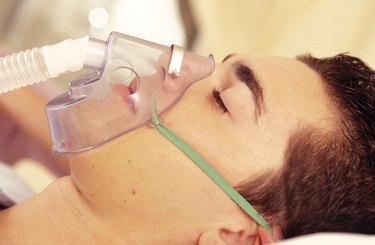
Oxygen supplements can be life saving or a marketing scam. When provided in the form of supplementary oxygen gas, as in an emergency medical situation, oxygen supplementation is vital for survival. When provided as a recreational activity in an oxygen bar, they may be psychologically relaxing, and physiologically harmless. However, when provided as a pill or in a liquid form, dietary oxygen supplements are, at best, useless.
Dietary Supplements
Video of the Day
Many companies currently market dietary oxygen supplements, however supplements claiming to cure diseases by correcting oxygen deficiency or oxygen starvation in cells have no basis in science. While it is possible to use electric current to add a small amount of oxygen to water, you would not be able to access it for your body's needs without having gills like a fish. Taking a liquid or pill containing oxygen will not increase the amount of oxygen in your blood. Oxygen enters your bloodstream through your lungs, adapting to your changing needs by changing your breathing rate. You extract the amount of oxygen you need from the air, deliver it to your cells, and return any surplus back to your lungs through your blood. In 1999, the Federal Trade Commission charged and won a settlement from at least one company making false claims regarding oxygen supplements.
Video of the Day
Colon Cleanser
Oxygen supplements can be used as colon cleansers. Oxy-Mega and Oxy-Power, for example, are both colon cleansers marketed as supplemental oxygen products that reduce pathogenic intestinal tract bacteria through the use of oxygen release. Manufacturers of Oxy-Mega claim that this supplemental oxygen product produces oxygen when dissolved in a mild acid, such as a citrus, fruit juice or stomach acid. According to the manufacturer's website, oxygen is released in the single-atom form, similar to a free oxygen radical, which is chemically more reactive than atmospheric oxygen molecules. Oxygen-releasing colon cleansers claim that when oxygen is released, it creates an oxygen rich environment inhospitable to pathogenic anaerobic bacteria. It is important to note that despite the claims of reducing pathogenic bacteria and relieving symptoms such as constipation parasites, yeast infection, and digestion problems associated with them, these colon cleansers do have the FDA required disclaimer that the product is not intended to diagnose, treat, cure or prevent disease.
Emergency Oxygen Supply
Supplemental oxygen is extremely useful when provided to ill or injured patients needing oxygen. When you are seriously ill or injured, often your body's ability to process oxygen is compromised. Shock can occur unless the effects of the decreased amount of oxygen in the blood can be reversed. In such cases, providing supplemental emergency oxygen is often one of the first medical measures emergency medical personnel take. Supplemental oxygen is also provided to premature infants and newborns having difficulty breathing on their own. In these cases, oxygen is delivered directly to your lungs as a gas, the form of oxygen your body can easily accept and efficiently use. Supplemental oxygen treats many conditions affecting the lungs including asthma, bronchitis, emphysema, pneumonia, and heart failure.
Scuba Divers
Scuba divers use supplemental oxygen in order to breathe when diving at great depths under water. Although water has oxygen molecules in it, this oxygen is unavailable for breathing without gills. Emergency supplemental oxygen is used in scuba diving accidents to shrink bubbles that have formed in the blood and tissues, by administering 100 percent inhaled oxygen.
Recreational Use
Supplemental oxygen can also be used for recreational purposes. Provided in different flavors such as peppermint, bayberry, cranberry and wintergreen, oxygen bars provide flavored oxygen for you to breathe. These bars do not claim medical benefits and are investigated by the FDA if they do. Oxygen bars that dispense oxygen without a prescription violate FDA regulations, but individual states do have some discretion in enforcing the laws--therefore, some states allow them and some do not. Proponentes of oxygen bars claim they reduce stress, increase energy and alertness and lessen the effects of hangovers, headaches, and sinus problems. Many people find it relaxing. According to Mary Purucker, M.D., Ph.D., a pulmonary specialist in the Food and Drug Administration's Center for Drug Evaluation and Research, however, there are no long-term, well-controlled scientific studies that support these claims for oxygen in healthy people. And people with healthy lungs don't need additional oxygen. The American Lung Association indicates that although there may not be any physiological effect of inhaled oxygen in bars for recreational purposes, there is no evidence that it is harmful to healthy people either. However, if you have heart disease, asthma, congestive heart failure, pulmonary hypertension, and chronic obstructive pulmonary diseases, such as emphysema, too much oxygen may cause you to stop breathing, and therefore oxygen bars are not recommended for those people.
- Quack Watch: FTC Attacks "Stabilized Oxygen" Claims
- Applied Ozone Systems: Super Oxygen Colon Cleanser
- Safety Aid Instruction: Emergency Oxygen Supplement
- USPTO.GOV: Combination Oxygen Supplement and Swimming Snorkel Apparatus
- Nutraoxygen.Com: Liquid Oxygen Supplements:
- Eupho2ria.Com: Oxydren Oxygen Tablets
- Pub Med: The Physiological Basis for Supplemental Oxygen in the Newborn
- Oxypowder.com: Oxygen Colon Cleanser
- Lakeside Press: Scuba Diving Explained