
































































The tendons in your body play a critical role in your ability to jump, walk, sit and make every other movement. These tissues attach your muscles to your bones, all of which work together to provide stability and mobility. Your tendons may even help shape your bones before you're born, according to research published in the December 2009 issue of "Developmental Cell." Ensuring that you're eating the right nutrients can impact the health of your tendons, to keep your body in optimal working order.
Omega-3 Fatty Acids
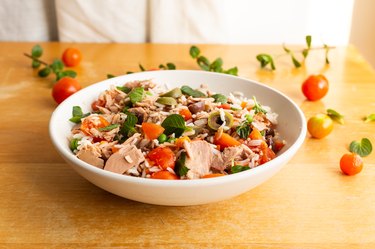
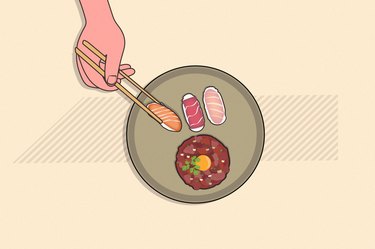
Hands perform all kinds of tasks, and the flexor tendons that connect your forearm muscles to your fingers may sustain damage from overuse and repetition. They may swell, causing carpal tunnel syndrome. While your physician may recommend movement limitations, medications or surgery to correct the problem and return your tendons to health, according to The New York Times website, you may also consume omega-3 fatty acid supplements or foods high in this nutrient to reduce inflammation of the irritated tendons. The University of Maryland Medical Center website notes that omega-3 fatty acids have known anti-inflammatory properties. If you're experiencing tingling or pain in your hands from this condition, the website recommends taking one to two capsules of fish oil per day or taking 1 tbsp. of oil daily to help ease swelling of the tendons. You can also modify your diet to include salmon, mackerel, lake trout, herring, sardines and albacore tuna.
Magnesium
Include foods high in magnesium or magnesium supplements in your diet for tendon health. The University of Maryland Medical Center recommends taking 750 mg of magnesium per day when fighting tendinitis, a condition that presents with swelling, tenderness and pain from swollen tendons. Also take calcium to help connective tissues like tendons heal. Research published in the April 2000 edition of the journal "Biological Trace Element Research" notes that age-related changes to the Achilles tendon correlate to a decrease in magnesium and phosphorus. The National Institutes of Health Office of Dietary Supplements website reports that foods high in magnesium include halibut, almonds, cashews, soybeans, spinach, oatmeal, potatoes and wheat bran.
Vitamin C
The vitamin C in your diet contributes to the health of your tendons by helping with the growth and repair of tissues throughout your body. Vitamin C is also used by the body to manufacture collagen, which makes up tendons. Because your body does not produce vitamin C on its own, it's vital to make sure you're eating enough vitamin C or taking vitamin C supplements, according to MedlinePlus. Animal research published in the February 2009 issue of the journal "Archives of Orthopaedic and Trauma Surgery" indicates that high doses of vitamin C may help speed healing of injuries to the Achilles tendon because of its effect on regenerating collagen and growing blood vessels--although more research is needed to determine the use of vitamin C in effecting faster healing of tendon injuries. To get more vitamin C in your diet, The Daily Green website recommends eating guava fruit, red and green bell peppers, kiwi, oranges and other citrus fruits, strawberries and Brussels sprouts.
References
- PubMed.gov: High-dose vitamin C supplementation accelerates the Achilles tendon healing in healthy rats
- PubMed.gov: Age-dependent decreases of phosphorus and magnesium in human Achilles' tendons
- The New York Times: Carpal Tunnel Syndrome
- EurekAlert: Tendons shape bones during embryonic development
- University of Maryland Medical Center: Omega-3 Fatty Acids
- MedlinePlus: Vitamin C


