






















































Recommended Daily Allowance of Vitamins for Children

Recommended Daily Allowance of Vitamins for Children
Photo Credit Anatoliy Samara/iStockphoto/Getty Images

Vitamins are organic substances that are needed in small amounts to support human life, according to the Linus Pauling Institute. It's especially important to ensure that children are getting adequate vitamins for proper growth and optimum health. The Recommended Dietary Allowance (RDA), also sometimes known as the Recommended Daily Allowance, for vitamins change with age with younger children needing lower doses than older children.

Vitamin A

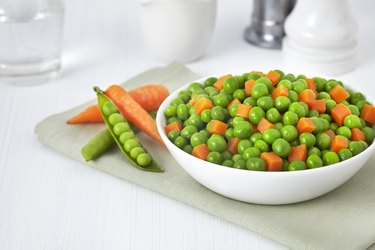
For children ages 1 to 3, the RDA for vitamin A is 300 micrograms; it increases to 400 micrograms for children 4 to 8 years old. You can find vitamin A in fish, dairy products and green and orange vegetables.

B-vitamins

The B-vitamins include thiamin, riboflavin, niacin, biotin, pantothenic acid, vitamin B-6, folate and vitamin B-12, all of which all have their own RDA or Adequate Intake (AI). An AI is used for a specific nutrient when there is not enough data to support establishing an RDA. For thiamin, riboflavin and vitamin B-6, the RDA for children ages 1 to 3 is 0.5 mg, while children ages 4 to 8 should get 0.6 mg per day. Children ages 1 to 3 need 6 mg of niacin until ages 4 to 8, when they need 8 mg daily. Children ages 1 to 3 need 8 micrograms of biotin daily until ages 4 to 8 when they need 12 micrograms. Pantothenic acid is required at a level of 2 mg for children 1 to 3 years old and 3 mg for ages 4 to 8. Kids require 150 micrograms of folate from ages 1 to 3 and 200 micrograms from ages 4 to 8. They also need 0.9 micrograms of vitamin B12 from ages 1 to 3, while kids ages 4 to 8 need 1.2 micrograms. Whole grains, legumes and pork are good sources of thiamin, while dairy products, legumes, eggs and meat are good sources of riboflavin. The best food sources of niacin are fish and meat, whole grains and legumes. Good sources of biotin are egg yolks, liver, legumes and nuts while pantothenic acid is present in most foods. The best sources of folate are leafy green vegetables, legumes and citrus fruits. The best sources of vitamin B-6 are meat, whole grains, vegetables and nuts. Vitamin B-12 is found only in animal products like meat, fish, eggs and dairy products.

Vitamin C

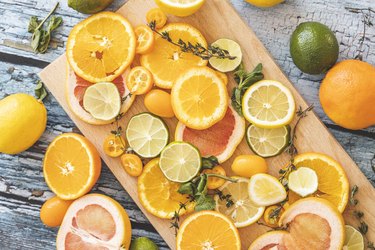
The RDA for vitamin C is 15 mg for children ages 1 to 3 and 25 mg for children 4 to 8 years old. Oranges, strawberries, bell peppers and broccoli are all good sources of vitamin C.

Vitamin D

For children ages to 1 to 8 years, the AI for vitamin D is 5 micrograms per day. Vitamin D is found in egg yolks, fish, liver and dairy products.

Vitamin E

For children ages 1 to 3, the RDA for vitamin E is 6 micrograms and increases to 7 micrograms for children 4 to 8 years old. Avocados, olive oil and almonds are all good sources of vitamin E.

Vitamin K

For children ages 1 to 3, the AI for vitamin K is 30 micrograms, while the AI for children 4 to 8 years old is 55 micrograms. Green leafy vegetables such as spinach, collard greens, kale and Swiss chard are some of the best food sources of vitamin K.

References

Article reviewed by Mia Paul Last updated on: Aug 11, 2011

Must see: Photo Galleries

Member Comments