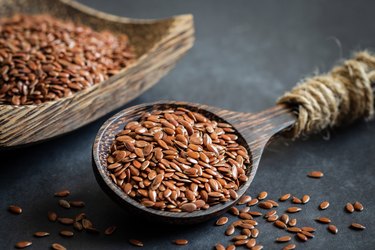
Flaxseeds are tiny, dark-brown or golden-colored seeds of the flax plant. They have a very mild, nutty flavor and can be eaten whole, ground into powder, used as an oil or taken in a pill form as a supplement. Adding some flaxseed into your daily diet is a great way to incorporate dietary fiber, antioxidants and omega-3 fatty acids, providing you with health benefits that outweigh any flaxseed side effects.
Tip
Flaxseed provides the most benefits if eaten in ground form, as whole flaxseed can pass through your digestive tract undigested if you don't chew it thoroughly.
Video of the Day
Nutritional Flaxseed Benefits
Flaxseed benefits include a low calorie and carbohydrate content, yet they are a good source of protein and fiber. The nutritional profile of whole flaxseed differs slightly from ground flaxseed.
Video of the Day
For comparison per tablespoon, which is about 10 grams for whole flaxseed and 7 grams for ground, flaxseed offers the following macronutrients, according to the USDA:
- Calories: whole flaxseed, 55; ground, 37
- Carbohydrates: whole flaxseed, 3 grams; ground, 2 grams
- Protein: whole flaxseed, 1.9 grams; ground, 1.3 grams
- Total Fat: whole flaxseed, 4.3 grams; ground, 3 grams
- Cholesterol: 0
Fiber to Help Digestion
The fiber in flaxseed is found primarily in the coat of the seed. One tablespoon of whole flaxseed contains 2.8 grams of dietary fiber, which is 11 percent of your recommended daily value. Fiber helps to keep your bowel movements regular.
Flaxseed is a good source of soluble and insoluble fiber and has traditionally been valued for its laxative properties. Insoluble fiber in flaxseed remains undigested in the intestinal tract. It absorbs water and adds bulk to your digested food to help it move smoothly through your stomach and intestines. Soluble fiber slows digestion by attracting water and turning into a gel, which may help to maintain blood glucose levels and lower cholesterol, according to a study published in Journal of Food Science and Technology in January 2014.
In addition, a high-fiber diet can help with diverticulosis. Penn State Hershey recommends an intake of 15 grams of flaxseed per day to treat this disorder.
Fiber and Digestive Side Effects
Flaxseed, like any fiber, should be taken with plenty of water. Without enough fluid, whole and ground flaxseed side effects may result, including constipation. In rare cases, it may cause an intestinal blockage. Symptoms of a blockage can include crampy, intermittent abdominal pain, lack of ability to eliminate normal feces, distended stomach and fever.
USDA says that up to 12 percent flaxseed can safely be eaten as an ingredient in food.
Healthy Fats in Flaxseed
Of the total fat, flaxseed contains only a minimal amount of saturated fat — 0.38 grams. It is recommended that you limit your intake of saturated fat to less than 10 percent of your daily calorie content.
Flaxseed is a rich source of healthy, polyunsaturated fat, with 2.9 grams per tablespoon, and a moderate source of monounsaturated fat, with .78 grams per tablespoon. Polyunsaturated and monounsaturated fats may help lower LDL (bad) cholesterol levels in your blood, which may reduce your risk of heart disease and stroke, according to American Heart Association.
Read more: Monounsaturated Fat Vs. Polyunsaturated Fat
Omega-3 Fatty Acids
Flaxseed is the best plant-based source of omega-3 fatty acid, which is vital to the health of your reproductive system, eyes, brain, blood vessels, lungs and immune system, says National Institutes of Health.
Flaxseed is also a rich source of linolenic acid and lignans. According to a September 2014 study published in the Journal of Food Science and Technology, whole or ground flaxseed is recommended as a viable supplement for its omega 3s, linolenic acid and lignans that play a role in reducing the risk of cardiovascular disease and cancer, including breast, colon, ovary and prostate.
Vitamins in Flaxseed
B vitamins are needed to provide your body with energy for physiological functions involving your nerves, muscles, skin, heart and brain. Flaxseeds contain almost all the B vitamins, including:
- Thiamine
- Riboflavin
- Niacin
- Vitamin B6
- Pantothenic acid
- Folate
Among the many benefits of the B vitamins is that they may help reduce stress and fatigue as well as improve your feeling of well-being. In an Australian study, a group of full-time employees given antioxidants and B vitamins had an improvement in cognitive ability and mood.
The evidence, published in the Nutrition Journal in December 2014, suggested that dietary supplementation of B vitamins may be useful in reducing occupational stress, increasing work productivity and decreasing absenteeism.
Flaxseed also contains a small amount of vitamin K.
Read more: Foods High in B Vitamins
Wealth of Minerals
Flaxseed is rich in many minerals that are important to your health. Per tablespoon, whole flaxseed contains:
- Calcium: 26 milligrams
- Iron: 0.6 milligrams
- Magnesium: 40 milligrams
- Phosphorus: 66 milligrams
- Potassium: 84 milligrams
- Zinc: 0.45 milligrams
- Copper: 0.13 milligrams
- Manganese: 0.26 milligrams
- Selenium: 2.6 micrograms
Helps Lower Blood Pressure
Flaxseed contains three important minerals that contribute to heart health. These are magnesium, potassium and calcium.
Magnesium is important for regulating muscle and nerve function, including the relaxation of blood vessels that help maintain your blood pressure. Potassium also helps blood vessels relax and plays a role in conducting electrical signals in your nervous system and heart, which protects against irregular heartbeat. Calcium helps manage your blood pressure by helping blood vessels tighten and loosen as needed.
Another one of flaxseeds' benefits relating to heart health is due to its rich dietary source of linolenic acid, lignans and fiber. Researchers explored the effect of flaxseed intake on blood pressure by analyzing 11 studies. Results indicated flaxseed slightly reduced systolic and more so, diastolic blood pressure.
The conclusions, published in the Journal of Nutrition in April 2015, reported the beneficial reduction in blood pressure was greatest with the consumption of whole flaxseed for a duration of more than 12 weeks.
Toxic Flaxseed Side Effects
It is suggested that you should not eat raw or unripe flaxseed because of the potential of toxins, specifically cyanide. If you have concerns about flaxseeds' side effects, rest assured the risk is very rare. Although some compounds in flaxseed may release cyanogenic glycosides — as much as 7.8 micrometers per gram of flaxseed, researchers reported that your body is able to detoxify cyanide in an amount dependent on the amino acid content in your diet.
The review, published in Trends in Food Science and Technology in July 2014, concluded that toxicity from cyanide in flaxseed is rare except in cases in which it is consumed in large amounts in a low protein diet. The report determined there is generally no harmful effect with prolonged consumption of flaxseed.
- USDA Food Composition Database: "Seeds, Flaxseed"
- MedlinePlus: "Healthy Food Trends -- Flaxseeds"
- Journal of Food Science and Technology: "Flax and Flaxseed Oil: An Ancient Medicine & Modern Functional Food"
- Penn State University: "Diverticular Disease"
- National Center for Complementary and Integrative Health: "Flaxseed and Flaxseed Oil"
- Medical University of South Carolina: "Digestive Disease Center: Symptoms of Small Bowel Obstruction"
- Health.gov: "Dietary Guidelines for Americans, 2015-2020: Appendix 7. Daily Nutritional Goals for Age-Sex Groups Based on Dietary Reference Intakes and Dietary Guidelines Recommendations"
- American Heart Association:"Polyunsaturated Fat"
- National Institutes of Health: "Omega-3 Fatty Acids"
- Nutrition Journal: "Reducing Occupational Stress With a B-Vitamin Focussed Intervention: A Randomized Clinical Trial: Study Protocol"
- Harvard Health Publishing: "Key Minerals to Help Control Blood Pressure"
- Journal of Nutrition: "Flaxseed Consumption May Reduce Blood Pressure: A Systematic Review and Meta-Analysis of Controlled Trials"
- Trends in Food Science and Technology: "Flaxseed (Linum usitatissimum L.) Bioactive Compounds and Peptide Nomenclature: A Review"