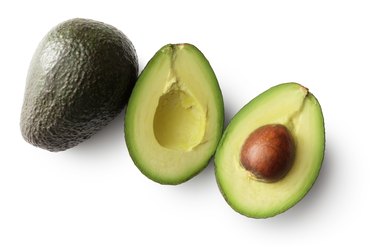
With its creamy texture and satisfying richness, you could eat an avocado at every meal. And, with all its health benefits, what could possibly be wrong with that? Well, that depends. There's no risk of overdose or toxicity from eating too much avocado, but it is high in fat and calories, which can really add up if you consume a lot. In addition, people with food intolerance may find that eating a lot of this fruit causes uncomfortable digestive upset.
Tip
Eating too much avocado leads to weight gain.
Video of the Day
A High-Calorie Fruit
Because it's a fruit, many people don't realize how many calories an avocado contains, and that's a big mistake. Just one avocado contains 322 calories. Many people eat a whole avocado in one sitting in addition to the other foods in their meal, which can drive the calorie count of that meal way up.
Video of the Day
If you slice an avocado to top a sandwich or salad, your meal could contain several hundred calories or more, depending on the other ingredients in your dish. The same thing goes for guacamole. If you mindlessly eat chipful after chipful of guac, you could be eating more than one avocado, plus the calories in the chips — and that's just your appetizer.
Too Much Leads to Weight Gain
Weight gain occurs when you take in more calories than you burn each day. It doesn't matter where those calories come from — whether they're from french fries or fruit — your body turns the excess calories it doesn't need into fat and stores it in your fat cells for a later time. Eating too many calories over time leads to overweight and obesity, both of which have deleterious effects on health.
The average moderately active women needs 2,000 calories a day, according to the Dietary Guidelines for Americans. To put that in perspective, it's the amount of calories contained in six avocados. If you eat as many as three avocados per day, that's half of your total daily calories. Even if you limit the other foods you eat, it's more than likely that you will go over your daily calorie quota. If you fail to limit other foods, you'll far exceed your calorie needs and gain weight.
Avocado Calories From Fat
A large portion of the calories in avocados come from fat. With 9 calories per gram, fat has more than double the calories of protein and carbohydrates, which have only 4 calories per gram. A single avocado has a whopping 30 grams of fat. Just for comparison's sake, that's more fat than a large order of fast-food french fries.
The National Academy of Medicine has set the Acceptable Macronutrient Distribution Range (AMDR) for fat at 20 to 35 percent of calories. This is how much fat you need for good health, but it's also a limit that, if surpassed, could have health consequences. One avocado provides approximately 38 to 68 percent of an adult's daily needs on a 2,000-calorie diet. In addition to the other fat in your diet, eating more than one avocado a day will cause you to exceed the AMDR.
The fat in avocados is considerably healthier than the fat in fried foods, but they do still contain saturated fat, the type of fat that can clog your arteries and lead to heart disease if eaten in excess. Of the 30 grams of fat in an avocado, 4 grams are saturated. The American Heart Association recommends that adults limit their intake of saturated fat to 5 to 6 percent of their daily calories, which amounts to 13 grams on a 2,000-calorie diet.
The amount of saturated fat in one avocado comprises about 30 percent of that limit. If you eat two avocados per day or more, in addition to other foods containing saturated fat, you are likely to exceed the recommended daily limit.
Food Intolerance and Avocados
An upset stomach, bloating, gas and diarrhea are some of the symptoms people with food intolerances may experience after eating certain foods. The most common example is dairy products; many people have trouble digesting the milk sugar lactose.
Other natural sugars found in foods can cause digestive trouble for some individuals. These include:
- Fructose
- Fructans
- Galacto-oligosaccharides
- Polyols
Avocados contain polyols, so people who are intolerant of polyols may experience adverse effects after eating them. If you have an avocado intolerance, you may still be able to eat small amounts of the fruit without symptoms. However, eating too much avocado can lead to symptoms immediately after eating it or up to 48 hours later. Intolerances are not dangerous like food allergies in most cases, but the symptoms are likely enough to prevent you from eating too much.
Avocado Nutrition Benefits
Including avocado in your diet in moderate amounts is good for your health. The polyunsaturated and monounsaturated fats in avocados are considered healthy fats, because they can help lower your unhealthy cholesterol levels and improve heart health when eaten in place of saturated fats.
Avocados are also a rich source of dietary fiber, the part of plant foods that undergoes minimal digestion in your body. Fiber adds bulk to your stomach contents as it moves through your digestive tract, leading to improved bowel movements and bowel health. Getting enough fiber can lower your risk of colon cancer and other digestive diseases.
Because of its bulk, fiber fills the stomach and can help you feel fuller after a meal, which helps you eat fewer calories to maintain your weight or lose weight. According to a 2017 research article in Journal of Nutrition and Metabolism, increased intake of dietary fiber is associated with normal weight, while lower intakes are linked to obesity.
The fiber in avocados also helps lower cholesterol by binding with it and helping to remove it from the body before it can be absorbed into your bloodstream. The National Academy of Medicine recommends women get 25 grams of fiber and men 38 grams of fiber each day, and one avocado provides 35 to 54 percent of an adult's daily fiber needs.
How Much Should You Eat?
One serving of avocado is one half of a fruit. It is generally recommended that you stick to one serving of avocado per day, but depending on the other balance of foods in your daily diet, you may be able to include one whole fruit each day. It's important to pay attention to how much you are eating, especially when you dine out, as it's not always easy to tell how much of one — or more than one — fruit is in a dish.
Read more: 12 Yummy New Avocado Recipes
- USDA: Basic Report: 09037, Avocados, Raw, All Commercial Varieties
- Live Science: Weight Gain: How Food Actually Puts on Pounds
- Dietary Guidelines for Americans: Appendix 2. Estimated Calorie Needs per Day, by Age, Sex, and Physical Activity Level
- National Academy of Medicine: Dietary Reference Intakes: Macronutrients
- American Heart Association: Saturated Fat
- Healthy Eating Advisory Service: Food Intolerance
- USDA: Basic Report: 21238, McDONALD'S, French Fries
- WebMD: The Skinny on Fat: Good Fats vs. Bad Fats
- Mayo Clinic: Dietary Fiber: Essential for a Healthy Diet
- Journal of Nutrition and Metabolism: Dietary Fiber Intake Among Normal-Weight and Overweight Female Health Care Workers: An Exploratory Nested Case-Control Study Within FINALE-Health
- Cleveland Clinic: Can You Eat Too Much Avocado?
- Cleveland Clinic: Fat and Calories
- Celveland Clinic: Fat: What You Need to Know