



















If you make foods to sell in your community or state, you must comply with local and state food labeling requirements. If you sell homemade foods via the Internet or in states other than your own, you need to comply with the U.S. Food and Drug Administration food labeling guidelines. Food gifts don't need to be labeled, but doing so adds a personal touch. You may be required to purchase commercial labels for foods you sell, so find out the requirements of your community or the area where you plan to sell before getting started.
Gather Information
Step 1
Write or type contact information such as your name and phone number or your company name, address, phone number and website. Include a logo if you have one.
Step 2
List the name of your product in simple language, such as pickled green beans, pickled hot peppers or clam chowder.
Step 3
List all ingredients, including small amounts of spices or preservatives, contained in your homemade food. Use common names such as green beans, onions, garlic, olive oil and pepper.
Step 4
Rank your ingredients in the order of the greatest amount used to the least amount used to make the food. For example, for pickled green beans the ranking list would be green beans, water, vinegar, salt, garlic, turmeric, calcium chloride and sodium benzoate, spices.
Step 5
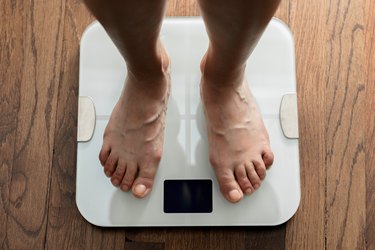
Provide the net weight of homemade food you plan to sell. Weigh the empty container. Put the food in the container and weigh it again. Weight of the full container minus weight of the empty container equals the net weight of the homemade food. List the net weight in English units and metric units.
Step 6
List nutrition facts in a standardized format according to FDA guidelines for food you sell. Include serving size, number of servings in the container and nutrient information. Go to www.fda.gov and search for food labeling guide, then click on section VII titled Nutrition Labeling to obtain this information.
Step 7
Add the statement "refrigerate after opening" or "must be kept refrigerated" for perishable items.
Step 8
List the date the product was made and the expiration date when the food can no longer be eaten safely. For sales of perishable products list the date when the local market needs to pull the item off the shelf and the expiration date. Refer to www.fda.gov for food safety guidelines.
Step 9
List the size of your container, such as 16 oz. pint glass preserving jar.
Create Label
Step 1
Measure the area where you plan to put the label: for example, across the top of the lid or around the jar. Visit www.fda.gov and search for Food Labeling Guide, then click on section III titled General Food Labeling Requirements for guides for placing labels on products for sale.
Step 2
Use the information you gathered to fill in the label. Use templates available online at sites such as TipJunkie for foods you don't plan to sell. Print the labels on full-sheet sticker paper.
Step 3
Go to www.fda.gov to create labels for foods you plan to sell. Search for Food Labeling Guide, then click on section III titled General Food Labeling Requirements. Use the information you gathered to fill in the required information for placement, statement and panels. Print the labels on full-sheet sticker paper.
Tips and Warnings
- For help ranking your ingredients for food sales labels, go to www.fda.gov, search for Food Labeling Guide and click on section VI titled Ingredients List. Companies that specialize in commercial labels include www.WesternShield.com and www.ConsolidatedLabel.com.
Things You'll Need
- Food containers
- Scale with English and metric units
- Labels
- Tape measure
- Full sheet sticker paper


Member Comments