
























Nutritional Values of Venison vs. Beef

Nutritional Values of Venison vs. Beef
Photo Credit Jupiterimages/Photos.com/Getty Images

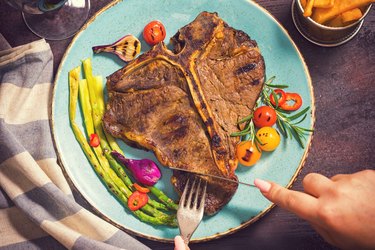
Embarking on a hunting trip is no longer the only way to find game meats. In addition to the standard beef entrees, many restaurants around the country now include wild game meats on their menus. Venison, or deer, typically contains less fat, as wild animals generally exercise more often and consume more natural diets than domesticated animals. The cut of meat can impact nutritional content of both venison and beef. Although wild game meat, such as venison, tends to be a leaner red meat option than beef, both meats can be enjoyed as part of an overall healthy diet.

Calories

Even when compared to lean beef, most cuts of venison typically have fewer calories. On average, a three-ounce portion of cooked deer meat contains 134 calories, whereas a three-ounce cut of cooked beef contains 247 calories.

Fat and Cholesterol

A three-ounce portion of cooked venison contains 3 g of total fat, 1 g of saturated fat and 95 mg of cholesterol. Even with the majority of the fat trimmed off, an average three-ounce cut of cooked beef contains 15 g of total fat, 6 g of saturated fat and 74 mg of cholesterol. Limiting your saturated fat intake to less than 7 percent of your total daily calories is important, as diets high in saturated fat have been associated with high blood cholesterol levels. Although venison is slightly higher in cholesterol than beef, it still contains less saturated and total fat, making it a healthier alternative.

You may want to remove the small amount of fat in venison prior to cooking, as it can impart a stronger flavor that is not as desirable.

Protein

A three-ounce portion of cooked beef contains about 23 grams of protein, while a three-ounce portion of cooked venison contains about 26 grams of protein. Although both meats provide high-quality protein, due to its lower total fat and saturated fat content, venison is a leaner protein source.

Vitamins and Minerals

Both venison and beef are good sources of important vitamins and minerals including iron, vitamin B6, vitamin B12, niacin and riboflavin. A three-ounce cut of cooked beef provides 2.3 mg of iron, 0.3 mg of vitamin B6, 2.13 mcg of vitamin B12, 3.1 mg of niacin and 0.2 mg of riboflavin. A three-ounce cut of cooked deer provides 3.8 mg of iron, 0.6 mg of vitamin B6, 1.56 mcg of vitamin B12, 9.1 mg of niacin and 0.4 mg of riboflavin.

Incorporating Into Your Diet

Consuming no more than 100 grams -- just slightly more than three ounces and about equal in size to a deck of cards -- of unprocessed red meat such as venison or beef was not found to be associated with a higher risk of heart disease, according to the Mayo Clinic. Although daily consumption of large portions of red meat is not advised, occasionally indulging in red meat can be possible as part of an overall healthy lifestyle. Some tips to remember to keep your red meat as lean as possible include trimming the excess visible fat, using low-fat marinades to flavor and tenderize the meat, opting for healthier cooking methods such as grilling and roasting and limiting yourself to a three-ounce portion.

When purchasing beef, opt for "choice" or "select" meat instead of "prime," as it typically contains more fat. If you are buying ground beef, choose meat that is at least 90 percent lean. Certain cuts of beef may be labeled as "lean" or "extra-lean," if they meet certain standards. Extra-lean beef contains less than 5 grams of total fat, 2 grams of saturated fat and 95 milligrams of cholesterol per 3.5-ounce portion. Examples of extra-lean beef include top sirloin steak, bottom round roast and top round steak. Although still slightly higher in total and saturated fat than venison, extra-lean beef provides a healthy choice for the health-conscious red meat eater.

Warning

Recent research has demonstrated some potential risks associated with the consumption of wild game meats, such as venison. First off, wild deer may potentially carry a condition known as chronic wasting disease, which is similar to mad cow disease. Although there have been no verified cases of transmission to humans, precautions should still be taken by hunters when handling a deer. Furthermore, avoid consuming deer meat that may have come from an area known to have infected deer. Secondly, individuals who consume game meat regularly may have higher lead levels due to the use of lead bullets during hunting. Therefore, some recommendations are appearing that advise pregnant women and children under 6 years of age, the two groups at highest risk for adverse side effects from lead, to avoid consuming game meat that has been hunted with lead bullets.

References

Article reviewed by Knuckles Last updated on: Mar 15, 2011

Must see: Photo Galleries

Member Comments