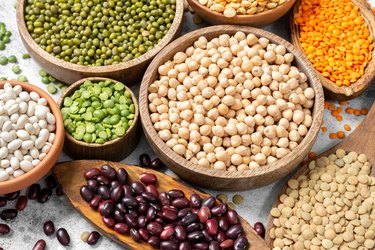
If ever there was a magic word when it comes to your diet, "fiber" would be the one — and not just so you can poop better. Fiber is shown to help lower and stabilize blood sugar and cholesterol. Here are the diet tips and fiber-rich foods that can help lower blood sugar and lower cholesterol.
Fiber, Fiber, Good for Your Heart
Video of the Day
Blood sugar — or glucose — is critical fuel for both your body and your brain. But according to the Mayo Clinic, uncontrolled diabetes has the potential to send your glucose levels soaring to dangerous heights. When that happens, all kinds of health complications can ensue, including a dramatic increase in your risk for heart disease.
Video of the Day
Similarly, per the Mayo Clinic, if you have high cholesterol, your arteries can narrow and harden, increasing your risk of clots that can cause heart attack or stroke.
But your diet can go a long way toward keeping heart disease at bay by controlling blood sugar and cholesterol. Dallas-based Lona Sandon, PhD, RDN, registered dietitian nutritionist and associate professor at the University of Texas Southwestern Medical Center, boils down her recommendation for a low-sugar, low-cholesterol diet to one word: fiber.
Experts at the National Institutes of Health (NIH) agree, noting that beyond helping to promote regular bowel movements, a fiber-rich diet actually lowers your risk of type 2 diabetes by slowing sugar absorption in your intestines and preventing spikes in your blood sugar.
NIH also highlights fiber's heart-healthy properties, with research indicating that a high-fiber diet can drive down your concentrations of "bad" cholesterol, thereby reducing your risk of high blood pressure, stroke and coronary heart disease.
Soluble Fiber for the Win
But not all fiber is the same. NIH notes two types, which affect your health in different ways:
- Insoluble (think: wheat bran and veggies).
- Soluble (found in oat bran, beans, peas and fruits).
While experts ultimately want you to focus on getting enough total fiber each day (38 grams for men, 25 grams for women), per NIH, soluble fiber helps reduce blood sugar and cholesterol.
Sandon agrees: "In particular, soluble fiber aids in lowering both cholesterol and blood sugar." Fruits are a good source, she says, noting that you should "get your fiber from whole fruits — instead of juices — most of the time."
She also advises that you eat "plenty of vegetables, cooked or raw — whatever way you like them best," recommending you swap saturated fats like butter with olive oil and spices for flavor. "And get plenty of whole grains such as oatmeal, wild rice, brown rice, 100 percent whole-grain bread, barley and quinoa," she says, with a goal of having "a whole grain at every meal."
Read more: What's the Difference Between Soluble and Insoluble Fiber, and Do You Really Need Both?
Shop Smart for Your Heart
That starts with smart shopping, which per the American Diabetes Association (ADA) means selecting foods with the word "whole" in the first listed label ingredient. And for blood sugar, the ADA suggests packing your cart with such diabetes superfoods (many of which also contain heart-healthy fiber) as:
- Whole wheat or whole grain breads and oats.
- Citrus fruits like grapefruit, oranges, lemons and limes.
- A wide variety of high-fiber beans (kidney, pinto, navy or black).
- Leafy green veggies.
- Sweet potatoes.
- Berries.
- Fish.
- Nuts.
- Milk and yogurt (low fat and low sugar varieties).
From there, Mayo Clinic encourages you to divvy up those healthy purchases into three balanced meals a day — with the idea that sticking to a reliable eating routine gives your body its best shot at regulating and maintaining safe glucose levels.
As for what to avoid to keep your blood sugar and cholesterol in a healthy range, the National Institute of Diabetes and Digestive and Kidney Diseases advises steering clear of cookies, candies, ice cream and other sweets, as well as fried foods or foods high in salt. It also suggests that you should avoid drinks that contain added sugar (juice, sodas or energy drinks) and keep alcohol consumption to a minimum.
- Mayo Clinic: “Diabetes: Symptoms & Causes”
- Mayo Clinic: “High Cholesterol: Symptoms & Causes”
- Lona Sandon, PhD, RDN, LD, registered dietitian nutritionist; associate professor, Department of Clinical Nutrition, University of Texas Southwestern Medical Center; director, Master of Clinical Nutrition Coordinated Program, Dallas
- National Institutes of Health: “Rough Up Your Diet: Fit More Fiber Into Your Day”
- American Diabetes Association: “What Superfoods Are Good for Diabetes?”
- Mayo Clinic: “Diabetes Diet: Create Your Healthy-Eating Plan”
- National Institute of Diabetes and Digestive and Kidney Diseases: “Diabetes Diet, Eating, & Physical Activity”