

















































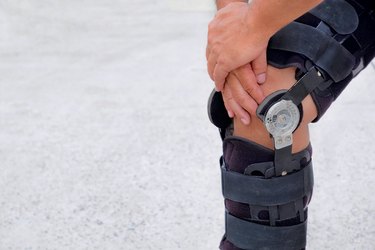


Hamstring and heel cord tightness can effect both sedentary and active individuals. Tight hamstrings can be the result of lower back, foot and knee injuries, according to the Sports Injury Clinic. Heel cord tightness is often a result of an injury to the Achilles tendon -- the body's largest tendon which connects the calf with the heel bone. Tightness in the hamstring and heel cord can limit sports performance and cause pain during day to day activities. Always consult your doctor if you suspect an injury to your hamstring or heel cord.
Spondylolisthesis
Spondylolisthesis is a condition characterized by vertebrae slipping out of its normal positioning. This slipped vertebrae falls on the vertebrae below it, according to the Cleveland Clinic. If the vertebrae slips too far, it can press on a nerve causing pain. This condition normally occurs in the lower back. Symptoms of spondylolisthesis can feel much like a strained back muscle. Spasms in the hamstrings are also a symptom of spondylolisthesis. This condition is diagnosed with an X-ray, physical examination and possible advanced imaging diagnostics. Anti-inflammatory medicine and physical therapy are common treatment methods. If your condition does not improve, surgery is an option.
Popliteus Injury
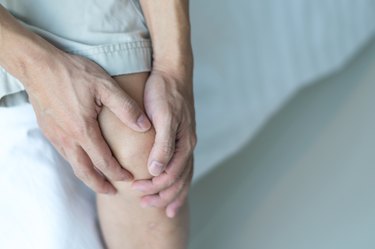
An injury to the popliteus can also result in hamstring tightness, according to the Sports Injury Clinic. The popliteus muscle is small and located in the back of your knee. It allows for your knee to bend and extend itself. The popliteus can be injured as the result of overuse, more hamstring stretching and injury to the knee. Knee injuries that affect the popliteus muscle include hyper-extension and tearing. Pain and tenderness in the back of the knee as well as hamstring tightness can be symptoms of a popliteus injury. A physical examination and imaging are used to diagnose an injury to your popliteus muscle. Rest, anti-inflammatory medications, steroid injections and rehabilitation focusing on the hamstrings are the usual course of treatment for a popliteus injury.
Achilles Tendinitis
Achilles tendinitis is a relatively common condition that causes inflammation in the tendon near the heel bone, according to the American Academy of Orthopaedic Surgeons. Achilles tendinitis can create irritation, pain and swelling in your heel. You are likely to develop Achilles tendinitis as the result of a sudden increase in activity, having tight calf muscles or a bone spur. A bone spur is the growth of extra bone near the Achilles tendon and the heel bone. A doctor will diagnose you with Achilles tendinitis with a physical examination of your foot and ankle. An X-ray or MRI may also be used to ensure your symptoms are related to Achilles tendinitis. Achilles tendinitis is treated with rest, ice, anti-inflammatory medication and exercise to strengthen the Achilles tendon.
Achilles Tendon Rupture
Achilles tendon ruptures are an injury to the tendon in the back of your lower leg, according to the MayoClinic.com. A rupture often occurs as the result of overstretching your Achilles tendon. Tendon ruptures occur in sports, falls from significant heights or stepping into a large hole. If you have a ruptured Achilles tendon rupture it is likely that you will experience severe pain, swelling and tightness in your tendon. You will be unable to bend your foot forward nor will you be able to stand on your toes. An Achilles tendon rupture is diagnosed with a physical examination as well as an MRI to determine if your tear is complete or partial. Surgery is the most common form of treatment, especially with a complete tear. Nonsurgical treatment can include a cast or walking cast.


