





























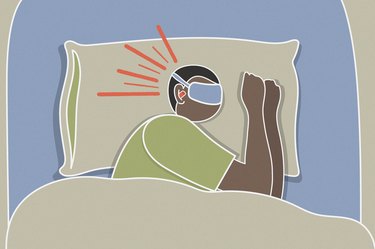






















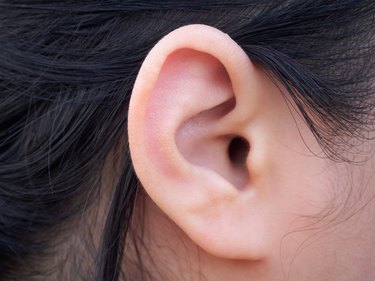








Tinnitus affects about 50 million people in the United States, according to the American Tinnitus Association. People with tinnitus may experience ringing, hissing, buzzing or crackling sounds inside one or both ears. The severity of tinnitus varies from a minor irritation to debilitating. Vitamins may provide relief of symptoms in some people with tinnitus.
Vitamin B-12
Vitamin B-12 seems to have promise in helping alleviate tinnitus in some people. According to a study in the March and April 1993 issue of the "American Journal of Otolaryngology," people with tinnitus and hearing loss had a statistically greater Vitamin B-12 deficiency than people with only hearing loss. Some people with tinnitus had reduced symptoms after taking Vitamin B-12 supplements. How Vitamin B-12 may help tinnitus is unknown, but it seems to be important for good nerve health. Normal hearing relies on proper nerve functioning. Vitamin B-12 is found in foods that originate from animals, including meat, poultry, fish, shellfish, eggs, and dairy products. Other ways to get Vitamin B-12 include supplements, injections and processed foods fortified with Vitamin B-12.
Vitamin C
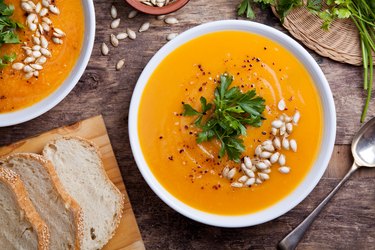
Tinnitus is thought to be caused by impaired blood flow to the ear in some people. According to "The Illustrated Encyclopedia of Natural Remedies," Vitamin C promotes healthy circulation, so this vitamin may help reduce tinnitus in these cases. In addition, Vitamin C is considered to be a powerful antioxidant that prevents cellular damage, including to the inner ear. Vitamin C is found in fruits and vegetables, including citrus fruits, berries, broccoli, and peppers. Rose hips are another rich source of Vitamin C. Some animal products contain Vitamin C, including liver and oysters.
Vitamin E
Similar to Vitamin C, Vitamin E is a potent antioxidant, according to "The Illustrated Encyclopedia of Natural Remedies." Vitamin E's antioxidant properties may help prevent damage to the inner ear. The vitamin also improves oxygen supply to cells to help them function more properly. Vitamin E is found in seeds, nuts, oils from seeds and nuts, and green leafy vegetables.
Vitamin A
Vitamin A is involved in sensory reception, according to "The Illustrated Encyclopedia of Natural Remedies." The vitamin is thought to be essential for the special sensory cells in the inner ear to work properly. Vitamin A may help reduce tinnitus by improving the functioning of the sensory cells and cochlea, an organ in the inner ear that changes sound waves into nerve impulses. Many vegetables and fruits contain Vitamin A, including carrots, sweet potatoes, cantaloupe melons and mango. Liver is also high in Vitamin A.
References
- "American Journal of Otolaryngology"; Vitamin B12 Deficiency in Patients with Chronic-Tinnitus and Noise-Induced Hearing Loss; Zecharia Shemesh, M.D., Joseph Attias D.Sc., Michal Ornan, Niva Shapira, Ph,D, and Amnon Shahar, M.D.; March and April 1993.
- American Tinnitus Association
- "The Illustrated Encyclopedia of Natural Remedies"; C. Norman Sheally, M.D., Ph.D.; 1998.


