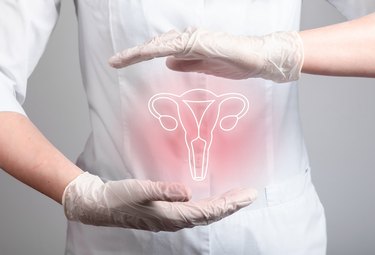
Getting proper nutrition is key to the health of your ovaries and uterus. If you've been wondering if there are foods and supplements that specifically support ovarian and uterine health, you should know that there are several kinds of nutrients that are especially good to include in your daily diet.
Body weight plays a role as well. Keep reading to learn more.
Video of the Day
Video of the Day
Eating for Reproductive Health
The female reproductive system is complex and plays an important role in overall health and well-being. Ovaries house eggs and produce hormones, while the uterus is designed to provide nutrition and a home for a growing fetus.
What you eat affects the health of your whole body — including the reproductive system. Any diet that will keep the uterus and ovaries healthy needs to be filled with nutrient-rich foods in the right amounts.
3 Key Nutrients for Ovary and Uterus Health
Good health, no matter what body part you're focusing on, starts with a healthy diet full of fruits, vegetables, whole grains, low-fat dairy and lean sources of protein such as seafood, poultry and beans.
That said, three specific nutrients are especially important to the health of your ovaries and uterus, especially if you are thinking about becoming pregnant. Those three nutrients are antioxidants, folic acid and vitamin D, and they can be consumed in the form of food or supplement.
Antioxidants
As explained by the Harvard T.H. Chan School of Public Health, antioxidants are molecules that defend the body against cell-damaging chemicals known as free radicals. "An excessive chronic amount of free radicals in the body causes a condition called oxidative stress, which may damage cells and lead to chronic diseases," they warn.
Research shows that antioxidants are important contributors to ovarian health. They improve oxidative stress in people suffering from polycystic ovary syndrome (PCOS) — a common endocrine disease that can cause infertility — and also "improve the ovarian environment, reduce androgen levels and promote follicular maturation," according to a study published in the April 2022 issue of the International Journal of Women's Health.
Selenium, beta carotene and vitamins A, C and E are all antioxidants, and you can effortlessly boost your intake by eating lots of fruits and veggies. The Cleveland Clinic calls this a "rainbow diet."
"A rainbow diet means eating fruit and vegetables of different colors like green (broccoli or spinach), red (tomatoes or strawberries), orange (carrots or oranges) and yellow (bell peppers or banana)," they write. "This ensures you consume a diverse range of vitamins, nutrients and, yes, antioxidants."
Almonds, apricots, avocados, brown rice, Brussels sprouts, cantaloupes, eggs, legumes, mangos, oatmeal, onions, salmon, sunflower seeds, sweet potatoes and tuna are also rich sources of antioxidants, notes the Clinic.
Folic Acid
Foods rich in folic acid are also important for ovary and uterine health, especially during the reproductive years. Among other benefits, getting enough folic acid in your diet decreases the risk of birth defects, as described by the New York State Department of Health.
Orange juice, green veggies and enriched breads, cereals and other grain products can all help you meet your daily folic acid needs, they note.
Vitamin D
Research published in Nutrients in September 2022 offers insights into the link between vitamin D and the health of the ovaries and uterus. "In the past two decades, an increasing body of evidence has shown that adequate physiological levels of vitamin D are crucial for the female gamete and its microenvironment," say the study's authors. "Vitamin D receptors have been detected in the ovary [and] endometrium.... There is no doubt that optimal serum and follicular fluid levels of vitamin D are of high relevance for female reproduction."
In addition, numerous studies — including a clinical trial published by the Caspian Journal for Internal Medicine in 2019 — indicate that vitamin D has a beneficial effect on the size and proliferation of uterine fibroids (UFs). In fact, vitamin D deficiency is increasingly being viewed as a risk factor for UFs.
"Uterine fibroids are benign tumors originating from smooth muscle cells," explains an October 2020 review published in Reproductive Sciences. "Several studies have shown that the majority of UF patients experienced [vitamin D deficiency]. In addition, sufficient vitamin D serum levels are associated with the reduced risk of UFs."
Your body can manufacture vitamin D on its own through sun exposure, as explained by the U.S. National Library of Medicine (NLM). You can also get it from food sources such as salmon, egg yolks, mushrooms and vitamin D-fortified milk and cereals.
Taking Supplements for Ovary and Uterine Health
As the Cleveland Clinic points out, getting nutrients naturally by having a well-balanced diet is typically healthier than taking dietary supplements. "Studies are inconclusive about whether or not supplements actually help, or in some cases, cause more harm than benefit,” they warn. Overdose and drug interactions may occur. If ovary or uterine health is a concern, consult your doctor or a nutritionist about whether or not dietary supplements are the right choice for you.
Fibroid-Friendly Foods
Certain types of food can help minimize the occurrence of ovarian cysts and uterine fibroids.
Low-Glycemic-Index Foods
Following a low-glycemic-index diet (LGD) has been found to be beneficial for ovary health. According to a meta-analysis published in the November 2021 issue of the journal Heliyon, "LGD may play a significant role in reducing the risk and improving the clinical and biochemical features of PCOS."
As described by the NLM, glycemic index (GI) is "a measure of how quickly a food can make your blood sugar (glucose) rise. Only foods that contain carbohydrates have a GI."
Foods that are lower on the glycemic index have less of an effect on blood sugar, which can help maintain healthy blood sugar levels and minimize insulin resistance. "In general, low-GI foods increase glucose slowly in your body," says the NLM. "Foods with a high GI increase blood glucose quickly."
Potatoes, white rice, processed foods and food that's cooked for long periods of time tend to have a high glycemic index, while most fruits, whole grains, milk, legumes and non-starchy vegetables are low on the glycemic index, says the NLM.
Hormone-Lowering Foods
When it comes to the uterus, "eating more fruits and veggies and less red meat could help prevent or shrink fibroids," says a November 2022 article published by the Cleveland Clinic. "Diet changes may minimize symptoms by lowering amounts of the hormones that fuel fibroids."
One reason fruits and vegetables have this effect is, they are high in fiber. "[Fiber] helps your body get rid of excess estrogen through your stool," the Clinic points out. "Estrogen feeds fibroids, so clearing out any excess may decrease risks of fibroids."
Weight Loss and Reproductive Health
It's worth mentioning that being overweight in general can have adverse effects on ovarian and uterine health. A high BMI not only increases your PCOS risk, but also puts you at a higher risk of developing uterine fibroids and ovarian cancer.
In fact, weight loss is one of the main treatments for PCOS, says Johns Hopkins Medicine. "People with polycystic ovary syndrome are more likely to also have obesity," they note. "Reaching and maintaining a healthy weight is our first concern ... and that starts with diet and exercise."
"Some risk factors for ovarian cancer, like getting older or having a family history, cannot be changed," admits the American Cancer Society. "But women might be able to lower their risk slightly by avoiding other risk factors, for example, by staying at a healthy weight."
To sum up, eating nutrient-rich foods, following a low-glycemic-index diet and maintaining a healthy weight can all be beneficial to the health of your ovaries and uterus, and may help limit your risk for uterine fibroids, polycystic ovary syndrome and ovarian cancer.
However, dietary changes alone won't prevent or cure these conditions. Talk to your gynecologist or a nutritionist for help developing an eating plan that optimizes your reproductive health.
Tip
No matter what type of dietary changes you make, paying attention to portion sizes can help you avoid unwanted weight gain. Healthy foods contain calories too, so eating too much of them in one sitting can add pounds. Likewise, if you eat a large enough portion, even lower-glycemic-index foods can raise blood sugar levels.


- Cleveland Clinic: Female Reproductive System
- MedlinePlus: Vitamin D
- American Cancer Society: "Can Ovarian Cancer Be Prevented?"
- Harvard T.H. Chan School of Public Health: "Antioxidants"
- Cleveland Clinic: "Everything You Need To Know About Antioxidants"
- International Journal of Women's Health: "Clinical and Biochemical Potential of Antioxidants in Treating Polycystic Ovary Syndrome"
- New York State Department of Health: "Folic Acid: the Vitamin That Helps Prevent Birth Defects"https://www.health.ny.gov/publications/1335/
- National Library of Medicine: "Vitamin D"
- Caspian Journal of Internal Medicine: "The Effect of Vitamin D Supplementation on the Size of Uterine Leiomyoma in Women with Vitamin D Deficiency"
- Reproductive Sciences: "The Significance of Measuring Vitamin D Serum Levels in Women with Uterine Fibroids"
- Nutrients: "Relevance of Vitamin D and Its Deficiency for the Ovarian Follicle and the Oocyte: An Update"https://www.ncbi.nlm.nih.gov/pmc/articles/PMC9502977/
- Heliyon: "The Effect of Low Glycemic Index Diet on the Reproductive and Clinical Profile in Women with Polycystic Ovarian Syndrome: A Systematic Review and Meta-analysis"
- U.S. National Library of Medicine: "Glycemic Index and Diabetes"
- Johns Hopkins Medicine: "PCOS Diet"
- Cleveland Clinic: "Can Certain Foods Reduce Uterine Fibroids?"