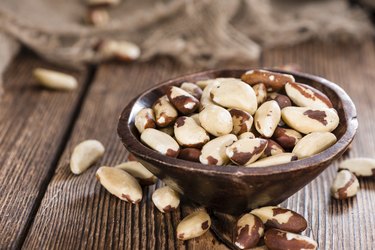
Brazil nuts contain more selenium than any other food. While this sounds like a benefit, the amount of selenium in a handful of Brazil nuts is so high that eating them too frequently puts you at risk for selenium toxicity. As long as you occasionally eat only a few, Brazil nuts are good sources of magnesium, vitamin E and healthy unsaturated fats.
Two Are Better Than One
Video of the Day
When you consume selenium, it interacts with proteins to form new substances called selenoproteins. Of the 25 known selenoproteins, some have well-documented roles, while researchers have not yet pinpointed the precise job of others.
Video of the Day
As a constituent of selenoproteins, selenium produces antioxidants, regulates thyroid hormone and supports your immune system. Based on the location of selenoproteins in the body, they may have roles in muscle metabolism and sperm development, according to the Linus Pauling Institute.
Read more: 9 Healthy Nuts That May Help You Live Longer
Grounded in Good Soil
The amount of selenium in any plant-based food varies according to the levels of selenium in the soil. Brazil nuts come from trees that thrive in the rich soil of the Amazon jungle. As a result, a 1-ounce serving contains 543.5 micrograms of selenium. The recommended dietary allowance, or RDA, is only 55 micrograms.
Because they're larger than most other nuts, a 1-ounce serving equals about six Brazil nuts. By comparison, you could eat about 22 almonds and 32 peanuts in the same serving size. The important thing is to watch your portions when eating Brazil nuts.
Too Much of a Good Thing
As long as they're part of a diet low in saturated fat and cholesterol, eating 1.5 ounces of nuts daily may reduce the risk of heart disease, according to the health claim approved by the U.S. Food and Drug Administration. Brazil nuts provide similar nutritional benefits as other nuts, but they should not be used to fill this recommendation.
The most selenium you can safely consume in one day, which is called the tolerable upper intake level, or UL, is 400 micrograms. Eating more than the UL causes selenium toxicity, or selenosis. Signs of selenosis include hair loss, skin rashes, nausea, diarrhea, fatigue and mood changes. It can progress to neurological symptoms, respiratory distress, kidney and heart failure.
Cumulative Effects
While Brazil nuts can boost levels of selenium, deficiencies are rare in the United States, according to the Office of Dietary Supplements. Besides the risk of toxicity from eating too many Brazil nuts, another potential problem with getting such a large amount from one source is that you will also get plenty from other foods high in selenium in your diet.
A serving of yellowfin tuna provides almost double the RDA for selenium. Many types of fish, beef, pork and chicken supply more than 20 percent of the RDA in a typical serving. Other rich sources include cottage cheese, yogurt, brown rice, baked beans, oatmeal, spinach, eggs, whole wheat, grains and dairy products.