


















































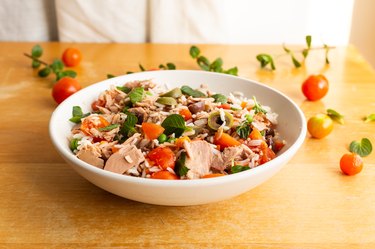







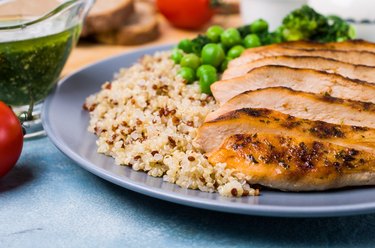











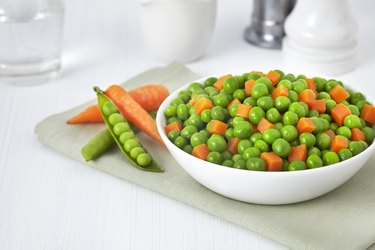
Whole foods refer to unprocessed products, such as whole grains, fruits, vegetables, legumes, nuts and seeds. Some whole food diets may include meats, poultry and fish, but only lean meats and poultry with all the fat removed or reduced-fat meats. You try to control the intake of refined sugars or flour. Whole grains work effectively in a whole food diet because they are unrefined and therefore contain better sources of fiber and nutrients.
Whole Food Protection
Whole food diets may help lower cholesterol, improve the immune system and aid digestion. Researchers at the Sphera Foundation, in Los Altos, California, examined 12 women with excess amounts of lipids in the blood, a factor that may increase their risk of obesity and heart disease. The subjects consumed a refined-food diet for two weeks and then spent the next two weeks on a whole food diet, consisting of whole grains, vegetables, fruits and other unprocessed foods. The whole food diet resulted in a significant drop in total cholesterol levels and also improved colon function and cell damage defenses because of the antioxidants in whole foods, according to the study, published by Bonnie Bruce, DrPH, MPH, RD, FACN and colleagues in the February 2000 issue of the "Journal of the American College of Nutrition." The study also involved the USDA Agricultural Research Service Human Nutrition Research Center.
Easy Digestion
Whole grains have plenty of fiber to help foods move rapidly through the digestive system so it functions properly, MayoClinic.com explains. Diets high in fiber may help reduce the risk of heart disease and diabetes. The bran in whole grains has not been removed during the milling process. Bran removed in the process often becomes a source of dietary fiber supplements.
Whole Grain Nutrients
Whole-grain foods include whole-wheat or multigrain bread, whole-grain cereal, whole-grain pasta, oatmeal, brown rice, cracked wheat, buckwheat, barley and air-popped popcorn. Whole grains keep their rich supply of minerals, including selenium, potassium and magnesium. Selenium contains antioxidant properties to protect against cell damage. Potassium aids heart, muscle, nerve and digestive functioning. Magnesium supports the immune system and normalizes blood pressure.
Dietary Fiber
Fruits high in fiber include raspberries, pears, apples, strawberries, oranges, bananas, raisins and dried figs. Artichokes, peas, broccoli, turnip greens, sweet corn, Brussels sprouts and baked potatoes provide rich amounts of fiber. Split peas, lentils, black beans, lima beans, baked beans, almonds, pistachios, pecans and sunflower seed kernels also provide high fiber.
Weight Loss
People with mild or severe obesity, high triglyceride levels or high blood pressure may benefit from a whole-foods weight loss diet. The diet includes salads, vegetables, fresh fruit, lean meats and poultry, fish, egg whites, reduced-fat cheese and nuts included in main dishes, according to the Texas Tech University Health Sciences Center. The diet encourages whole, unprocessed foods while including moderate amounts of protein and fat.


Member Comments