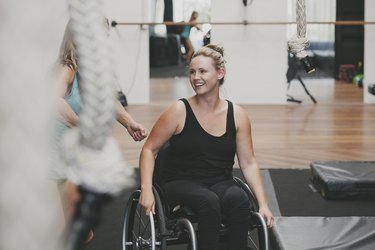
The human body is made to move, and this doesn't change if you have paraplegia. With the proper wheelchair exercises, it is possible to harness all of the benefits of working out, regardless of your condition. Your health may improve in the process, so your efforts will pay off.
Benefits of Wheelchair Exercises
Video of the Day
Before you put together your workout, make sure you understand why performing paraplegic exercises is so important in the first place. According to a systematic review published in Neurology in August 2017, regular exercise plays a key role in maintaining the cardiovascular and metabolic health of people with spinal cord injury.
Video of the Day
These individuals are more susceptible to weight gain, high cholesterol, cardiovascular disease and elevated blood sugar, points out the Model Systems Translation Center (MSTC). A consistent fitness routine may help protect against issues and improve overall health. It may also lead to better sleep, greater flexibility and increased energy levels. Plus, you'll find it easier to maintain a normal weight.
Furthermore, exercises for quadriplegics and paraplegics can help strengthen and maximize the function of your healthy muscles. Wheelchair exercises may also make you more flexible and decrease any pain you are experiencing. The guidelines that follow can help you develop a balanced workout regimen that meets your needs.
Tip
Aerobic training, weight lifting and stretching are all examples of paraplegic exercises that can be extremely beneficial.
Be Sure to Stretch
Maintaining flexibility in your shoulders, arms and back plays a huge role in preventing muscle stiffness. This is especially true if you use a wheelchair regularly, which may cause you to develop tightness from constantly sitting and pushing the wheels of your chair forward.
To combat this, consider beginning a stretching program. A pectoral stretch and a posterior shoulder capsule stretch are ideal for lengthening tissues in the shoulder region that tend to tighten up with prolonged time in a wheelchair. These postural stretches can help you avoid developing a humpback posture.
Read more: Lat Exercises at Home
A seated chair stretch in the wheelchair is another one of the easy exercises for quadriplegics and paraplegics. Its role is to loosen up the lower back muscles. This technique may help relieve the soreness that develops after long periods of sitting.
The MSTC suggests holding each stretch for 30 seconds and attempting to perform two stretches at a time, pushing slightly further on the second stretch. Craig Hospital does caution to keep the stretching gentle to avoid overstressing your tissues.
Get Some Aerobic Exercise
In addition to stretching, regular aerobic exercise is also important for people with paraplegia. According to a July 2019 systematic review in the Journal of Sport Rehabilitation, participation in aerobic workouts can positively affect body structure and function in individuals with spinal cord injuries.
Upper body cardio equipment like a rowing machine or an arm bike are good options to get your heart rate up. These machines are available in most fitness facilities, but you may also buy one for home use. Gaylord Specialty Healthcare suggests shooting for at least 20 minutes of aerobic wheelchair exercises at a time, three times per week.
Read more: 5 Serious Causes of Leg Weakness
Other aerobic paraplegic exercises include playing wheelchair basketball or briskly pushing your chair around the block or on a running track. The World Para Athletics reports that even high-level Paralympic athletes, like medal winner Rheed McCracken, incorporate track workouts into their training programs when preparing to compete on the world stage.
Hit the Weights
The last piece of the workout puzzle is incorporating strength training into your routine. Resistance exercises using weights or fitness machines help keep the muscles that are functioning strong. This form of training also makes things like propelling your wheelchair and transferring to and from cars easier.
Read more: Arm Bike Benefits
Try performing exercises like dumbbell biceps curls or overhead triceps extensions while you are sitting in your wheelchair. Other upper body techniques, such as seated rows and lat pulldowns, can be performed using equipment found standard in most gyms.
The MSTC suggests completing 10 repetitions of each exercise and trying to do two to three sets for each movement. This can be done several times per week. As the exercises become easier, try to slowly increase the amount of weight you are using. Be sure, however, to stop any exercise that causes pain. Contact your physician if you have questions or experience unusual symptoms.
- Neurology: “Effects of Exercise on Fitness and Health of Adults With Spinal Cord Injury”
- Model Systems Translation Center: “Exercise After Spinal Cord Injury”
- Craig Hospital: “Exercise”
- Journal of Sport Rehabilitation: “Physical Exercise for Individuals With Spinal Cord Injury: Systematic Review Based on the International Classification of Functioning, Disability, and Health”
- Gaylord Specialty Healthcare: “Healthy Living With Spinal Cord Injury”
- World Para Athletics: “#WorkoutWednesday with Australia’s Rheed McCracken”
- ExRx.net: "Behind Head Chest Stretch"
- American Council on Exercise: "Seated Biceps Curl"
- ExRx.net: "Dumbbell Triceps Extension"
- American Council on Exercise: "Seated Rows"
- ExRx.net: "Cable Pulldown"
Is this an emergency? If you are experiencing serious medical symptoms, please see the National Library of Medicine’s list of signs you need emergency medical attention or call 911.