














































Your baby teeth emerge from your gums during infancy and are replaced with your permanent teeth over the next few years. Teeth may become ingrown when a tooth fails to emerge from the gums properly. The seriousness of ingrown teeth, referred to by dentists as impacted teeth, varies from a common dental problem usually corrected with time or simple procedures to impactions that cause infection, damage other teeth or require oral surgery.
Causes
Wisdom teeth, called the third set of molars, are the teeth most likely to become impacted since they emerge last. Wisdom teeth emerge between the ages of 17 and 21 unless they are stuck in your bones or gum tissue. The tooth may emerge partially or it might grow sideways or at an angle. Sometimes the jaw is too small to accommodate a third set of molars. Hyperdontia, or too many teeth, may delay or prevent the eruption of primary or permanent teeth.
Symptoms and Side-effects
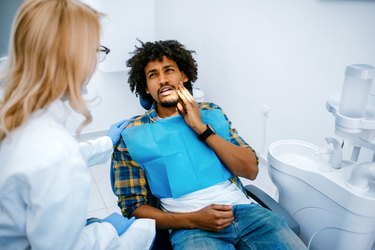
Red, painful and swollen gums may indicate an impacted tooth. Other symptoms are bad breath, headaches, painful jaws, swollen lymph nodes in the neck and a gap where the missing tooth should be. Your gums might swell and tighten over the impacted tooth or the impaction might cause an abscess, infection, and misalignment of your teeth. Impacted teeth also cause the trapping of food and plaque between your teeth and gums and result in pericoronitis, which is an inflammation of your gums.
Prevention
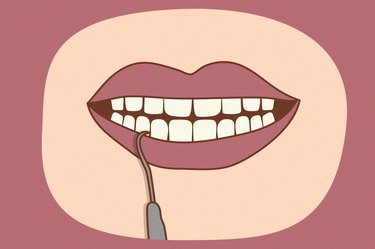
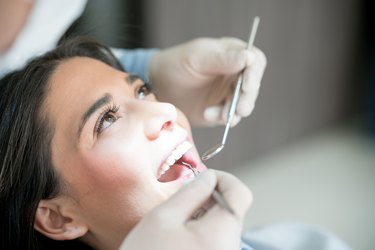
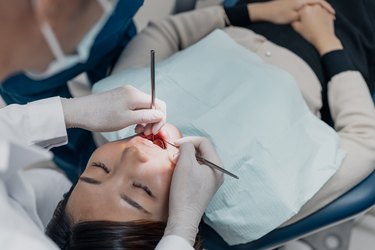
Your dentist might recommend extraction of your wisdom teeth to prevent impaction and avoid problems with tooth alignment. Wisdom teeth are usually removed before the age of 30 while bones remain flexible enough to prevent complications. You dentist might perform an x-ray to find out if you have or are might develop an ingrown or impacted tooth.
Treatment
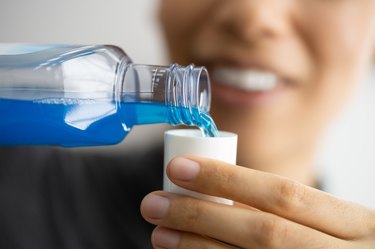
Treatment might not be necessary if an impacted tooth does not cause you problems; however, extraction, sometimes by an oral surgeon, is the usual treatment. According to the American Dental Association, extraction might be warranted if the wisdom tooth emerges partially of if it threatens to damage other teeth or bones. For an impacted tooth that causes pain, use over-the-counter pain medication or gargle with warm salt water or mouthwash until you can see your dentist.


