

















































Low blood sugar, or hypoglycemia, may make you feel shaky, sweaty, anxious and hungry. As eating will provide your body with a ready source of glucose, hunger is your body's way of remedying hypoglycemia. Foods that are rapidly broken down into sugars cause wide fluctuations in your blood sugar and are thus more likely to cause hunger, while foods that are broken down slowly will keep your blood glucose even and curb hunger for several hours.
Background
When you eat a food, your cells recognize the increase in blood glucose and release a hormone called insulin that helps carry the glucose in to your body's cells where it can be used as fuel. If a food is easily converted to glucose, there is a rapid increase in blood sugar and then a rapid decrease as insulin carries glucose into cells. A food that is easily converted to glucose is said to have a high glycemic index and will cause a sensation of hunger after eating when your blood glucose becomes low.
Fruits
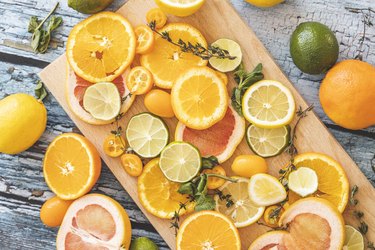
Fruits that are rich in soluble fiber, and low in sugar, such as apples, grapefruits, oranges, pears and peaches, all have a low glycemic index. These fruits are digested slowly and cause a gradual rise and subsequent gradual decrease in your blood sugar, allowing you to feel full longer. Additionally, the soluble fiber is not broken down in your digestive tract and likely contributes to the sensation of fullness. Consuming these fruits while they are fresh and uncooked will provide you with the highest nutrient value, as well as the highest amount of fiber. Certain fruits, such as watermelon, pineapple and raisins, have a higher glycemic index and may leave you feeling hungry sooner.
Vegetables
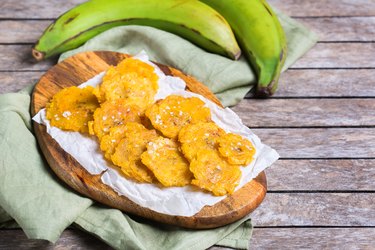
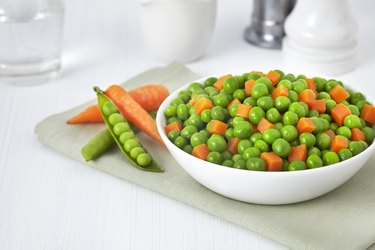
Starchy vegetables, such as white potatoes, beets and corn, are easily broken down into sugar and have a high glycemic index. Sweet potatoes contain more soluble fiber than white potatoes and have a lower glycemic index, while carrots, green peas and beans have the lowest glycemic index in the vegetable group. When planning a meal, ensure that most of the foods in your meal have a low glycemic index to help you to feel full longer.
Protein
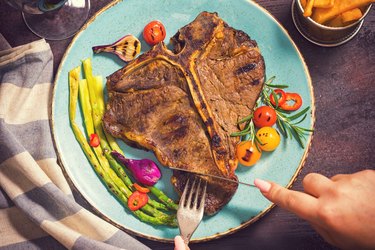
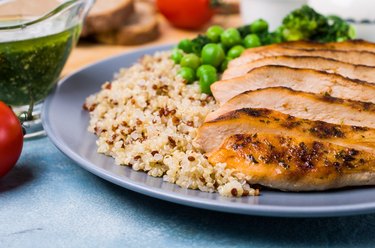
According to the "American Journal of Clinical Nutrition," a high protein diet can decrease appetite. In this study, increasing protein intake to 30 percent of total calories resulted in decreased caloric intake and weight loss. As proteins are broken down slowly, these foods do not cause large changes in your blood sugar. Meats, eggs, cheese, yogurt and milk are excellent sources of protein that can be incorporated into either meals or snacks.
Fat
Fatty foods curb hunger as they slow the passage of food through the gastrointestinal tract. When the food remains in your stomach longer, the sensation of fullness persists long after the meal. Additionally, fatty foods may prompt secretion of a hormone that signals a feeling of fullness. While fatty foods are not typically considered healthy, foods such as avocados, nuts and seeds contain polyunsaturated and monounsaturated fats, which are considered "heart healthy" because they do not increase your cholesterol, and may even decrease it.
Meal Size
Eating small meals frequently rather than large meals several times a day will keep your blood sugar levels regulated and curb hunger. Oatmeal, an orange and a glass of skim milk is an example of a breakfast that would keep you feeling full for several hours. Examples of snacks that help curb hunger include raw carrots with a low-fat yogurt dip, grapefruit with cottage cheese and an apple with low-fat cheese.
References
- National Diabetes Information Clearinghouse (NDIC): Hypoglycemia
- University of Wisconsin: Glycemic Index
- MayoClinic: Glycemic index diet: Losing weight with blood sugar control
- "The American Journal of Clinical Nutrition"; A high-protein diet induces sustained reductions in appetite, ad libitum caloric intake, and body weight despite compensatory changes in diurnal plasma leptin and ghrelin concentrations; Weigle et. al;July 2005
- University of California: UC Irvine Study Shows How Fatty Foods Curb Hunger


Member Comments