
















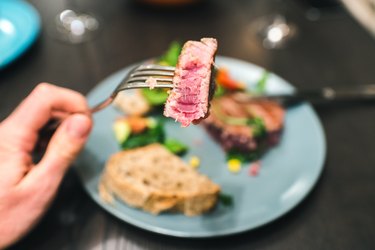














































Trout, a coldwater fish commonly found in fresh bodies of water, belongs to the salmon family. Smoking these fish, which can weigh up to 40 lbs., imparts a deep, rich flavor and helps to preserve the fish, as well. You may purchase trout already smoked from many grocery stores, although you may smoke trout at home in a smoker.
Calories and Fat
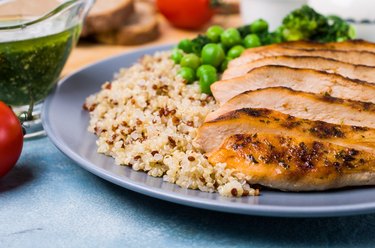
A 2-oz. serving of smoked trout contains 80 to 90 calories. Based on a 2,000-calorie diet, this accounts for 4 percent to 4.5 percent of the calories you may consume daily. The U.S. Department of Agriculture Food Pyramid suggests two to three servings of lean protein, such as a smoked trout, per day. To make it a balanced meal, you can add one to two servings of vegetables and a grain -- quinoa, wild rice and millet are all nutritious choices -- or a bread roll. Smoked trout is also relatively low in fat, containing 3 g to 4 g. Despite the few grams of fat, it does make up 34 percent to 40 percent of the calories per serving. Consume no more than 20 to 35 percent of your total calories consumed from fat.
Cholesterol
While your body requires cholesterol for proper cell function, too much of it can clog your arteries. This waxy substance is manufactured in your body, which produces enough to meet your needs. Cholesterol is present in smoked trout -- 10 mg to 40 mg in a 2-oz. serving. MayoClinic.com suggests limiting your intake of meat to no more than 6 oz. per day in an effort to keep your consumption of cholesterol to under 300 mg per day. Overeating cholesterol can increase your risk of developing heart disease, as well as suffering a heart attack and stroke.
Protein
Two oz. of smoked trout provides approximately 13 g of protein, 23.2 percent to 28.2 percent of the 46 g to 56 g recommended for daily consumption by the Institute of Medicine. This macronutrient serves as a source of energy for your body, but it also ensures your immune system stays in working order. Protein plays a critical role in the health of your muscles and helps your body manufacture vital hormones and enzymes, as well.
Vitamins and Minerals
Smoked trout contributes to your daily iron requirements -- 2 oz. of this fish provides you with 2 percent of the amount you need each day. Iron promotes sufficient oxygenation of your entire body, but without enough you may experience dizziness, headaches and fatigue. Be sure to supplement your diet with iron-rich foods to ensure you meet your needs. A 2-oz. serving of smoked trout may also contain up to 8 percent of the daily recommended value of vitamin A, a vitamin that works in tandem with calcium to keep your bones and teeth strong. This portion of smoked trout provides 2 percent to 4 percent of the calcium you require each day, making smoked trout a good choice for bone health.
Considerations
Smoked trout is quite high in sodium, with 670 mg to 680 mg per 2 oz. portion. The U.S. Centers for Disease Control and Prevention notes that the average American eats more than 3,000 mg per day, although the ideal consumption limit is 1,500 mg. Including too much sodium in your meal plan puts you at greater risk of high blood pressure and water retention. Trout may also contain high levels of mercury, a contaminant that can cause health problems, particularly for pregnant women. Depending on the pollution levels in the water from which the trout comes, you may need to limit your consumption of smoked trout to once every month to avoid the effects of mercury.


