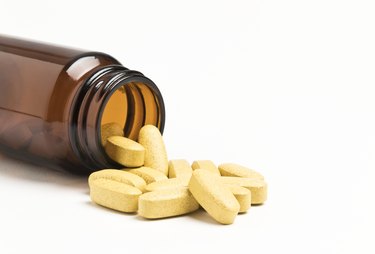
Niacin, which is also referred to as vitamin B-3, is one of eight B vitamins that plays a role in converting the calories you eat into usable energy. Niacin is also responsible for the production of stress and sex hormones and can help to improve circulation.
According to the National Institutes of Health, you can consume all the niacin you need though diet, which makes niacin deficiency very uncommon in developed countries. While high doses of niacin present a number of serious risks, they may also be useful, under medical supervision, for treating high cholesterol. Consult with your doctor before adding supplements to your diet.
Video of the Day
Video of the Day
Tip
High doses of niacin are used as a treatment for lowering cholesterol. But consuming too much niacin in supplement form can cause side effects and be harmful to your health.
Niacin Recommendations and Dietary Sources
Niacin is present in a number of foods, including eggs, lean meats, nuts, poultry, dairy products, enriched breads and cereals, legumes and fish. The recommended daily allowance of niacin for adults is 14 to 16 milligrams per day — an amount more than 30 times less than a 500-milligram dose.
You can easily meet this daily requirement by consuming niacin-rich foods, such as chicken, with 7.3 to 11.7 milligrams per serving; tuna, 8.6 to 11.3 milligrams per serving; fortified breakfast cereal, 20 to 27 milligrams per serving; salmon, 8.5 milligrams per serving; and lentils, 2.1 milligrams per serving.
Read more: Niacin & Weight Loss
High Doses to Lower Cholesterol
Aside from treating niacin deficiency, high doses of niacin — typically 500 milligrams or higher — have been used to treat high cholesterol. According to MedlinePlus, doses this high are typically sold as prescription products. Because very high doses are required for treating high cholesterol, dietary supplements — which typically come in strengths of 250 milligrams or less — are not appropriate for this use.
One study published in the journal Archives of Internal Medicine tested high doses of niacin, combined with a prescription cholesterol-lowering drug. This study, which started at a daily 500-milligram dose and eventually increased to 2,500 milligrams per day, found that niacin, combined with one type of statin drug, was able to improve four types of cholesterol commonly associated with atherosclerosis.
Read more: Niacin and Impotence
Niacin Flush and B-Complex Imbalances
One of the most common side effects of high doses of niacin is a "niacin flush." This side effect, while not serious, is characterized by redness, itching and tingling in the neck, face, arms and upper chest. According to the National Institutes of Health, niacin flushing can start at doses of 30 to 50 milligrams.
One less-obvious side effect of high-dose niacin is a potential imbalance in other B-vitamin levels in the body. Taking high doses of any one of the B vitamins can cause imbalances in other B vitamins. Therefore, it is best to consume a B-complex vitamin, containing all of the B vitamins, if you decide to use supplements.
Risk of Liver Damage
While niacin, like all other B vitamins, is water-soluble and can be excreted by the body when taken in excess, there are still a number of dangers in consuming doses as high as 500 milligrams. Such doses have the potential to cause skin rashes, peptic ulcers, increased blood sugar and liver damage, among others.
It's particularly important for individuals who already have liver disease, kidney disease or stomach ulcers to avoid niacin pills. In addition, those with diabetes or gallbladder disease should only use niacin under the supervision of a medical professional.
Read more: Niacin & Anxiety
- MedlinePlus: Niacin
- Oregon State University: Linus Pauling Institute: Niacin
- MedlinePlus: Niacin and Niacinamide (Vitamin B3)
- Archives of Internal Medicine: Efficacy of Extended-Release Niacin With Lovastatin for Hypercholesterolemia: Assessing All Reasonable Doses With Innovative Surface Graph Analysis
- National Institutes of Health: Office of Dietary Supplements: Niacin