























































Nutrition in Elderly Food Menu Plan

Nutrition in Elderly Food Menu Plan
Photo Credit Jupiterimages/Polka Dot/Getty Images

So much emphasis is placed on childhood obesity and nutrition, it is easy to forget the aging segment of the population and their needs. The elderly have unique nutritional needs in many cases, and special care must be taken to ensure they get the nutrients they need.

Menu Plans

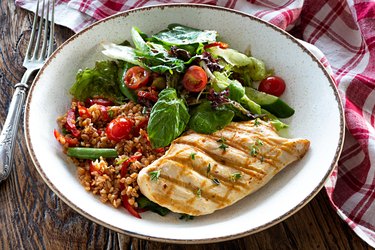
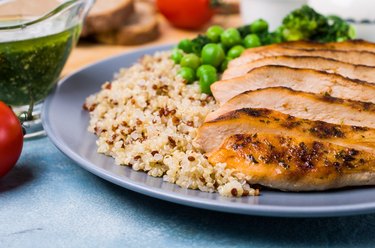
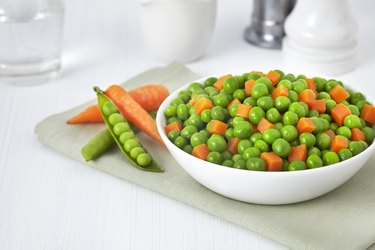
Seniors need a balanced mix of foods to help meet their nutritional requirements. Plan menus around fruits and vegetables, whole grains, low-fat dairy and lean meats. Eat regularly throughout the day and do not skip meals. If you have become bored with eating the same things over and over, mix up your routine by reversing the order of your meals, or try new flavors in the form of mild herbs or spices in your food. Aim for three different colors on your plate in each meal for a healthy variety.

Important Nutrients

The challenge for a senior is to get the same nutritional value from foods as you did when you were young, but with fewer calories. Nutrient-dense foods like fruits and vegetables are what make that possible. Some important nutrients as you age include vitamin D, protein and calcium for your bones and muscles, and vitamin C, vitamin E, lutein and beta carotene for macular degeneration. Eating whole grains, nuts and colorful vegetables will give you what you need. Zinc is also important and can be found in meat, eggs and seafood. Water is one of the most important elements to include. As you age, your perception of thirst decreases, which may result in dehydration and more strain on your kidneys. Drink water throughout the day, even if you are not thirsty.

Lifestyle Modifications

As you experience different sensory changes with your hearing, taste, sight and smell, your taste for food may change as well. Take these changes into consideration and modify your eating habits to maintain a healthy balance. For example, if you have dentures and have trouble with harder foods, boil or steam vegetables a little longer to still get the fiber you need. Eat to your activity level, or increase your daily activity if you still want to eat the same amount of food.

Considerations

For any senior wishing to create a menu plan and take a look at his nutrition, it is important to consult with your doctor first. Your specific medical condition may influence which foods can and cannot be included in your diet. For example, with kidney disease your protein levels will change; with diabetes, your sugar levels fluctuate. You also need to determine how medications may influence the nutrients you take in.

References

Article reviewed by Sharon Last updated on: Mar 28, 2011

Must see: Photo Galleries