










































Sleeping Vs. Resting for Recovery

Sleeping Vs. Resting for Recovery
Photo Credit Hemera Technologies/Photos.com/Getty Images

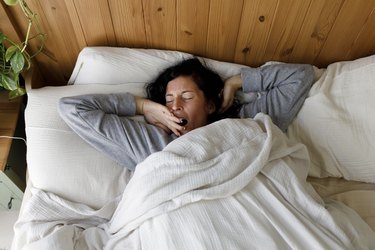
The typical American is getting less sleep than ever before. Television, social networking, multiple jobs and a plethora of commitments and obligations has people shaving off minutes or even hours from their sleep schedules. We often justify nocturnal behaviors such as watching television or surfing the net by convincing ourselves we are "resting". But when it comes to physical recovery from exercise, there is no substitute for sleep.

Sleep and Physiology

In a report published in the "Journal of Sleep," researchers at the University of Pennsylvania School of Medicine proclaimed, "Chronic loss of physiological sleep has been documented to adversely affect
endocrine function, cardiovascular events, and other health-related outcomes." The report notes that chronically limiting sleep to just six hours per night has the cumulative effect on cognitive performance of two days of total sleep deprivaiton. While resting gives joints and muscles a break, the building and repair of tissue takes place during sleep, when hormones are released to do their job. According to the University of New Mexico, studies have shown that production of Human Growth Hormone is impaired when sleep is inadequate, slowing the repair and growth of cells.

Sleep and Athletic Performance

A study of the effects of sleep deprivation on male athletes by the University of Aukland, New Zealand Department of Sport and Exercise Science revealed that lack of sleep interfered with the repletion of muscle glycogen, consequently impeding muscle recruitment during athletic activity. In a presentation by Jeffrey Lin, MD, of Stanford University Medical Center, a study showed marked improvements in key elements of performance in sleep deprived male athletes after a 30 minute post-lunch nap. In another study by Cheri Mah of Stanford University, male basketball players showed significant improvements in athletic performance when permitted to get as much extra sleep as possible beyond an established baseline of their typical sleep patterns.

Sleep and Tactical Acuity

The link between sleep and performance translates to both physical and tactical skills. Tactical skills are those decisions made in the heat of play, when an athlete must make a judgement call. When the mind is tired, decision-making acuity is impaired. For an athlete, a poor tactical maneuver can result in lost points or even injury. The same is true for decision-making on the job or at home. Merely resting does not refresh the brain cells. In fact, what most people refer to as "resting" consists of activities that stimulate the brain, such as watching movies or reading.

Stages and Patterns of Sleep

During a full night's sleep, the average person experiences four to six cycles of sleep punctuated by brief periods of wakefulness or arousal. Within each sleep cycle are five stages: Stage one involves light sleep and drifting in and out of consciousness; stage two, which makes up about half of sleep time, is marked by relaxed muscles and a slowing of brain waves; stages three and four, marked by deep sleep and large, slow brain waves, are the restorative stages where hormones are released and body chemistry is balanced. In the final stage, rapid eye movement, or REM sleep occurs during which vivid dreaming takes place. Failure to get a full night's sleep deprives you of the restorative benefits of deep sleep for which resting cannot compensate.

References

Article reviewed by GlennK Last updated on: May 26, 2011

Must see: Photo Galleries