



































































Herring and Nutrition

Herring and Nutrition
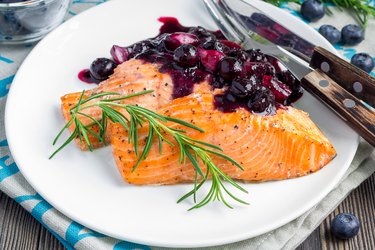
Photo Credit Fisch Forelle image by roger from Fotolia.com

Herring, a small silvery fish, eat plankton and are a member of the Clupeidae family. While it is possible to buy fresh herring in fish markets, you are more likely to find canned, smoked or pickled herring in grocery stores. Herring prepared in this way comes ready to eat and often includes oils or water as the packing medium to ensure this fish does not dry out. Avoid purchasing fish preserved in soybean or cottonseed oil and go for healthier options, such as olive oil.

Basic Nutrition

Herring serves as a good source of quality protein, providing 19.6g of protein in a 3-oz. cooked serving. This accounts for 35 to 42.6 percent of the protein you should include in your meal plan each day. This type of fish contains 0g of carbohydrates, but it does have 9.9g of fat, with 2.2g of this fat is of the saturated, or "bad," variety. Saturated fat may influence your risk of coronary heart disease. Approximately half the 172.5 calories in a serving of herring come from fat. Limit the amount of total fat in your diet to 20 to 35 percent of the calories you eat in a day.

Vitamins

Including herring in your diet gives you access to an excellent source of vitamin B-12 -- each 3-oz. serving provides 186.1 percent of the daily recommended intake of this vitamin, and you will not waste a bit of it as your body is capable of storing more than one year's worth of vitamin B-12. Your body uses vitamin B-12 to promote healthy nerve and red blood cells. One serving of herring also contains 17.5 percent of the vitamin B-3 you need each day.

Minerals

One 3-oz. serving of herring serves as a rich supply of selenium, providing 56.8 percent of the amount you need each day. Selenium may help protect your body from damage caused by smoking, according to a January 2011 article from Food Consumer. Research reported in the "Journal of the Federation of American Societies for Experimental Biology" in that month indicates that animal studies provided evidence that selenium intake correlates to fewer tumors from cigarette smoke exposure. More studies are needed to confirm this finding. In addition to selenium, one serving of herring contains 25.8 percent of phosphorus and 10.2 percent of potassium required daily.

Benefits

Including herring in your diet boosts your omega-3 fatty acid intake. A 3-oz. serving of this type of fish provides 1.3 to 2g of this essential fatty acid, although the amount varies, depending on the way the herring is prepared -- fresh herring contains the most omega-3 fatty acids, according to May-June 2003 issue of "Natural Health." Omega-3 fatty acids may decrease your risk of heart disease and cancer as well as improve your brain function.

Considerations

Herring is high in cholesterol, a substance that may clog your arteries if you eat too much of it. A 3-oz. portion of herring has 65.5mg of cholesterol. Limit your consumption of cholesterol to 300mg per day. You should also limit your consumption of herring to no more than 12 oz. per week if you are pregnant. Herring is low in mercury, an environmental contaminant, but eating too much herring can still cause defects in the fetus.

References

Article reviewed by Elizabeth Ahders Last updated on: Jan 18, 2011

Must see: Photo Galleries

Member Comments