






































































The combination of intense training schedules, need for strength and the requirement for gymnasts to maintain a lean body makes gymnastics a unique sport. As a result, coaches are required to carefully monitor the diet of their athletes during training and competition. The obsession surrounding food, disciplined exercise and striving for perfection could lead to eating disorders such as anorexia and bulimia among gymnasts.
Nutrition and Performance
Despite the amount of calories needed to fuel intense training, many gymnasts follow a calorie-restricted diet in order to maintain a lean body. Restricting the intake of calories and essential components of their diet directly affects training. If body fat is too low, it may result in suboptimal performance. All athletes should consume enough calories and nutrients to meet their energy requirements, according to Dr. A. Jay Binder, member of the Medical Commission of the International Gymnastics Federation (FIG). The American College of Sports Medicine (ACSM) has outlined a three pronged risk of illness for active women and girls who are driven to excel in sports. According to research, they risk developing the Female Athlete Triad, three distinct but linked conditions: disordered eating, amenorrhea and osteoporosis.
Gymnast's Diet
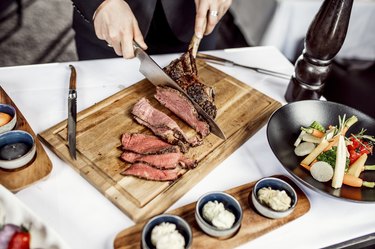
The ideal diet for a gymnast is low-fat and high in carbohydrates and protein. Foods such as whole-grain pasta, potatoes and vegetables should provide between 60 and 65 percent of their total calorie intake. Protein is essential to aid with muscle growth and repair and 12 to 15 percent of a gymnast's calories should come from meat, fish and eggs. Getting the right amount of calcium is also important in building bone strength and preventing injuries. Ideally, only 25 percent of a gymnast's diet should be made up of fat, with those calories coming from foods containing unsaturated fats rather than junk food, chocolate or soda. However, a gymnast's diet should reflect the intensity and demands of her body type and individual training schedule.
Negative Effects
Disordered eating can make the athlete less able to withstand the rigour of training and more prone to electrolyte imbalances, malnutrition and injury due to low energy effort, according to Dr. Binder. This can result in gymnasts having to retire early from the sport and being left with serious psychological problems and in the most serious cases can cause death.
Prevention
To help prevent gymnasts developing an eating disorder, it is important that coaches, parents and welfare officers work together to recognize symptoms. The ACSM states that warning signs of an eating disorder can include excessive leanness or rapid weight loss and pre-occupation with weight, food, mealtime rituals and body image. In training, coaches may notice a reduction in the athlete's energy levels and concentration. In all cases it is important that the gymnast understands the need for a healthy, balanced diet to support her training.
Gymnasts with Eating Disorders
Many international gymnasts have suffered from eating disorders. Kathy Johnson, Nadia Comaneci and Cathy Rigby have all admitted their battles with weight. Former U.S. National gymnastics team member, Christy Henrich died of multiple organ failure in 1994 after eight-years of suffering from anorexia and bulimia after being told she was fat by a judge.


