





















































It's January. The New Year has taken off and you are determined that this year you are going to lose those stubborn surplus pounds for good. In spite of all the new diet books being published at a steady clip at this time of year, you wonder what would be the best way for you to tackle this weighty problem. Losing weight alone is hard enough without your having to make radical changes in your diet and lifestyle that will be difficult to sustain. Sticking to some simple steps may help keep you on the right track.
Promise Yourself You Will Never Diet Again
Chances are you are not new to dieting. You probably have several diet books lying around somewhere, testimony to earlier attempts that did not work. Unfortunately, diets don't work. In theory they do, yes, but if they represent an artificial way of eating for you, you are not going to be able to stay with them in the long run. Step 1 on your way to permanent weight loss is promising yourself that you will never diet again. Pack up those diet books and make that vow. Pam Anderson, author of "The Perfect Recipe for Losing Weight and Eating Great," put it this way: "If I could figure out a way to change my life, I'd do it, but I'd never again follow an unrealistic program only to fall off the wagon a few days, a few weeks, a few months later."
Identify What's Holding You Back
Losing weight is not only about numbers on a scale. It also has a great deal to do with what is going on in your mind. There might be an underlying reason why you eat the way you do. Maybe you think you are not worth taking care of. Maybe you fear that your family is not going to be supportive. Maybe you are unhappy and use food as comfort. Before you can lose pounds and maintain the weight loss, you need to determine if there is something that's holding you back. Geneen Roth, who has written several books about women and their relationship with food and taught numerous workshops on the subject, says: "When you eat when you're not hungry, you are using food as a drug, grappling with boredom or illness or grief or emptiness or loneliness or rejection."
Pledge to Take Care of Yourself, Now and Always
Make a pledge to take care of yourself from now on. Schedule an appointment with your doctor to find out where you are in terms of health and wellness. Discuss your weight loss plans with her and decide on the best course of action.
Get Moving
Taking care of yourself and of your body includes finding a way to get moving. Find a type of exercise you enjoy. Walking is usually the easiest way to start. If you use a pedometer, you can track your progress. Just make time in your schedule and take that first step, and don't let yourself off the hook -- rain or shine. According to the Centers for Disease Control and Prevention, regular physical activity is one of the best things you can do to get and stay healthy. It will help you to lose and maintain your weight, reduce the risk of chronic disease, strengthen your bones and muscles, improve your balance and live longer.
Identify What Foods You Cannot Live Without
In order to find a way to eat for the rest of your life, develop your own eating plan. Figure out what meals you need and what foods you do not want to go without. You not only want to nourish your body, but also your mind, so have that glass of wine and enjoy dessert -- in moderation.
Be Present and Mindful
What you do need to regulate is when, where and how much you eat. If possible, have your meals in a pleasant spot where you can eat without distractions. No eating in the car, in front of the television, while reading a book or listening to the radio. You want to be able to tune into your body's cues: Know what it feels like to be hungry and when you are full. That is why it is easier for most people to have three square meals a day instead of grazing throughout the day. Having meals at set times in the same spot enables you to become a mindful eater. Research conducted at the Food and Brand Lab of Cornell University showed that environmental factors do affect people's eating behavior and that it pays off to pay attention to the when, where and how much.
Start Cooking
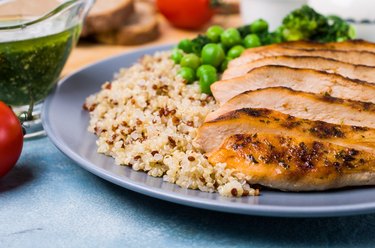
To eat well and enjoy all the foods that you love, start cooking. By preparing most of your meals yourself, you have control over what goes into the meal and how much you put on your plate. Instead of spending money on diet books, buy yourself a cookbook with recipes that appeal to you and your family. Develop strategies that allow you to have dinner at home with your family most nights of the week.
Relax and Take it Slowly
Give yourself the luxury of time. Do not rush or think that the pounds should have come off yesterday. It took you a while to get to where you are now and it will take time to get to where you want to be.
Have Faith in Yourself
Reward yourself by getting rid of the clothes that have become too big and buy yourself new things as necessary. Don't save your old clothes for those what-if moments. Have faith in yourself.
Take Pleasure in Food
Food and eating are a major source of pleasure, not a source of pain and guilt. Sharing good food with the people you love is much more important than fat grams or number of calories. The fact that you are trying to lose weight does not mean that you are not allowed to enjoy your food. So taste, savor and enjoy!
References
- "The Perfect Recipe for Losing Weight and Eating Great"; Pam Anderson; 2008
- "Women Food and God"; Geneen Roth; 2010
- Centers for Disease Control and Prevention: Physical Activity and Health
- "Annual Review of Nutrition"; Environmental Factors that Increase the Food Intake and Consumption Volume of Unknowing Consumers (abstract); Brian Wansink;


Member Comments