





























































Does Exercise Increase Platelet Levels?

Does Exercise Increase Platelet Levels?
Photo Credit Duncan Smith/Photodisc/Getty Images

Platelets are cell fragments, or cells lacking a DNA-containing nucleus, that are essential to the formation of blood clots and healing at sites of open wounds. At extremely high levels, platelets can contribute to the formation of clots in the blood stream, potentially leading to heart attack or stroke. If you are at an elevated risk of developing one of these conditions, the effect of exercise on platelet levels may be of concern.

Thrombocytosis and Thrombocytopenia

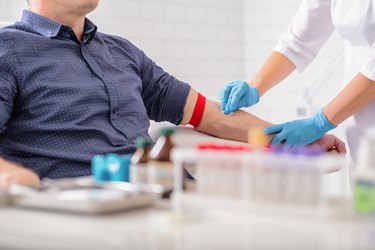
Thrombocytosis is a condition in which the circulating level of platelets, or thrombocytes, is chronically high. Thrombocytopenia, on the other hand, is defined by a chronically low level of platelets in the blood stream. According to a study published in the July 2010 issue of "Clinical Hemorheology and Microcirculation" by Sajad Ahmadizad and colleagues at Liverpool John Moores University in the U.K., great fluctuations in platelet levels naturally occur over the course of the day. Though such fluctuations occur within a healthy range, these conditions are defined by platelet levels consistently outside of this range.

Essential and Reactive Thrombocytosis

Essential, or primary, thrombocytosis is a chronic condition resulting from genetic or physiological abnormalities affecting the bone marrow or blood stream. In contrast, reactive, or secondary, thrombocytosis is a temporary condition that may arise from a variety of factors. According to Bernadette Rodak and colleagues in their 2007 book "Hematology: Clinical Principles and Applications," causes of reactive thrombocytosis include infections, excessive blood loss, inflammatory disorders, recovery from chemotherapy, steroid-based medications, an absent or underactive spleen, anemia and tissue damage. As a potential cause of tissue damage, excessive exercise may result in the development of reactive thrombocytosis.

Exercise and Reactive Thrombocytosis

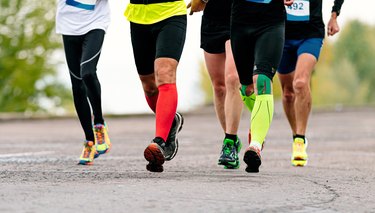
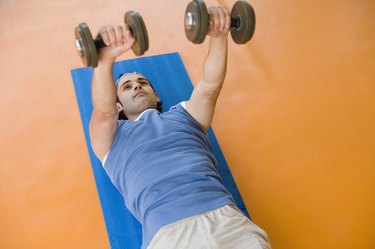
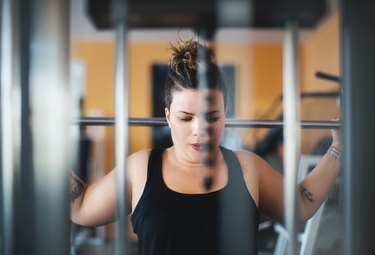
In a study published in the January 2010 issue of the "European Journal of Applied Physiology," Juha Hulmi and colleagues at the University of Jyväskylä found that single sessions of resistance exercise, such as weight-lifting, increase circulating platelet levels immediately after exercise. However, such changes are not lasting, with a 21-week resistance training program having no effect on baseline platelet levels. These researchers also found baseline platelet levels to be higher in younger adults, with exercise-induced increases becoming less pronounced with age. Despite coming to a similar conclusion, Eileen Peat and colleagues at the Royal Alexandra Hospital in Paisley, U.K. suggest that such short-term changes may be severe enough to temporarily increase the risk of heart attack or stroke among middle-aged adults. Their study, published in the October 2008 issue of the "British Journal of Sports Medicine," did not find physical fitness level to affect the risk of exercise-induced increases in platelet levels, with both professional soccer referees and relatively inactive adults at approximately equal risk.

Exercise and Reactive Thrombocytopenia

In a study involving patients undergoing chemotherapy published in the July 2009 issue of the "International Journal of Hematology," Thomas Elter of the University of Cologne, Germany and his colleagues weigh the costs and benefits of exercise in individuals with reactive thrombocytopenia. With severely reduced platelet levels, patients undergoing chemotherapy are traditionally warned against strenuous exercise due to the risk of bleeding or tissue damage. These researchers did not find exercise to present such a risk, instead finding it to improve the physical condition of the patients in the study. However, as exercise only temporarily increases platelet levels, it should not be viewed as a potential treatment for chronic thrombocytopenia.

Summary

Although exercise may temporarily increase platelet levels, it does not result in long-term changes. Despite having generally lower platelet levels than young adults, middle-aged and older adults may be at risk of having exercise-induced increases in platelet levels result in dangerous internal blood clots. As such risks affect both highly active and relatively inactive adults, consult your doctor before beginning an exercise regimen regardless of your current fitness level.

References

Article reviewed by Jessica Lyons Last updated on: Jan 31, 2011

Must see: Photo Galleries

Member Comments