
























































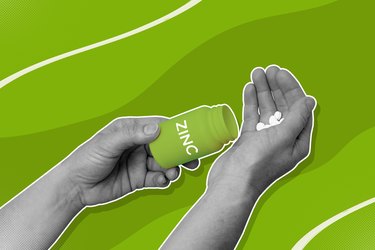






Your body needs small amounts of the essential mineral zinc to help maintain a variety of functions, including immune system health, blood clotting and reproduction. Dietary sources of zinc include red meat, cheese, poultry and shellfish. Your doctor may recommend adding a zinc supplement to your diet to help you get enough of this mineral. However, improper or excessive treatment with zinc supplements may cause severe overdose symptoms.
Cause
The daily recommended dose of zinc for adults is 8 to 12 mg. If you consume more than the tolerable upper intake of 40 mg of zinc for adults, you may be at risk of developing a zinc overdose. Consult your doctor immediately if you believe you have taken too much zinc to ensure you receive prompt and appropriate care.
Acute Overdose Symptoms
Acute zinc toxicity occurs if you take a large amount of this mineral over a short period of time, such as a few hours or days. Symptoms associated with acute zinc overdose include nausea, vomiting, severe abdominal pain and diarrhea. Typically, these symptoms of an acute zinc overdose develop within 30 minutes following zinc consumption. You may also feel unusually irritable, lethargic or dizzy. Taking too much zinc in a short period of time may also cause body pain, convulsions, chills, shortness of breath or jaundice. Without prompt and appropriate medical care, an acute overdose of zinc may be life-threatening.
Chronic Overdose Symptoms
Consuming more than 40 mg of zinc daily over the course of several weeks or months may cause chronic zinc toxicity. Chronic zinc overdose negatively affects the way your body metabolizes copper, which lowers your blood levels of copper. Consequently, you may experience overdose symptoms of recurrent infections due to poor immune function and anemia. A copper deficiency caused by chronic zinc overdose may also result in bone loss, diminished skin pigmentation and poor growth and development. Discuss these chronic zinc overdose symptoms with your doctor immediately if they arise.
Treatment
The initial form of treatment for a zinc overdose is the cessation of zinc supplementation. Your doctor may also give you water or milk to help flush excess amounts of zinc out of your body. In cases of acute zinc overdose, your doctor may perform a gastric lavage to remove zinc supplements from your stomach. During gastric lavage, your doctor will insert a tube through your nose or mouth that is passed into your stomach. This tube allows your doctor to clear any remaining zinc supplements out of your digestive tract.


Member Comments