
















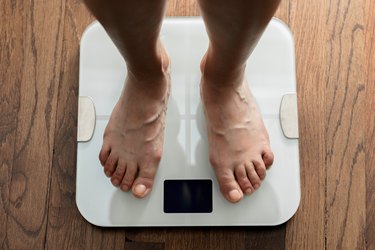























































The danger of losing weight too quickly may result from the way your body reacts to metabolizing high amounts of fat, or the calorie restrictions that typically produce rapid weight loss. Excessively fast weight loss may impair basic cognitive functioning and increase your risk for life threatening conditions. The National Digestive Diseases Information Clearinghouse suggests a maximum weight loss rate of 1 to 2 lbs. each week.
Starvation Diets
Losing weight too quickly may result from starvation diets, which drastically reduce the number of calories that you ingest. These diets may bring your calorie intake near or below the recommended daily minimum. According to MedlinePlus, a website from the National Institutes of Health, the lowest recommended intake is 1,200 and 1,550 daily calories for women and men, respectively. Diets that bring your total caloric intake below your basal metabolic rate are generally considered starvation diets. Prolonged starvation diets are dangerous, because they can cause keto-acidosis, which can lead to coma and death. Early signs of keto-acidosis may impair your basic cognitive functions. Symptoms may include extreme dizziness, light-headedness, confusion or restlessness.
Too Much Exercise
You may lose weight too quickly if you exercise excessively. This type of weight-loss strategy may bring your total caloric intake below your basal metabolic rate, and lead to keto-acidosis similar to starvation diets. Excessive exercise is also dangerous because overtraining does not provide sufficient recovery between each workout. Your body must work harder during each workout by supporting exercise recovery processes simultaneously. Overworking your body may bring your heart rate excessively high, and increase your risk of heat exhaustion. Early signs of heat exhaustion, which can impair basic cognitive functions, include dizziness, fatigue, cramps and headache. Heat exhaustion is dangerous because it can lead to heat stroke and death.
Fat Conservation
Losing weight too quickly may result in reducing muscle instead of fat. Your body prefers burning fat for most low-intensity and moderate physical activity throughout the day. Fat is also an important source of energy for neurological processes in your brain and nervous system. Fast weight-loss that results from bringing your total calorie intake below you basal metabolic rate may trigger fat conservation. Your body turns to alternate sources of energy and conserves as much fat as possible while in this metabolic mode. Excessively fast weight loss that triggers fat conservation is dangerous, because your body gets energy by eating away at your muscle tissue during this metabolic mode.
Metabolic Problems
You may develop metabolic problems by losing weight too quickly. Rapid weight loss occurs when your body metabolizes a lot of fat in shorter amounts of time. Metabolizing high amounts of fat may cause your liver to secrete extra cholesterol into your bile fluids. Cholesterol deposits may collect and harden your gallbladder, which forms pebble-like substances known as gallstones. Gallstones may be painful and prevent your bladder from emptying properly.
References
- Personal Fitness Trainer Manual; National Federation of Professional Trainers and Ron J. Clark; 2008
- Medline Plus: Tips For Losing Weight
- FamilyDoctor.org; What it Takes to Lose Weight; June 2004
- MayoClinic.com; Heat Exhaustion; Nov. 2009
- National Digestive Diseases Information Clearinghouse; Gallstones; July 2007


Member Comments