















































A vegetarian diet typically focuses on grains, vegetables, seeds, nuts and fruits as food sources. Vegetarians generally eliminate all meats from their diets, and some also limit or eliminate eggs and dairy products. Because these foods are staple protein sources in the standard American diet, some vegetarians worry that they do not obtain enough protein. However, several food sources can provide protein for vegetarians.
Recommendations
The daily requirement of protein is the same for vegetarians as it is for omnivores. Vegetarians should aim to consume 0.36 g or protein per pound of body weight, according to the Vegetarian Resource Group. For example, a 125-lb. person should consume about 45 g of protein per day.
Role of Protein
Proteins are amino acid chains that serve several important functions for omnivores and vegetarians alike. They supply energy for physical activity and cognitive function. Proteins are also necessary for the repair and regeneration of healthy organ, bone, muscle and connective tissue cells. This nutrient is also necessary for proper development and growth during childhood and adolescence.
Animal-Based Protein Sources
Vegetarians who only eliminate meats from their diets can still obtain protein from animal sources. Eggs, which are included in ovo-lacto vegetarian diets, are rich sources of protein; a large egg provides about 6.28 g of this nutrient. Dairy products are also abundant sources of protein for ovo-lacto vegetarians. A cup of skim milk provides about 9.67 g of protein, and a 1-oz. serving of part-skim mozzarella cheese contains about 6.88 g.
Plant-Based Sources
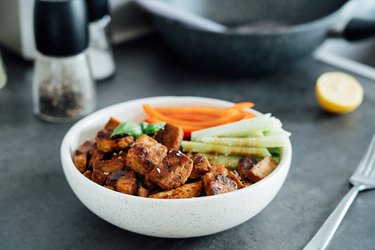
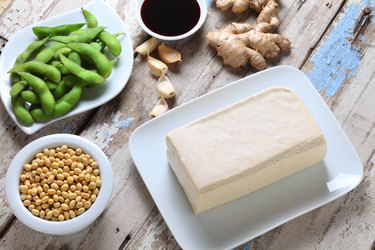
Vegetarians can also obtain protein from non-animal food sources. This is particularly important for vegetarians who do not consume dairy products or eggs. Meat replacements are abundant sources of lean protein. Seitan, a gluten-based meat replacement, contains about 22.1 g of protein per 3-oz. serving. Tofu is also a high-protein meat replacement -- a 4-oz serving contains about 10.6 g of protein. Other high-protein plant foods include black beans, kidney beans, chickpeas, soy milk, spinach, almonds and peanut butter.


Member Comments