The terms "lean body mass" and "fat-free mass" are used to describe body composition. Although they may be used interchangeably, they are not the same. Lean body mass includes fat that acts as fuel for energy production and other processes that are part of normal metabolism. On the other hand, fat-free mass does not include any fat.
Lean Body Mass
Video of the Day
Lean body mass includes the combined weight of the internal organs, bones, muscles, water ligaments and tendons. Included in this mass is the weight of the essential fat in the organs, central nervous system, and bone marrow. The weight of nonessential or storage fat, which is present in the subcutaneous adipose tissue underlying the skin and also surrounds internal organs, is not a constituent of lean body mass.
Video of the Day
Fat-Free Body Mass
To obtain the fat-free mass, the weight of the essential fat is subtracted from lean body mass, according to professor of kinesiology Dr. Sue Beckham at the University of Texas at Arlington. Essential fat cannot be differentiated from storage fat. Estimates vary, but there is about a 2 to 3 percent difference between lean body mass and fat-free mass in males and a 5 to 12 percent difference in females.
Body Composition Data
What percentage of the body is fat mass and what is fat-free mass is what assessing body composition is chiefly concerned with. This information can be used in a number different ways. It can help in assessing overall health and risk for some chronic diseases, providing nutritional counseling, designing and monitoring the efficacy of exercise and treatment programs for weight problems, tracking the progress of athletes, and monitoring the growth and development of children.
Measuring Body Composition
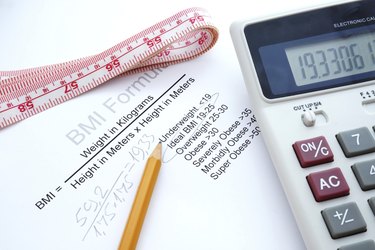
Those who are interested in health and fitness want to know what their fat levels are. Simpler and less expensive methods of determining body composition include using skinfold calipers; Body Mass Index or BMI, based on height and weight calculations; waist circumference; waist to hip ratio. Hydrostatic or underwater weighing is a more complicated, lab-method based on body density. This method may not be readily available or affordable, though it is considered reliable.