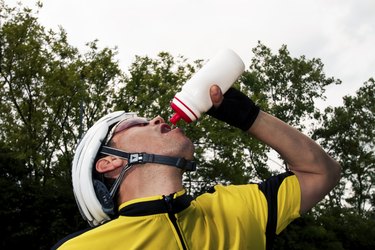
Vigorous exercise helps promote heart health, weight loss and overall fitness, but it can also make you sweat one to three quarts of fluid during intense workouts. Although sweating is your body's way to help keep its core temperature cool, it can lead to the loss of important minerals, dehydration and heat stroke. Isotonic drinks replace those nutrients and fluids quickly, helping to prevent exercise-related injuries and illness.
Identification
Video of the Day
Sports drinks are classified three ways: isotonic, hypotonic and hypertonic, depending upon the amount of carbohydrates they contain. Isotonic fluids have six to eight percent carbohydrates, including glucose -- your body's preferred energy source for exercise. Isotonic drinks have an osmolality of 280 to 330 mOsm/kg, a measure of the number particles of carbohydrates, electrolytes, sweeteners and preservatives in a fluid. The osmolality rating of isotonic drinks best approximates that of your body's natural fluid balance, which is one reason why these drinks are so popular among runners and other endurance athletes.
Video of the Day
Electrolytes
Electrolytes are essential minerals that help maintain the acid-base balance in your body's cells of sodium, potassium, calcium, magnesium, chloride, bicarbonate, phosphate and sulphate. A study from the Netherlands, published in 1998 in the "International Journal of Sports Medicine," compared the effects of a caffeinated soft drink, a low-sodium mineral water and an isotonic carbohydrate-electrolyte solution on elite cyclists. Subjects given the isotonic drink retained more sodium, magnesium and calcium in their bodies -- enough to compensate for urinary and sweating losses.
Glucose
The carbohydrates glycogen, which is converted to glucose and stored in your liver/muscles, requires less oxygen to be burned for fuel than protein or fat. In a typical male athlete, for example, the liver stores 90 g of glycogen and the muscles store 400 g. During hard exercise, carbohydrate stores can be depleted at a rate of three to four grams per minute, which can almost exhaust your body's supplies in exercise sustained at two hours or more. It would ordinarily take 24 to 48 hours for your body to naturally replenish those supplies, but an isotonic drink can return the glycogen balance to your body much more quickly.
Hydration
It would seem logical to consume water during exercise when you're sweating, but water can cause bloating -- and it doesn't contain carbohydrate or electrolytes. The higher the carbohydrate level in a drink, the slower the rate of stomach emptying. Isotonic drinks empty from the stomach at a rate similar to water, reducing urine output and encouraging fluid retention to prevent dehydration.
Endurance
Researchers at the University of Edinburgh measured the effects of isotonic sports drinks on young athletes during exercise who consumed the drinks before and during games. The results, published in the "European Journal of Applied Physiology" in 1990, found that the isotonic hydration allowed the athletes to continue high-intensity, stop-start activity up to 24 percent longer than those who drank a placebo solution.
- Brian Mac Nutrition Coach: Sports Drinks
- “European Journal of Applied Physiology”; Ingesting a 6% Carbohydrate-Electrolyte Solution Improves Endurance Capacity, but Not Sprint Performance, During Intermittent, High-Intensity Shuttle Running in Adolescent Team Games Players Aged 12–14 Years; Shaun M. Phillips; February 2010
- BBC News: Make Your Own Sports Drink
- “International Journal of Sports Medicine”; The Effect of Different Rehydration Drinks on Post-Exercise Electrolyte Excretion in Trained Athletes; F. Brouns; January 1990
- American Sport Education Program; Playing Hot: Heat Illness in Sports; E. Paul Roetert, et al.; 2001