


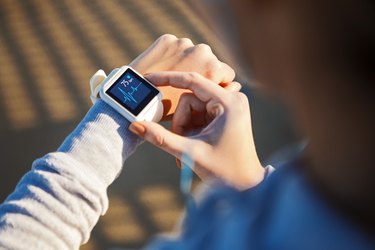























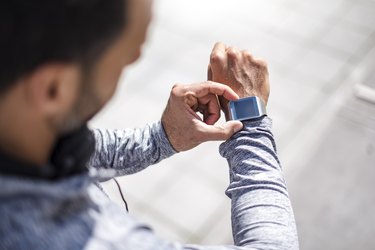





































Monitoring your heart rate during exercise can be helpful in understanding how strenuous your physical activity must be to achieve your target heart rate. This understanding of heart rate will also assist you with losing weight and strengthening your heart as calories are burned during your workout. Many different heart rate monitors are available on the market, including those with a wristwatch deign and those without.
Definition
Heart rate monitors are devices that you can incorporate into your workout to help monitor your pulse rate, usually via a sensor or group of sensors directly applied to a pulse point on your skin. These monitors provide instant feedback as to how hard or how fast your heart is working during exercise and can help you track your target heart rate effectively. Common types of heart rate monitor sensors include those with a wrist watch design or those with a chest strap.
Chest Strap
One alternative design of heart rate monitors without watches include those with only a chest strap. These chest strap designs include an electronic read-out screen on the strap that provides feedback on how fast your heart is working during strenuous activity. Placement of the chest strap is usually just below your pectoral line and wrapped around your body in a tight, yet comfortable, fit. Sensors along the underside of the strap track your heartbeat through your chest and send information to the strap's LED display.
Considerations
While there are a few chest-strap-only heart rate monitors available on the market, this design may be difficult to read or use in determining your current heart rate; you may have difficulty reading whatever the LED display says during exercise. As such, most heart rate monitors come equipped with a convenient wristwatch sensor display that will allow you to read and track your progress. The chest strap in this case will send signals to the wristwatch, which then displays an electronic reading on the watch's display.
Benefits
Tracking your heart rate during exercise will also assist you in determining how much exertion should be applied to a particular exercise to achieve your fitness goals. Always speak to a personal trainer or your doctor prior to beginning a new cardiovascular exercise to determine what your target heart rate should be when exercising, and how a new activity can help you achieve your goals.


Member Comments