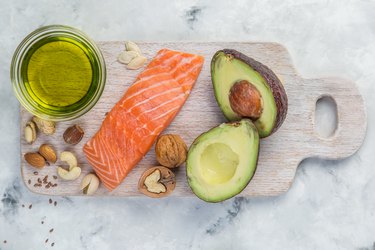
Omega-3 fatty acids are a type of fatty acid found in various foods. Unlike saturated fats, omega-3 fatty acids are healthy fats that have been linked to a variety of health benefits. They're known to be found in marine animals, like salmon and shellfish, but several fruits and vegetables, including avocados and seaweed, also contain these healthy nutrients.
Video of the Day
Video of the Day
Omega-3 Fatty Acids
Omega-3 fatty acids are healthy fats that are naturally present in many foods and are also available in the form of supplements. They can help with the prevention and treatment of certain diseases. You'll find different types of omega-3 fatty acids in different foods, and there are three main types: α-linolenic acid (ALA), docosahexaenoic acid (DHA) and eicosapentaenoic acid (EPA).
ALA is commonly found in fruits and vegetables, while DHA and EPA are most easily obtained through marine plants and animals, particularly fish and shellfish. DHA and EPA have been linked to various health benefits. They have been used to help treat cancer, cardiovascular issues, diabetes, digestive system disorders, eye diseases, neuropsychological issues, respiratory conditions and rheumatological disorders. However, DHA and EPA are only thought to be clinically useful in fairly high amounts. For this reason, these two omega-3 fatty acids are typically thought to be more desirable than ALA. Although ALA is processed into DHA and EPA when you eat foods that contain it, only very small amounts are converted.
Salmon and Omega-3s
Marine animals and plants have high levels of omega-3 fatty acids. Fatty fish, like salmon, are particularly rich in omega-3. According to the American Heart Association, you should eat a serving (3.5 ounces, or about 100 grams) of fatty fish at least twice a week. One serving of salmon contains a tiny bit of ALA (0.047 grams), almost half a gram of DHA (0.47 g) and 0.25 g of EPA. Fatty, protein-rich fish like salmon are also known for being excellent sources of several B-complex vitamins, copper, phosphorus, potassium and selenium.
Avocado and Omega-3s
Vegetables and fruits like avocado contain a fatty acid called ALA. The National Institutes of Health recommends between 0.5 and 1.6 g of ALA per day, based on age and gender. Eating avocados benefits your health, but you should keep in mind that avocado nutrition values differ between types — there are hundreds of different of types of avocados. In general, avocados are rich in fiber, B-complex vitamins, vitamin C, vitamin E, vitamin K and potassium.
Two of the most popular types of avocados are the California (or Hass) and Florida varieties. These two types of avocados are different sizes and, consequently, have different nutrient and fat contents. There are 21 grams of fat in the average California avocado, while a whole Florida avocado contains 30.6 grams of fat. According to the California Avocado Commission, serving sizes for avocados are about 50 grams. This brings the fat content of California avocados to 7.6 grams per serving and that of Florida avocados to about 5 grams per serving. According to the United States Department of Agriculture, avocados have no naturally occurring EPA or DHA. However, they do contain ALA. Despite these differences, both types contain just over half a gram of ALA per serving.
Read more: 8 Cool Things You Can Do With Avocados
Avocado vs. Salmon for Omega-3 Levels
In short, salmon is a much better source of omega-3 fatty acids than avocados. However, both are healthy foods that contain different nutrients. If you're keen to obtain omega-3 fatty acids, salmon is a better option compared to avocados. This isn't to say avocados are bad, though — they simply contain different nutrients and types of fat. If you're looking to supplement your diet with vegan or vegetarian sources of DHA and EPA, you do have options. Marine plants, like seaweed, and nuts and seeds are good sources of EPA. Eggs and milk products also contain EPA as well as DHA.
- American Heart Association: Fish and Omega-3 Fatty Acids
- University of Maryland Medical Center: Omega-3 Fatty Acids
- NIH: Fatty Acids Omega 3
- PubMed: Hass Avocado Composition and Potential Health Effects
- PubMed: Avocado Consumption Is Associated With Better Diet Quality and Nutrient Intake, and Lower Metabolic Syndrome Risk in U.S. Adults
- American Journal of Clinical Nutrition: Avocado Consumption and Risk Factors for Heart Disease: A Systematic Review and Meta-Analysis
- Annals of Clinical Psychiatry: Omega-3 Fatty Acids in Psychiatry: A Review
- Journal of the American College of Nutrition: Omega-3 Fatty Acids in Inflammation and Autoimmune Diseases
- DHA EPA Omega 3 Institute: Dietary Sources of Omega-3 Fatty Acids
- USDA National Nutrient Database: Fish, Salmon, Sockeye, Raw
- University of California Agriculture and Natural Resources: Avocado Varieties
- California Avocado Commission: Avocado Serving Size Update