




















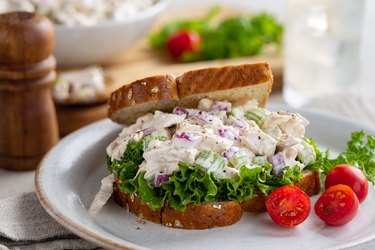

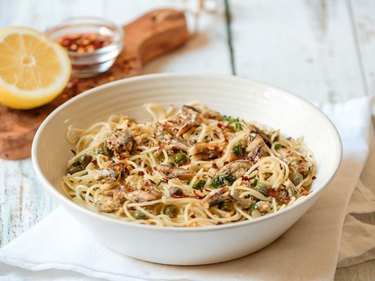


Crab salad, typically a mixture of crab meat, olives, celery, scallions, lemon juice and mayonnaise -- although recipes vary greatly -- is considered a homestyle dish commonly served as a topping to a bed of lettuce or a hearty sandwich filling. While quite high in calories and fat, crab salad provides high quality protein and many vitamins and minerals.
Basic Nutrition
A 7.8-oz. serving of crab salad contains 298.5 calories as well as 16 g of fat. You can cut down on the fat in this salad significantly by using low fat or nonfat varieties of mayonnaise or replacing the mayonnaise with nonfat yogurt or reduced fat sour cream; nonfat mayonnaise adds no fat to the recipe, while reduced fat sour cream provides 3 g of fat per 2-tbsp. serving. One serving of crab salad also has 12.6 g of carbohydrates and 26.2 g of protein. Protein intake from seafood may correlate to the incidence of gout. Study participants -- middle-aged, Chinese men -- showed a higher risk of gout according to research published in the January 2011 issue of the journal "Nutrition, Metabolism, and Cardiovascular Diseases." More research is needed to determine if this finding translates to other genders and ethnic backgrounds.
Fiber
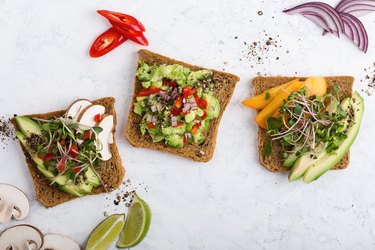
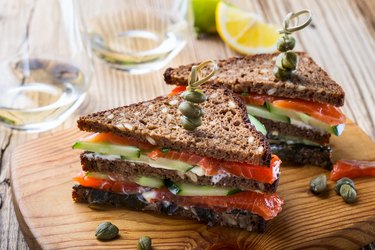
Eating crab salad gives you access to 2 g of fiber, although you need 25 to 38 g of fiber per day if you eat a 2,000-calorie diet. You can increase your fiber intake by eating crab salad on a bed of lettuce. Using crab salad as a sandwich filling on whole grain bread also boosts your fiber consumption.
Minerals
Eat a serving of crab salad, and you satisfy your entire daily need for selenium, a mineral that plays a critical role in producing antioxidants based on a 2,000-calorie diet. You also take in 54 to 75 percent of the daily recommended intake of zinc as well as 30.8 percent of the phosphorus you require each day. Additionally, a serving of crab salad serves up 15 percent of the potassium and 3 percent of the magnesium your body needs.
Vitamins
Crab salad is an excellent source of vitamin B-12, which satisfies 500 percent of the daily recommended intake. The vitamin B-12 in crab salad keeps your nerves healthy. Each serving also provides 25 to 28.5 percent of the niacin and 18.8 to 24.6 percent of the vitamin A you need each day. You'll also get 16 percent of the recommended folate -- add crab salad to your diet if you are pregnant to help you boost this vital nutrient that may prevent some types of birth defects.
Health Considerations
Avoid eating crab salad if you have a heart condition or hypertension -- one serving has 985.6 mg of sodium, a considerable portion of the suggested amount for daily consumption. Healthy people can consume up to 2,300 mg of sodium per day, although the American Heart Association suggests limiting your sodium intake to 1,500 mg whether your are healthy or have underlying medical conditions. You also take in 93.7 mg of cholesterol in a portion of crab salad; limit your consumption of dietary cholesterol to 300 mg per day.
References
- Food.com; Grandma Anita's Famous Crab Salad; Feb. 7, 2011
- "Nutrition, Metabolism, and Cardiovascular Diseases"; Purine-Rich Foods, Protein Intake, and the Prevalence...; R. Villegas, et al.; January 2011
- MayoClinic.com; Dietary Fiber: Essential For a Healthy Diet; November 2009
- MedlinePlus; Selenium in Diet; Linda Vorvick, et al.; Mar. 7, 2009
- MayoClinic.com; Vitamin B12; Dec. 1, 2010
- U.S. Centers for Disease Control and Prevention; Americans Consume Too Much Sodium; February 2011


Member Comments