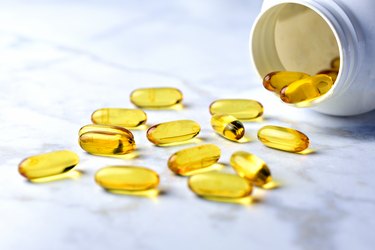
B100 complex vitamins are nutrients that help your body convert calories into energy. They are also important for vision, normal appetite, and healthy skin, hair and nails. In addition, they play a role in the formation of red blood cells and the functioning of the nervous system. Vitamin B100 complex supplements contain B1 (thiamine), B2 (riboflavin), B3 (niacin), B5 (pantothenic acid), B6 (pyridoxine), B7 (biotin) B9 (folic acid) and B12 (cobalamin).
B100 complex vitamins contain most of the B vitamins in doses of 100 milligrams, except for a few B vitamins that you need in much smaller doses. The 100-milligram dosage is much higher than the recommended daily value. However, because B vitamins are not stored in the body's fat tissues the way some vitamins are, B-vitamin toxicity is not generally an issue.
Video of the Day
Video of the Day
Increase Energy and Improve Mood
Because B100 complex vitamins help convert the food you eat into usable energy, they may also be effective in increasing energy levels. A study published in "Psychopharmacology" in 2010 found that there was significant improvement in the mental health of male participants after 33 days of supplementation with a B-complex vitamin, along with vitamin C and a mineral supplement. Subjects reported increased vigor and overall improvements in mood, as well as reductions in stress levels.
Reduce Stress Levels
Many B-complex vitamins are sold under the name "B-stress" for their perceived ability to decrease stress levels. A study published in 2011 in "Human Psychopharmacology" tested whether a high-dose B complex vitamin could decrease the psychological strain associated with chronic work stress. The double-blind, randomized, placebo-controlled trial was conducted over a three-month period.
Healthy Hair, Skin and Nails
B100 complex vitamins are important for healthy hair, skin and nails. According to the California Nutrition and Physical Activity Guidelines for Adolescents, one B vitamin, either folate or folic acid, when taken daily can help promote glowing skin, shiny hair and strong, healthy nails. Folate is required in smaller amounts than other B vitamins, with a daily recommendation of 400 micrograms. Biotin is another B vitamin that is particularly important for maintaining healthy hair, skin and nails. MedlinePlus notes that biotin is used to treat brittle nails, hair loss and skin rashes.
Nerve and Blood Cell Health
B12 is one component of a B100 complex vitamin that plays a particularly important role in the health of nerve cells and blood cells. B12 also helps make genetic material in cells, called DNA.
Avoid Vitamin Deficiencies
Insufficient vitamin-B intake can lead to a variety of diseases and conditions. MedlinePlus notes that insufficient levels of B12 or B6 can cause anemia. B12 deficiencies can also cause nerve problems, leading to numbness or tingling in hands and feet. Deficiencies of biotin can lead to fatigue, loss of appetite, depression, anemia and heart abnormalities. Folate deficiencies can lead to impaired growth, anemia and diarrhea, and insufficient niacin can cause nausea, skin problems and cramps. Taking a B100 complex will ensure that your body has an abundance of each B vitamin.
- MedlinePlus: B Vitamins
- Colorado State University Extension: Water-Soluble Vitamins: B-Complex and Vitamin C
- Psychopharmacology: Effects of High-Dose B Vitamin Complex with Vitamin C and Minerals on Subjective Mood and Performance in Healthy Males
- Human Psychopharmacology: The Effect of 90-Day Administration of a High Dose Vitamin-B Complex on Work Stress
- California Nutrition and Physical Activity Guidelines: Folic Acid Is a B Vitamin Your Body Needs Every Day
- MedlinePlus: Biotin
- National Institutes of Health: Vitamin B12