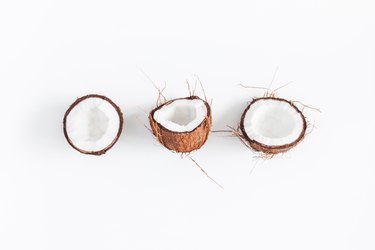
Given how difficult it is to crack open a coconut, eating raw coconut meat isn't too common — you're more likely to find commercially prepared products, like coconut water or coconut cream, in grocery stores. However, raw coconut is just as good for you as any other form of coconut. In many ways, eating raw coconut is even better as it's full of fiber, vitamins and minerals.
Video of the Day
Video of the Day
Obtaining Raw Coconut Meat
Raw coconut meat, especially young coconut meat, is delicious and nutritious. Raw coconut is also easy to integrate into other foods; you'll often find it served alongside desserts or as a garnish for dishes like curries.
The type of coconut meat you choose can make a difference in its nutrition, texture and flavor, though. Older coconut meat is thicker and crunchier, while young coconut meat is softer and more tender.
Young coconut meat comes from green coconuts, which aren't fully mature. This means that their outside shell is less firm and easier to cut open, making the fresh, raw meat simpler to acquire when you're dealing with a whole coconut.
If you're keen on eating raw coconut but don't have access to whole coconuts, you might also be able to find raw coconut in the refrigerated section of certain supermarkets. Sun-dried coconut, which is typically considered a raw food, is often easier to find as it doesn't need to be refrigerated.
Coconut Meat Nutrition Facts
Raw coconut meat is packed with vitamins and minerals. In every serving or 100 grams (3.5 ounces) of raw coconut meat, you can find:
- 48 percent of the daily value (DV) for copper
- 14 percent of the DV for iron
- 8 percent of the DV for magnesium
- 65 percent of the DV for manganese
- 9 percent of the DV for phosphorus
- 8 percent of the DV for potassium
- 18 percent of the DV for selenium
- 10 percent of the DV for zinc
- 6 percent of the DV for vitamin B1 (thiamin)
- 6 percent of the DV for vitamin B5
- 7 percent of the DV for vitamin B9 (folate)
Raw coconut calories per 100 grams total 354 or 18 percent of a 2,000-calorie diet. There are also 3.3 grams of protein in coconut per serving, making this a good source of plant-based protein.
Coconut meat is rich in fat, with 33.5 grams (52 percent of the DV). Many of these fats are healthy, monounsaturated and polyunsaturated fats, like omega-6 fatty acids. However, the majority of the fat in coconut (29.7 grams of its total fat content) is saturated fat.
Despite being rich in saturated fat and fairly high in calories, raw coconut is low in carbohydrates. It has only 5 percent of the DV or 15 grams of carbohydrates, about half of which are fiber. It also has small amounts (between 1 and 4 percent) of other nutrients, like other B-complex vitamins, vitamin C, choline and calcium.
Raw Coconut’s Benefits
Coconut is beneficial, even beyond the variety of nutrients it provides. For example, coconut:
- Can help to lower cholesterol.
- Doesn't seem to negatively affect cardiovascular health, despite its saturated fat content. According to a few studies, including a 2014 study in the Journal of Brain, Behavior and Immunity, a 2015 study in the Ceylon Medical Journal and a 2016 article in Nutrition Reviews, the saturated fat content in coconut is not comparable to the unhealthy saturated fats found in animal products.
- Is considered to have anti-diabetes activity.
- Is rich in antioxidants and other beneficial compounds.
- Is good for people on ketogenic diets: The high fat content and high nutrient value of coconut make it an ideal plant-based food for people following low-carbohydrate diets like the ketogenic diet. It's also naturally sweet but still low in carbohydrates — which you won't find in many foods that have low carbohydrate contents.
- May have compounds that can help prevent or treat Alzheimer's disease.
The main downside of eating raw coconut is its fat content. Even though the fats in coconut are considered to be fairly healthy, if you're on a low-fat diet or are trying to minimize your saturated fat consumption, you may want to avoid consuming a lot of coconut. According to the American Heart Association, excessive consumption of coconut can be bad for you.
Alternatively, if you're concerned about the fat content of coconut but still want to eat its meat, you should try to obtain your meat from younger coconuts. Younger coconuts have less fat than older, fully ripened ones.
Read more: Curious About Keto? Start With These 10 Recipes
Fresh Coconut vs. Dried Coconut
Dried coconut might not always be a raw food product, but sun-dried coconut, which typically has no additives or preservatives, often is. However, you should be aware that sun-dried coconut isn't the same as fresh coconut from a nutritional perspective.
In the same serving size (100 grams or 3.5 ounces), you'll find that dried coconut is usually a more concentrated source of nutrients because of the lack of moisture, which adds weight and bulk to the fresh raw coconut. This means that 100 grams of dried coconut has:
- 88 percent of the DV for copper
- 18 percent of the DV for iron
- 21 percent of the DV for magnesium
- 119 percent of the DV for manganese
- 16 percent of the DV for phosphorus
- 12 percent of the DV for potassium
- 34 percent of the DV for selenium
- 18 percent of the DV for zinc
- 6 percent of the DV for vitamin B1 (thiamin)
- 8 percent of the DV for vitamin B2 (riboflavin)
- 16 percent of the DV for vitamin B5
The only vitamin that dried coconut meat has notably less of is folate. Only 2 percent of the DV for this vitamin is supplied per 100 grams, compared to 7 percent in fresh coconut meat.
Dried coconut calorie content is nearly double that of fresh coconut at a total of 660 calories in every 100 grams. As you might imagine, dried coconut also has more protein, fat and carbohydrates.
There are 6.9 grams of protein, 64.5 grams of fat and 23.7 grams of carbohydrates per 100 grams of dried coconut. That's about twice the amount of protein and fat contained in fresh, raw coconut. This means that while you can probably consume 100 grams of fresh, raw coconut in a day, you should consume less of the sun-dried version.
- International Journal of Food Properties: Phenolic Compounds, Antioxidant Activity, and Medium Chain Fatty Acids Profiles of Coconut Water and Meat at Different Maturity Stages
- American Heart Association: Saturated Fats: Why All the Hubbub Over Coconuts?
- British Journal of Nutrition: The Role of Dietary Coconut for the Prevention and Treatment of Alzheimer’s Disease: Potential Mechanisms of Action
- Nutrition Reviews: Coconut Oil Consumption and Cardiovascular Risk Factors in Humans
- Ceylon Medical Journal: An Ecological Study for Sri Lanka About Health Effects of Coconut
- Brain, Behavior, and Immunity: The Effects of Dietary Saturated Fat on Basal Hypothalamic Neuroinflammation in Rats
- MyFoodData: Nutrition Comparison of Nuts Coconut Meat Raw and Dried Coconut (Unsweetened)