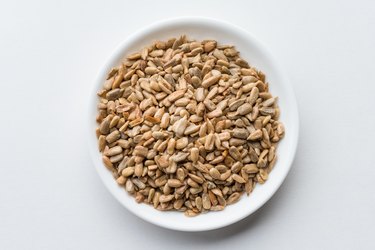
With their big, bright, yellow bloom, the mighty sunflower can turn open fields into works of art. But beyond their appeal to the eye, sunflowers have edible seeds that are full of essential nutrients your body needs to function. With a variety of ways to enjoy them, there are so many benefits of sunflower seeds to take advantage of.
Tip
Sunflower seeds are rich in nutrients that support health, including fiber, vitamin E, selenium and B vitamins. Enjoy unsalted, shelled sunflower seeds to get the benefits without excess sodium.
Video of the Day
What Are Sunflower Seeds?
You may be surprised to learn that sunflower seeds aren't actually seeds, at least from a botanical point of view, according to Palomar College. Because the seed develops from a flower, it's technically considered a fruit. The seed itself is called a kernel.
Video of the Day
The sunflower seeds you eat are small in size and are usually sold roasted in their black and white shells, but you can also buy them raw. Sunflower seeds have a nutty flavor and a crunchy, yet tender texture. Plus, they're full of nutrients.
Sunflower Seeds Nutrition
Sunflower seeds have high nutrient value. According to the USDA, a 1-ounce serving of shelled, dry-roasted sunflower seeds will give you:
- Calories: 165
- Total fat: 14 g
- Saturated fat: 1.5 g
- Trans fat: 0 g
- Cholesterol: 0 mg
- Sodium: 0.9 mg
- Total carbs: 6.8 g
- Dietary fiber: 3 g
- Sugar: 0.8 g
- Protein: 5.5 g
Tip
While the seeds are high in fat, most of the fat comes from heart-healthy monounsaturated and polyunsaturated fats.
Most of the fat in your diet should come from these sources of healthy fat, according to the American Heart Association.
Sunflower Seeds Calories and Macros
- Total fat: One ounce of sunflower seeds has 14 grams of total fat, which includes 1.5 grams of saturated fat and 0 grams of trans fat.
- Carbohydrates: One ounce of sunflower seeds has 6.8 grams of carbs, which includes 3 grams of fiber and 0.8 grams of sugar.
- Protein: One ounce of sunflower seeds has 5.5 grams of protein.
Sunflower Seeds Vitamins, Minerals and Other Micronutrients
On top of a good dose of protein and healthy fat, a 1-ounce serving of sunflower seeds offers:
- Copper: 58% of the Daily Value (DV)
- Vitamin E: 49% DV
- Selenium: 41% DV
- Vitamin B5: 40%
- Phosphorus: 26% DV
- Manganese: 26% DV
A serving of sunflower seeds also meets more than 10 percent of the DV for several of the B vitamins, including folate, niacin, and vitamin B6.
5 Health Benefits of Sunflower Seeds
Even if you just eat one serving per day, there are so many benefits of sunflower seeds for your health. Check some of them out below.
1. They Contain Vitamin E
While it's rare to be deficient in vitamin E, Americans may not be getting enough of this essential nutrient in their diet, according to the Office of Dietary Supplements (ODS).
Vitamin E is used in the body for immune system support and regulating gene expression. The fat-soluble vitamin has also been linked to protection against heart disease.
But, vitamin E is best known for its antioxidant power. It helps fight free radical damage to your cells and may help protect you from chronic illnesses, per the ODS.
The recommended dietary allowance (RDA) for vitamin E for adults is 15 milligrams per day. One ounce of sunflower seeds has 7.4 milligrams of vitamin E, meeting nearly half your daily needs, according to the USDA.
2. They're High in Selenium
Selenium is an essential nutrient that your body can't make on its own and must come from outside sources, including food or supplements, per the ODS. This tiny nutrient is needed for reproduction, the formation of DNA and thyroid hormone metabolism.
Like vitamin E, selenium is also a powerful antioxidant, so it aids in protecting your cells from free radical damage and the onset of chronic disease, per the ODS.
The RDA for selenium is 55 micrograms for adults. A 1-ounce serving of sunflower seeds offers 22.5 micrograms, which is almost half of your daily needs.
3. They Offer Important B Vitamins
The B complex vitamins are a group of eight water-soluble vitamins that play a vital role in many body functions, including turning the food you eat into energy, according to the National Library of Medicine. They also keep your skin, nervous system and eyes healthy. Your body can't store B vitamins, which means they need to be a regular part of your daily diet to keep your body running at its best.
Sunflower seeds are an especially good source of folate and vitamin B6. Both of these vitamins are needed for the metabolism of protein and the production of red blood cells, per Colorado State University.
Sunflower seeds are also an exceptionally good source of vitamin B5, which is more often referred to as pantothenic acid. Adults need 5 milligrams of this essential vitamin every day, and 1 ounce of sunflower seeds gives you 2 milligrams.
4. They May Support Digestion
One nutrient many Americans are not getting enough of is fiber. It's estimated that Americans eat about 10 to 15 grams of fiber per day, but we need anywhere from 25 to 38 grams, depending on age and sex at birth, according to Harvard Health Publishing.
Fiber is a type of carb your body can't digest, and it passes through your stomach, small intestines and colon relatively intact. It aids digestion by adding bulk to your stool, making it easier to pass. Fiber also helps keep your digestive system in good shape by clearing out the waste.
Meeting your daily fiber needs may also protect you from conditions that affect your digestive system, including hemorrhoids, diverticular disease and colon cancer, per the Mayo Clinic. But that's not all: Getting more fiber may help lower your cholesterol level, protect against heart disease and help you maintain a healthy weight.
One ounce of sunflower seeds will give you around 3 grams of fiber, meeting 8 to 15 percent of the recommended needs.
Tip
When adding more fiber-rich foods to your diet, like sunflower seeds, be sure to take it slowly and drink plenty of water.
As mentioned, fiber goes through your digestive system intact, and adding too much fiber too soon may overwork your system and lead to belly pain, gas or constipation.
5. They're Linked to Healthier Blood Sugar and Cholesterol
If you have diabetes, what you eat — or don't eat — is a major part of managing the condition. Nuts and seeds are considered a nutritious food option for people with diabetes, according to the American Diabetes Association.
Eating a 1-ounce serving of sunflower seeds improved blood sugar and raised HDL cholesterol (that's the good one) in postmenopausal people according to a 2016 study in the Journal of Chemical and Pharmaceutical Research.
Can Sunflower Seeds Help You Lose Weight?
There's no magic food, not even sunflower seeds, that will make you lose weight if you start eating it. That said, nutrient-rich choices like sunflower seeds may support your weight loss efforts.
To lose weight, you need to pay attention to how many calories you eat as well as where those calories come from. Supplying your body with all of the vitamins, minerals and other nutrients it needs from a wide variety of foods ensures your body — including your calorie-burning metabolism — functions at its best.
A well-balanced diet includes many foods from each of these food groups:
- Fruits and vegetables, such as broccoli and citrus fruits
- Whole grains, such as brown rice, whole-wheat bread, oats and quinoa
- Lean proteins, such as poultry, fish, red meat and legumes
- Healthy fats, such as sunflower seeds, chia seeds, nut butters and olive oil
Fiber and Protein
Adding more fiber to your diet may support weight loss, according to a February 2015 study in Annals of Internal Medicine. It helps regulate your digestion and keeps you full for longer, which may influence your weight.
It's not just the fiber that can keep your hunger pangs away, but the protein, too. The satiating power of protein is due to the multiple effects it has on your metabolic pathways, including hormones and amino acids that send signals to your brain that you're full, according to a May 2015 review in Advanced Nutrition.
Eating a small, one-ounce serving of sunflower seeds is a great way to get more of these satiating nutrients in your diet and support weight management.
Warning
Keep in mind that even though they're nutritious, sunflower seeds are high in calories.
An ounce of sunflower seeds has 165 calories, so be mindful of your portions if you're trying to lose weight.
The Sunflower Seed Diet
The sunflower seed diet is one of many crash diets rumored to help you lose weight rapidly by severely limiting your daily calories.
The problem with crash diets is that they do not provide adequate nutrition and are not sustainable. You would quickly regain the weight you lose unless you change your overall lifestyle.
Strictly limiting your calories for a short period of time may cause weight loss, but it can be dangerous, possibly leading to organ failure and even death. Crash diets such as the sunflower seed diet are not recommended.
Sunflower Seeds for Men
There may be unique benefits of sunflower seeds for people assigned male at birth (AMAB).
Sunflower seeds are high in zinc, which people AMAB need more of. Zinc is a mineral that's involved in sperm cell development and motility, according to an April 2018 review in the Journal of Reproduction and Infertility. The researchers suggest that getting enough zinc may prevent or treat infertility in these individuals.
The RDA of zinc for adults is 11 milligrams per day for people AMAB and 8 milligrams per day for people assigned female at birth (AFAB), according to the Harvard T.H. Chan School of Public Health.
A 1-ounce serving of sunflower seeds gives you 14 percent of your daily needs for zinc.
Risks
Sunflower seeds certainly make a healthy addition to your diet, but there are certain things you need to be aware of when adding these nutritional nuggets to the menu.
They're Calorie Dense
Sunflower seeds may be an excellent source of healthy fats, but those fats make the seeds a very concentrated source of calories. While you may enjoy snacking on the flavorful seed, eating too many may tip your calorie scale in the wrong direction and lead to weight gain. To keep calories in check, don't snack out of the bag. Instead, measure the 1/4 serving and put your seeds in a bowl for snacking.
They're a Potential Allergen
Sunflower seeds aren't a common food allergy, but allergic reactions to the kernel have occurred.
If you develop hives, tingling in your mouth or an itchy throat after snacking on your bowl of sunflower seeds, then you may have an allergy, per the Mayo Clinic. Stop eating right away and call your doctor for an evaluation.
They Can Be High in Sodium
If you're adding sunflower seeds to your diet to improve your health, you're going to want to skip the seeds that come pre-salted. Some varieties of sunflower seeds with salt can have as much 1,700 milligrams of sodium.
Adults shouldn't eat more than 2,300 milligrams of sodium per day, according to the USDA Dietary Guidelines for Americans. That 1-ounce snack meets more than 70 percent of the recommendation. Too much sodium in your diet could increase your risk of high blood pressure and heart disease.
Source of Cadmium
Cadmium is a toxic heavy metal found naturally in the soil, according to the US Department of Labor. Smoking, car exhaust and phosphate fertilizers are environmental sources of cadmium. Overexposure to this heavy metal may increase your risk of cancer or affect lung, kidney or bone health.
Unfortunately, certain plants uptake more cadmium from the soil than others. Sunflowers are one of those plants, and eating too many sunflower seeds can have side effects. But, limiting yourself to 1 ounce of seeds every day can help you avoid toxic effects.
How to Eat Sunflower Seeds
There's no doubt about it: Sunflower seeds make a yummy snack between meals. Their fiber and protein content can certainly keep your hunger at bay. But there are many ways you can incorporate sunflower seeds into your diet beyond a simple snack. Here are a few ideas:
- Mix them with nuts and dried fruit for a snack.
- Add them to fruit salad.
- Stir them into yogurt.
- Mix them with oatmeal.
- Add them to green, savory salads.
- Stir some into pancake batter.
- Sprinkle them on top of muffins or bread before baking.
- Saute them with green beans and olive oil.
- Use them in pesto.
- Sprinkle them on avocado toast.
You can also add sunflower seeds to your favorite meatloaf, quinoa or banana bread recipe for the texture and the health benefits.
- Good Housekeeping: Sunflower Facts: Things You Didn't Know About Sunflowers
- Fitbit: Shiloh Farms Black Sesame Seed Nutrition
- Environmental Research: Cadmium Bioavailability From Edible Sunflower Kernels: A Long-Term Study With Men and Women Volunteers
- Food for Breast Cancer: Cadmium Increases the Risk of Breast Cancer
- Journal of Chemical and Pharmaceutical Research: Effects of Sunflower Seeds on Fasting Blood Glucose in Diabetes Mellitus Type 2 Patients
- American Academy of Nutrition and Dietetics: Health Implications of Dietary Fiber
- American Heart Association: Good Fats and Bad Fats: The Facts on Healthy Fats Infographic
- Centers for Disease Control and Prevention: Get the Facts: Sodium and the Dietary Guidelines
- Journal of Reproduction and Infertility: Zinc is an Essential Element for Male Fertility: A Review of Zn Roles in Men’s Health, Germination, Sperm Quality, and Fertilization
- Harvard T.H. Chan School of Public Health: Zinc
- USDA MyFoodData: Dry Roasted Sunflower Seeds
- Palomar College: Achenes Of The Sunflower Family
- National Library of Medicine: B Vitamins
- Harvard Health Publishing: Fiber
- Mayo Clinic: Food Allergy
- USDA:2020-2025 Dietary Guidelines for Americans:
- US Department of Labor: Cadmium