











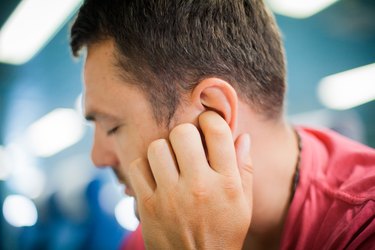













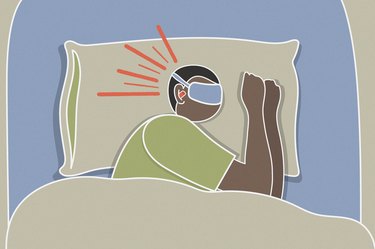









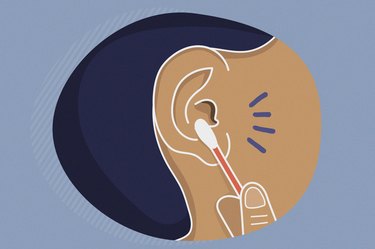

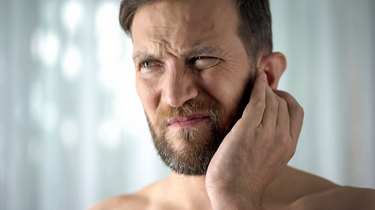








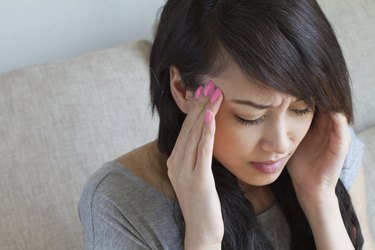
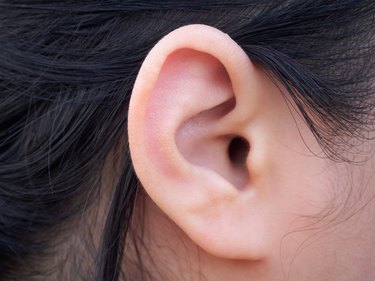









An earache can be caused by many factors. It may be throbbing, sharp pain or a dull ache on the side of your head. Earaches can occur in one or both ears and may be caused by an infection, a foreign object or insect that becomes embedded in the ear, wax buildup, high altitude, a change in air pressure or a cyst. Regardless of the cause, earaches are painful and need to be treated to avoid long-term hearing loss.
How to Help an Earache
Step 1
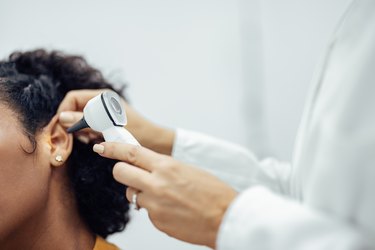
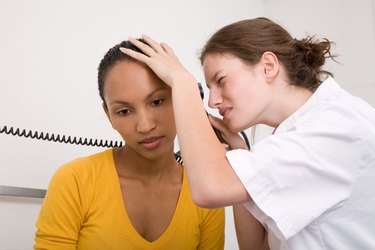
Visit the doctor, says the Mayo Clinic, and have him do a thorough exam of your ears. He will be able to diagnose the problem and decide on treatment. Most likely he'll examine your ear with an instrument called an otoscope, which has a light attached so he can view the eardrum and inner parts of the ear canal. Depending on the severity of the problem, he may refer you to a specialist.
Step 2
Take antibiotics if the doctor finds an infection and prescribes them. Be sure to take the full course of antibiotics prescribed.
Step 3
Use a decongestant, suggests Family Doctor.org, if the earache is related to a sinus infection. These are available over the counter at pharmacies and grocery stores and can clear the head and reduce pressure on your inner ear. Decongestants are available in liquid or capsule form and are oral medications. Consult with your doctor about the size of the dose needed for your condition. Side effects of decongestants can include increased blood pressure and heart rate as well as insomnia, nervousness and anxiety. If you experience any of these symptoms, quit taking the decongestant and contact your doctor.
Step 4
Try ear drops, available at pharmacies, for topical relief of ear pain. Depending on the severity of the problem, you may need to ask the doctor for a prescription to take care of the problem.
Step 5
Apply warm compresses or a heating pad set on low to the side of your head with the sore ear. Heat often soothes an earache and improves the effectiveness of eardrops. Don't go to sleep with a heating pad on unless it is set on low and has an automatic shut off.
Tips and Warnings
- Try using a painkiller available over the counter like Advil or Tylenol for temporary relief from earache.
- If there is bleeding from the ear or you experience a high fever or discharge, contact your doctor. The information offered here is for educational purposes and is not meant to replace medical advice.
Things You'll Need
- Antibiotics if prescribed
- Decongestant
- Heating pad


