






































Ovarian cancer originates in the cells of the ovaries. About 80 percent of all ovarian tumors arise directly from the surface epithelium. It is difficult to say why one person develops cancer while another doesn't. However, a woman's risk of developing ovarian cancer may depend on several risk factors, including age, diet, menopause and a history of breast cancer. There is some evidence that populations that eat a diet rich in soy suffer less ovarian cancer. If you want to use soy, talk to your doctor first.
Soy and Ovarian Cancer
An increased intake of soy isoflavones, a group of phytoestrogens, has already been linked to a reduced risk of ovarian cancer. Estrogen is a major contributor to the development of ovarian cancer. These plant molecules help to block estrogens from entering cells and slow tumor development, according to Ellen Brightwell of the University of Kentucky.
Supporting Evidence
Antiestrogenic glyceollins, a group of phytoalexins isolated from soy, may prove useful in the prevention and treatment of ovarian cancer, according to a 2007 study at Tulane University. In animal studies, glyceollins have been shown to influence the biological properties of ovarian tumors and hinder their ability to use to estrogen.
Dosage
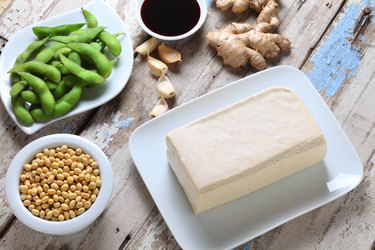
Soy may help many women with ovarian cancer, however, the most appropriate dosage, frequency of use and safety are unknown. Servings of soy foods, such as miso, tofu, soy milk and soy flour, as part of healthy diet, are safe. You should avoid taking dietary supplements that contain high amounts of isoflavones. Talk with your doctor about the benefits and risks of using soy if you are undergoing any cancer treatments.
Safety
If you have allergies to soy, talk to your doctor about it. Soy allergy can produce symptoms like itchy hives, nausea, diarrhea, wheezing, headache, dizziness and low pulse. Soy isoflavones can lower the amount of iodine in your body, which can lead to disrupted thyroid function, as iodine is necessary for the production of thyroid hormone.
References
- Ohio State University: Frequently Asked Questions About Ovarian Cancer
- Tulane University: Soy Compound May Fight Breast, Ovarian Cancers; Madeline Vann; January. 9, 2007
- The University of Kentucky: College of Agriculture: Soybeans Good For You; Ellen Brightwell; August. 10, 1999
- University of Maryland Medical Center: Soy; Steven D. Ehrlich; December. 14, 2009
- "Food Allergies: Let Us Know, WeCare"; Alfonso Tirado; 2005
- "The Anti-Estrogenic Diet: How Estrogenic Foods and Chemicals Are Making You Fat and Sick"; Ori Hofmekler and Rick Osborn; 2007


