

































































Most weight-management programs created for optimal health and disease risk reduction include both a healthy eating plan and exercise regimen. Both diet and exercise play important roles in specific health outcomes and weight management. However, diet and exercise each affect your health in different ways.
Weight Loss
Most experts will agree that diet and exercise are both important for successful weight loss. However, many studies indicate that calorie reduction has been more successful for weight loss than exercising alone. The American Dietetic Association reports that achieving a calorie deficit of 500 to 1,000 per day --- effective for a weight-loss rate of about 1 to 2 Ibs. per week --- through exercise alone is extremely difficult for most people. The National Institutes of Health notes that adding exercise to your weight-loss program will not produce a more significant weight loss than dieting alone over the course of six months.
Weight Maintenance
Calorie control is important for weight maintenance. However, to maintain a healthy body weight after a significant weight-loss exercise is most important, according to the National Institutes of Health. The American Dietetic Association reports that exercise is vital for preventing weight regain after a weight loss.
Disease Risk
Diet and exercise both play an important role in disease prevention. Exercise can help raise your HDL, or good, blood cholesterol, lower your LDL, or bad, cholesterol levels and reduce triglycerides, according to the U.S. Department of Health and Human Services. MedlinePlus reports that exercise can help prevent or delay the onset of heart problems, diabetes and some forms of cancer. However, eating a healthy diet high in fiber and low in saturated and trans fats can also help reduce your blood cholesterol levels and heart disease risk. Eating an appropriate number of calories each day will help maintain a healthy body weight, which also helps reduce your disease risk.
Recommendations
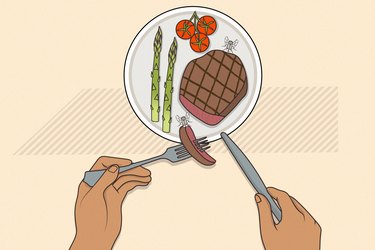
Eating a healthy diet with calorie and portion control is typically most important for weight management and disease prevention. However, combining exercise with a healthy diet is recommended by most experts. Exercise can improve physical characteristics such as body fat reduction and improved muscle definition. The U.S. Department of Agriculture Dietary Guidelines for Americans 2010 encourages adults to engage in 150 to 300 minutes of moderate-intensity exercise per week, including muscle-strengthening activities at least two days per week. The Dietary Guidelines for Americans also include recommendations for healthy eating and sample meal plans.
References
- American Dietetic Association: Position of the American Dietetic Association: Weight Management
- National Institutes of Health: Identification, Evaluation and Treatment of Overweight and Obesity in Adults
- U.S. Department of Health and Human Services: Lowering Your Cholesterol with TLC
- MedlinePlus: Exercise and Physical Fitness
- U.S. Department of Agriculture: Dietary Guidelines for Americans 2010


Member Comments