





















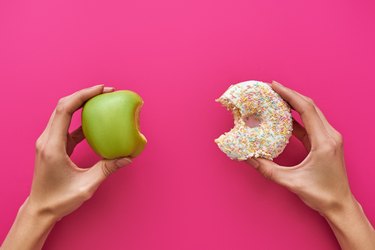
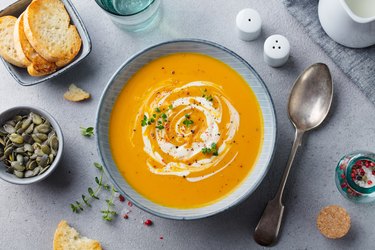




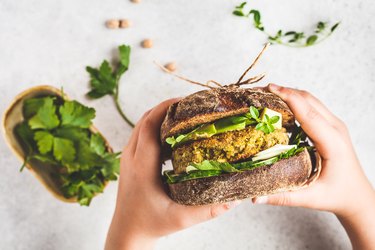












Healthy snacks offer essential nutrients that can improve the quality of your overall diet. Additionally, nutritious snacks help keep you satisfied in between meals, can prevent overeating and may help manage your weight. Not all snacks are equally nutritious, so it's important to choose snacks that are lower in calories and rich in vitamins and minerals.
Healthy Diet
Healthy snacks are an excellent addition to a healthy diet, which should include whole grains, fruits, vegetables, lean protein, low-fat dairy and healthy fats. More specifically, aim to eat 6 oz. of grains, 2 1/2 cups of vegetables, 2 cups of fruit 5 to 6 oz. of lean meat or other protein foods, 3 cups of low-fat dairy, and around 7 tsp. of oils in your diet each day, advises the 2010 Dietary Guidelines for Americans.
Snacks and Weight Control
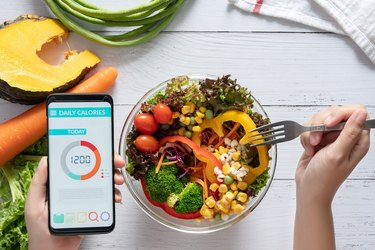
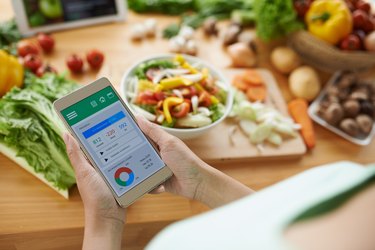
Including healthy snacks in your diet may help promote a healthy weight, according to a study published in the June 2010 " The American Journal of Clinical Nutrition." However, whether snacking prevents weight gain is not yet conclusive and research is ongoing. To help curb cravings without overeating, ensure your meals and snacks are the appropriate serving sizes to meet your calorie needs. For example, if your calorie needs are 2,000 per day, try eating three 500-calorie meals and two 250-calorie snacks. Preparing healthy snack foods ahead of time in single portions will help reduce the likelihood of indulging in unhealthy foods when hunger hits.
Filling Snacks
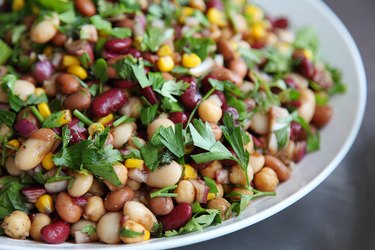
Foods with protein and fiber help improve satiety -- the feeling of fullness after a meal. Aim to include a healthy protein source with each meal and snack, such as lean turkey or chicken, eggs or beans. Low-fat dairy products, such as milk, yogurt, and cottage cheese, are good sources of protein and also provide vitamins and minerals. Including foods rich in fiber, such as legumes, fruits, and vegetables can help with weight control because they increase satiety and also tend to be lower in calories.
Healthy Snack Suggestions
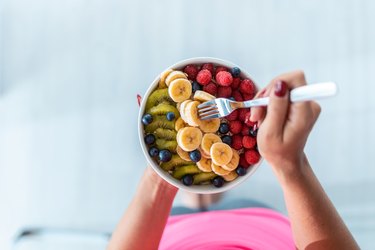
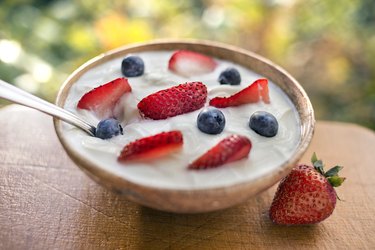
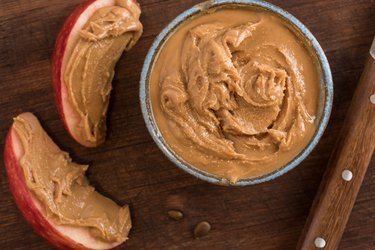
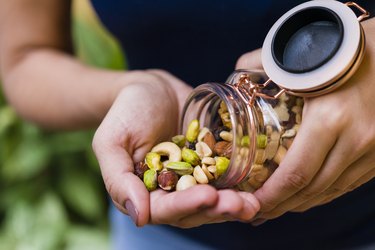
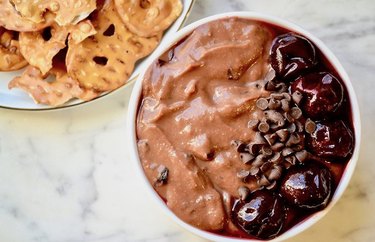
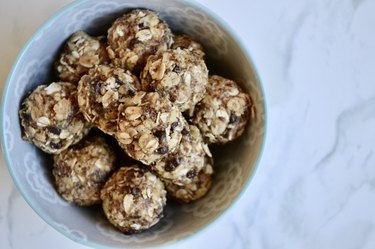
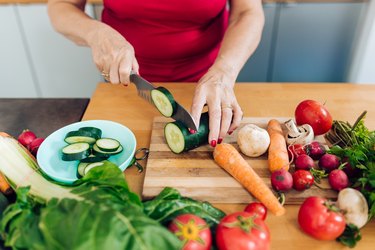
Be creative with snacks and include fruits and vegetables to increase your total nutrient intake for the day. Healthy snacks under 200 calories that are filling include six whole-wheat crackers with 1 oz cheese; 1/2 cup baby carrots and 2 tbsp. hummus dip; or one medium apple with 1 tbsp. of peanut butter. Healthy snacks under 300 calories include 6 oz. fat-free yogurt with 1/2 cup berries and 1/4 cup granola; 3/4 cup trail mix with almonds, raisins and sunflower seeds; or a whole-wheat mini-bagel with 1 tbsp. of peanut butter.
References
- American Dietetic Association; Smart Snacking for Adults and Teens; 2010
- "American Journal of Clinical Nutrition"; Protein, Weight Management and Satiety; Douglas Paddon-Jones, et al.; May 2008
- "Nutricion Hospitalaria"; Dietary Fiber: Influence on Body Weight, Glycemic Control and Plasma Cholesterol Profile; N Babio, et al.; June 2010
- "American Journal of Clinical Nutrition"; Snacking is Associated with Reduced Risk of Overweight and Reduced Abdominal Obesity in Adolescents: National Health and Nutrition Examination Survey (NHANES) 1999-2004; Debra Keast, et al.; August 2010
- U.S. Department of Agriculture; Dietary Guidelines for Americans; 2010


Member Comments