




















































Is a 1500 Calorie Diet Safe?

Is a 1500 Calorie Diet Safe?
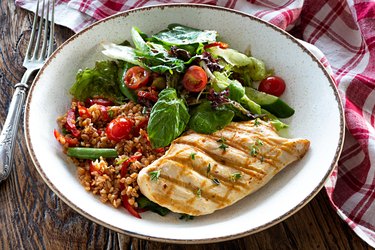
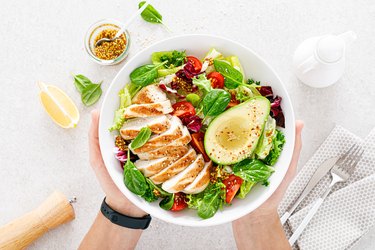
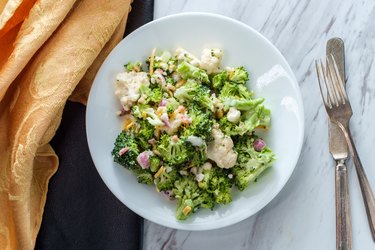
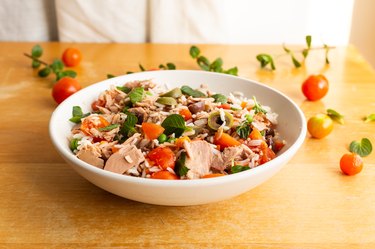
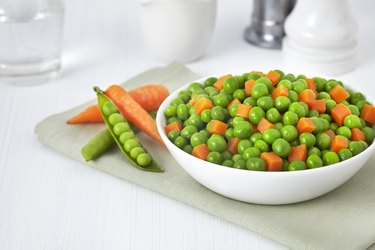
Photo Credit Healthy Salad image by William Berry from Fotolia.com

With hundreds of different diet plans, supplements and books, it is hard to determine between those that will yield real results and those that make empty promises. In addition to determining if a diet plan is effective, you also have to determine if it offers a healthy, sustainable approach to weight loss. A 1,500-calorie diet can be a healthy option, provided it is planned in a nutritionally balanced and thoughtful manner.

Expert Recommendations

For men, 1,500 calories is the minimum necessary to support health and nutrition needs. For women, 1,200 calories is the minimum. If you are especially active, 1,500 calories may not be sufficient to support your energy needs. If you are not interested in losing weight, the U.S. Department of Agriculture recommends 2,000 calories per day for an average, moderately active women and 2,500 calories per day for the average, moderately active man.

Considerations

For a 1,500-calorie plan to be healthy, you still need to take in adequate nutrition. Fill your 1,500 calories with sugars and fats, and it is not a healthy diet. Fill it with whole, natural foods from all of the major food groups, and 1,500 calories supports your energy and nutrition needs. Diets that limit entire food groups or tell you to rely on one super food tend to be unhealthy options as well.

Strategies

A healthy 1,500-calorie diet includes a minimum of six grain servings, 3 cups of milk, 5-1/2 oz. of meat or beans, 2 cups of vegetables and 1-1/2 cups of fruits. You should also try to eat a minimum of 33 g of fat daily, or 20 percent of total calories, to support daily function. Try to focus on fats that are unsaturated such as nuts, plant oils and fatty fish, rather than saturated or trans fats. Avoid eating more than 58 g of fat daily, or 35 percent of calories.

What to Eat

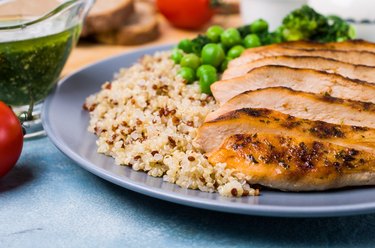
Dividing your 1,500 calories up over three meals and two snacks helps you take in a variety of nutritious foods. It also prevents you from becoming overly hungry. Make each meal contain about 400 calories and snacks 150 calories. For breakfast, you could enjoy two frozen, whole-grain waffles topped with 1 cup of plain, nonfat yogurt, 1 cup of frozen berries and 1 tsp. honey. Have 6 oz. of calcium-fortified orange juice as well. At lunch, make pasta salad with 1 cup of whole-wheat pasta, 1 tbsp. of light mayonnaise, 3 oz. of chopped, roasted chicken breast and one shredded carrot. For dinner, season 3 oz. of cod with sea salt, lemon juice and smoked paprika and broil until cooked through. Have with 1/2 cup of quinoa cooked in vegetable broth with ½ cup of sliced mushrooms and ½ cup of frozen green peas. Make a large spinach salad topped with ½ cup of mandarin oranges, 1 tbsp. slivered almonds and 1 tsp. olive oil and balsamic vinegar for a side dish. For one snack have a sliced peach with 4 oz. of nonfat pudding and for the other have five woven wheat crackers with a 1-oz. part-skim mozzarella string cheese.

References

Article reviewed by Contributing Writer Last updated on: Mar 28, 2011

Must see: Photo Galleries

Member Comments