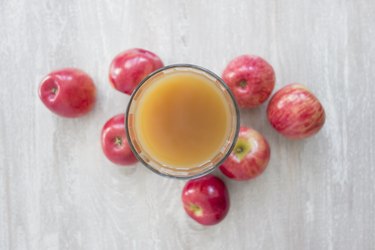
Drinking too much apple juice can cause diarrhea and gas. Because of the high sugar content, it may also lead to poor blood sugar regulation and weight gain. With these drawbacks in mind, eating whole apples is a healthier choice than downing a glass of juice — no matter how delicious it may be.
Apple Juice Causes Diarrhea
Video of the Day
The natural sugars in food can loosen stools and cause diarrhea when too much is consumed, says Harvard Health Publishing. One of the primary sugars that produces the problem is fructose, which is present in apple juice. In fact, three out of every four people who consume more than 40 to 80 grams of fructose per day will have diarrhea, according to gastroenterologist Norton Greenberger, MD, a professor at Harvard Medical School.
Video of the Day
A small April 1989 study featured in the European Journal of Pediatrics involved only 17 toddler participants. However, it's worth mentioning because it illustrates how the fructose in apple juice can result in diarrhea. When the juice was eliminated from the diet of the nine toddlers who had nonspecific diarrhea, their stools became normal.
Read more: Why Fruits Cause Diarrhea
Raw juice or cider that hasn't undergone pasteurization can carry bacteria that cause food poisoning, warns the Food and Drug Administration. Such food-borne illnesses may manifest in diarrhea, as well as abdominal pain, vomiting and fever. The immune system of most people protects them from becoming ill when exposed to these pathogens, but people with compromised immunity are at risk. Although most of the apple juice in supermarkets is pasteurized, farmers' markets, health food stores and some grocers have untreated products.
Apple Juice Causes Gas
In addition to causing diarrhea, drinking too much apple juice may produce gas, reports the Cleveland Clinic. Gas may manifest as flatulence, belching or burping. Because of the shortage or absence of the enzymes needed to digest sugars in foods like apples, the carbohydrates aren't fully absorbed, an effect that can result in gas.
Apples have a high content of fermentable oligosaccharides, disaccharides, monosaccharides and polyols (FODMAPs), which are food components that cause digestive issues. If apple juice gives you gas, Harvard suggests switching to a low-FODMAP fruit juice. Alternatives could include grape or orange juice.
Apple Juice and Blood Sugar
West Texas A&M University explains that any kind of juice, including apple juice, can have an adverse effect on blood sugar. When you eat a whole apple, the fiber in the pulp and skin binds to the fruit's natural sugars as it goes through the gastrointestinal tract. This binding action slows the absorption of sugar. Consequently, the sugar builds up in the bloodstream at a slower rate and lower quantity, compared to how it builds when you drink apple juice.
A harmful effect of having a larger amount of sugar entering the bloodstream quickly is that the body has more sugar available than it can use as an energy source, says West Texas A&M. Therefore, the pancreas releases insulin to remove some of the sugar rapidly. In other words, the blood sugar spike is followed by a blood sugar dip, which increases hunger and food intake. This effect partly accounts for why drinking fruit juice can lead to poor blood sugar regulation and weight gain.
Apple Juice Advice
Avoid juice cocktails and opt for beverages labeled "100% Juice," advises the American Institute for Cancer Research. Although apple juice cocktails contain some apple juice, they also have empty calories from added sugar and high-fructose corn syrup. Artificially-sweetened apple juice is also a poor choice, as diet drinks stimulate cravings for sweet foods and beverages, an effect that leads to weight gain.
Concentrated sugar in fruit juice makes it high in calories, so the Harvard T. H. Chan School of Public Health advocates consuming not more than 4 to 6 ounces per day. Although apple juice contains nutrients, the positive health effects are generally outweighed by negative health effects from the sugar content, states Diabetes.co.uk. The organization recommends eating whole fruit rather than drinking the juice since it's a less concentrated source of sugar.
Read more: 8 Healthy Apple Snacks
Health Benefits of Apples
Apples are plentiful in pectin and quercetin, constituents credited for providing the fruit's health benefits, notes the Harvard Chan School. Pectin is a soluble fiber that promotes good bowel evacuation and modestly lowers LDL, or "bad," cholesterol. Quercetin is a flavonoid, a chemical with anti-inflammatory and antioxidant properties. These nutrients in apples may play a role in protection against some diseases.
A March 2017 review published in Food & Function evaluated studies that explored the effect of apple and pear consumption on Type 2 diabetes risk. It found each serving per week was linked to a 3 percent reduction in the likelihood of the disease.
An October 2016 review featured in Public Health Nutrition examined observational studies to determine if apples might have cancer-prevention effects. The results indicated an association between apple consumption and a lower risk of cancer in different parts of the body.
Health Benefits of Cider Vinegar
The internet is rife with claims about the health benefits of apple cider vinegar, but the body of research investigating the topic is small. Because studies on vinegar's effects on weight loss are inconsistent, the Mayo Clinic says it's unlikely to be effective for this purpose. Nonetheless, scientists have obtained interesting results from preliminary research on other potential uses.
A May 2015 study published in the Journal of Diabetes Research dealt with only 11 participants, but the results merit notice because they suggest apple cider vinegar may help prevent Type 2 diabetes. In the clinical trial, researchers compared the effects of consuming vinegar and a placebo before a meal. The vinegar drinkers experienced a reduction in post-meal increases in insulin, blood sugar and triglycerides.
The April 2018 issue of the Journal of Functional Foods published a clinical trial on 39 people with obesity. It was a small study, but it bears mentioning because of what it may promise. One tablespoon of apple cider vinegar per day for 12 weeks led to reductions in triglycerides and improvements in the lipid profile of the individuals.
A January 2018 article in Scientific Reports involved testing apple cider vinegar on test-tube cultures of pathogenic bacteria. The researchers concluded that the vinegar has antimicrobial properties with therapeutic implications.
- Harvard Health Publishing: "Is Something in Your Diet Causing Diarrhea?"
- European Journal of Pediatrics: "Apple Juice, Fructose and Nonspecific Diarrhoea"
- Food and Drug Administration: "What You Need to Know About Juice Safety"
- Cleveland Clinic: "Gas"
- West Texas A&M University: "Is Fruit Juice Healthier Than Whole Fruit?"
- American Institute for Cancer Research: "If 100% Juice Is the Recommended Choice, Why Is the Sugar Content on Some Still so High?"
- Harvard T.H. Chan School of Public Health: "Drinks to Consume in Moderation"
- Diabetes.co.uk: "What Fruit Juice Can People With Diabetes Drink?"
- Food & Function: "Apple and Pear Consumption and Type 2 Diabetes Mellitus Risk: A Meta-Analysis of Prospective Cohort Studies"
- Public Health Nutrition: "Apple Intake and Cancer Risk: A Systematic Review and Meta-Analysis of Observational Studies"
- Mayo Clinic: "Drinking Apple Cider Vinegar for Weight Loss Seems Far-Fetched. Does It Work?"
- Journal of Diabetes Research: "Vinegar Consumption Increases Insulin-Stimulated Glucose Uptake by the Forearm Muscle in Humans With Type 2 Diabetes"
- Journal of Functional Foods: "Beneficial Effects of Apple Cider Vinegar on Weight Management, Visceral Adiposity Index and Lipid Profile in Overweight or Obese Subjects Receiving Restricted Calorie Diet: A Randomized Clinical Trial"
- Scientific Reports: "Antimicrobial Activity of Apple Cider Vinegar Against Escherichia coli, Staphylococcus aureus and Candida albicans; Downregulating Cytokine and Microbial Protein Expression"
- IBS Diets: "FODMAP Food List"