




















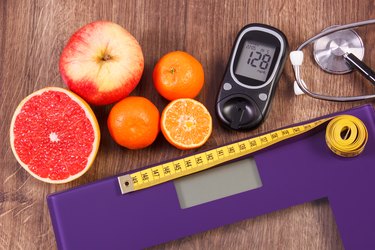

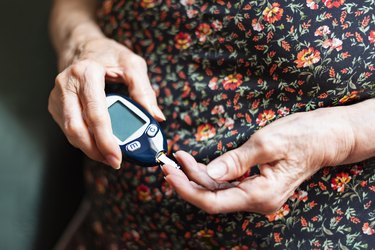









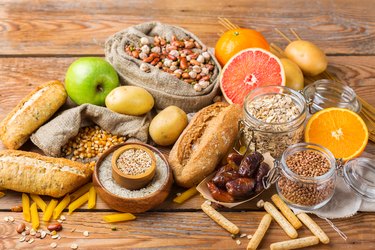
























If you are a diabetic or if you have been dieting to lose weight, you may be familiar with the glycemic index, or GI. Understanding the GI can help you plan your meals and achieve your health and fitness goals. Speak with your health-care provider before you make any dramatic changes to your diet, especially if you have diabetes.
Glycemic Index
The glycemic index is a scale that measures how quickly a specific food or beverage will likely raise your blood sugar. Although many people think how much sugar a food has is main factor in determining a food's GI, this is a misconception. Florida State University explains that the GI of a food or drink is influenced by several factors, including how much processing the food has undergone, how long the food is cooked, the type of sugar that the food contains and the acidity of the food.
GI of Apple Juice
According to Harvard Medical School, unsweetened apple juice has a GI rating of 40, plus or minus 1 point. At a GI score of 40, apple juice is considered a low glycemic index beverage. This may come has as surprise, since apple juice is nearly completely sugar. The sugar in 100 percent apple juice is natural and not processed or refined. The more a food or beverage is processed, the faster it absorbs in your system and the higher the glycemic index rating. Although the 40 GI rating for apple juice seems low, consider that the glycemic index of apples is 38, plus or minus 2 points, and 100 percent apple juice is made from apples.
Comparsion to Sweetened Beverages
One hundred percent apple juice can be considered a "good" carbohydrate source in comparison to other beverages such as soda and other sweetened drinks. Fruit "drinks" have added sweeteners such as high fructose corn syrup that dramatically increase how fast the beverage is absorbed. For example, cranberry juice "cocktail," which is made with added sweeteners, does not contain 100 percent juice has a glycemic index rating of 68. DiabetesNet.com reports that many colas and soda have a glycemic index of 65, which is significantly higher than apple juice. Many sports drinks have a glycemic index above 75, which is even higher than most sodas. Apple juice is a good beverage if you do not want to raise your blood sugar significantly.
Weight Loss and Weight Control
Many people become interested in the glycemic index because they want to know the best foods to eat in order to lose weight, especially people following low carbohydrate diets. When you raise your blood sugar by eating or drinking high GI foods or beverages, your body releases insulin to lower and stabilize your blood sugar. When insulin is released, your body tends to store any calories you have eaten as fat. While keeping your blood sugar stable will certainly help you control your weight and better achieve your weight loss goals, Florida State University explains that weight loss is ultimately a matter of caloric consumption. In order to lose weight, you will need to create a caloric deficiency by eating less calories than you burn.


