

















































People have used fenugreek since ancient times, internally as a remedy for gastrointestinal and respiratory ills and externally to treat wounds, skin irritation and pain. You may take fenugreek orally either whole or ground, or soak the seeds in alcohol to extract their active constituents. As with any supplement, consult your healthcare provider before using it.
Fenugreek
Fenugreek, whose botanical name is Trigonella foenum-graecum, is a plant native to southern Europe and Asia. Today its cultivation extends to the Middle East, India and northern Africa. People have used the seeds of the plant as medicine for thousands of years, according to "The Complete Book of Herbs and Herb Gardening."
Contemporary Uses
Ayurvedic medicine practitioners use the dried seeds of the plant as a demulcent, laxative and lactation stimulant, according to the Memorial Sloan-Kettering Cancer Center. Western herbalists use it to treat a variety of conditions including diabetes, high cholesterol, wounds, and inflammation. However, we need additional research to confirm fenugreek's medical efficacy.
How Fenugreek Works
You may take the dried, usually ground, seeds of fenugreek by mouth, or make it into a paste and apply it to your skin in the affected area, reports the National Center for Complementary and Alternative Medicine. Fenugreek seeds contain a rich store of vitamins, minerals, alkaloids, saponins, oil and flavonoids, states "The American Pharmaceutical Association Practical Guide to Natural Medicines."
Extracts
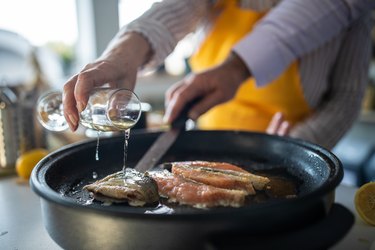
Herbal extracts are made by soaking the herb in alcohol to extract the herb's active constituents from its vegetable matter. Strong extracts contain either grain alcohol or hard liquor such as vodka. It is possible to make a lighter extract using wines, beers and vinegars, as suggested in "Illustrated Elements of Herbalism."
Cautions
Possible side effects of fenugreek include gas, bloating and diarrhea. Fenugreek may also cause skin irritation when used externally. At one time women used fenugreek to help induce childbirth, so women who are pregnant should consult a healthcare provider before using it. In addition, extracts may not be appropriate for people sensitive to alcohol. Take the alcohol content of extracts into consideration when driving, as it is similar to that of alcoholic beverages.
References
- "The Complete Book of Herbs and Herb Gardening"; Jessica Houdret; 2009
- Memorial Sloan Kettering Cancer Center: About Herbs: Fenugreek
- National Center for Complementary and Alternative Medicine: Herbs at a Glance: Fenugreek
- "The American Pharmaceutical Association Practical Guide to Natural Medicines"; Andrea Peirce; 1999
- Mountain Rose Herbs: Make Your Own Herbal Extract
- "Illustrated Elements of Herbalism"; Non Shaw; 2002


Member Comments