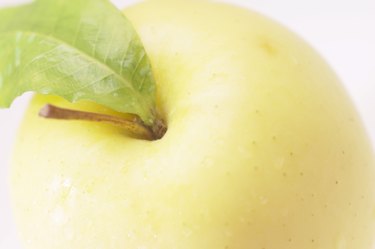
Apples are a low-calorie, high-fiber food option that can be served on their own or prepared in a number of dishes, both sweet and savory. There are a number of apple types, but some of the most popular include Lady, Jonathan, Winesap, Rome, Red Delicious, Golden Delicious, Granny Smith and Braeburn. While all apples are high in antioxidants and nutrients, if you are on the quest to find the healthiest apple, researchers at the Eden Healthcare Technologies lab in Leicestershire, England, have determined the healthiest variety to be the Pendragon apple.
Research Study
Video of the Day
A 2009 research study concerning the healthiest apple was presented at the Royal Pharmaceutical Society. Fifteen apple varieties were tested, including 12 organic varieties and three conventionally grown varieties. The apples were tested for various plant compounds, including those associated with lowering cholesterol and inflammation in the body. The tests measured the entire apple, including the peel. The results revealed the organic Pendragon apple, an apple that has been grown in England since the 12th century, as the top of the apple heap. The apple has similar coloring to that of crab apples, with light-red skin that turns slightly white at the apple's stem.
Video of the Day
Runners Up
If Pendragon apples are not sold at your local grocer's, back-up options are available. Coming in after the Pendragon in terms of health were organic versions of the Golden Delicious, the Collogett Pippin apple, Ben's Red and Devonshire Quarrenden apples. Although these apples ranked highly in the researcher's tests, the Pendragon apple won out because it contained the highest levels in seven of the eight categories measured.
Organic vs. Non-organic
Choosing to eat organic foods is a matter of personal preference. Certified organic foods are produced without chemicals or pesticides. However, pesticides do help to prevent damage to the apple crop. When considering which type of apple is best for you, try your own taste test and consider your and your family's priorities as to what apple choice is healthiest for you.
The Healthiest Apple: One You Will Eat
While the Pendragon may have won points for being the healthiest apple, it is important to remember that all apple varieties offer health benefits. An average medium apple contains 81 calories, 0 fat grams and 4 g of dietary fiber. Also, apples contain the element boron, which is helpful in protecting against osteoporosis.