



















































George Crum, a Native American who was a chef at Saratoga Springs in New York, created potato chips in 1853. When a guest complained that his fried potatoes were too thick, Crum sliced them paper-thin as a joke. What began as a joke is one of America's favorite snack foods, with over $6 billion in sales each year.
The Numbers
Most regular potato chips will contain similar amounts of calories, fat and other nutrients unless they are low-fat or reduced calorie versions. One serving (35 g) of Ruffles Original Potato chips contains 200 calories. This high-fat snack gets about 113 calories from fat. There are 12.5 grams of fat in this serving, of which 1.25 grams are saturated. The good news is there is no cholesterol, but there are 200 mg of sodium. Ruffles are a poor source of fiber, with only one gram. There is no vitamin A or C, calcium or iron in these chips.
Burning Off the Calories
The more you weigh, the more calories you will burn off doing the same activity as someone who weighs less. A person weighing 160 lbs. who wants to burn off one serving of potato chips would have to hike for 30 minutes or bowl for an hour. He could also lift weights for an hour or walk at 3.5 mph for about 45 minutes, according to MayoClinic.com.
Raw Potato Nutrition
Potatoes are much healthier before the frying process that turns them into potato chips. One medium potato (148 g) has only 100 calories. It has no fat, saturated or otherwise. Adding the fact that it has no sodium and no cholesterol makes the potato a healthy diet staple. Carb-conscious consumers may want to avoid potatoes -- one serving has 26 grams of carbs. The potato has three grams of fiber per serving and 45 percent of the daily requirement of vitamin C, based on a 2,000-calorie diet.
Incorporating Chips in a Healthy Diet
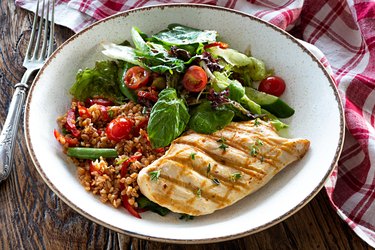
To enjoy potato chips while eating an overall healthy diet, you should limit consumption to an occasional treat. Nutrition information varies slightly among manufacturers, so make label reading a habit before purchasing. Try some of the lower-fat options now on the market, but don't forget to look for trans-fat information. When choosing among calories versus fat, try to avoid saturated and trans fats. Individual serving portions can help with portion control and help you avoid eating several servings in one sitting while eating from a large bag.


Member Comments