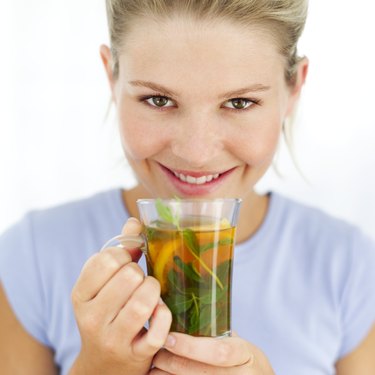
Herbal teas are often marketed for pregnant women or suggested by alternative medical practitioners as an alternative to coffee in pregnancy. Herbal teas, unlike non-herbal teas such as black or green tea, do not contain caffeine. When taken in pregnancy, herbal teas could increase the risk of miscarriage and some herbs may also cause fetal harm during labor. Do not drink herbal teas unless your medical practitioner approves.
Amounts and Sources
Video of the Day
Many herbs are common ingredients in herbal teas; some herbal teas contain a number of different herbs. Most commercially-produced herbal teas are considered safe in pregnancy, according to the American Pregnancy Association, but non-commercial teas or teas made at home may contain a harmful amount of an herb. Most herbs can be made into an herbal tea; the amount of herb in the tea depends of which part of the plant is used.
Video of the Day
Types of Herbs
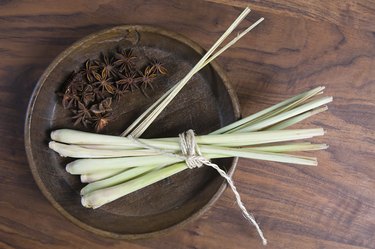
Many herbs can cause uterine contractions. Herbs associated with uterine stimulation include black cohosh, blue cohosh, chamomile, comfrey, goldenseal, lemongrass, licorice root, mugwort, rosemary, sage, stinging nettle leaf and yarrow. Herbs commonly used as seasonings are safe when used in food but could be harmful in large amounts in teas; common cooking herbs that cause uterine stimulation include anise, cinnamon, lavender, peppermint oil rosemary and sage.
Possible Effects

When taken early in pregnancy, herbal teas that cause uterine contractions could cause miscarriage. During labor, midwives may give herbs that act as uterine stimulants to start or enhance labor or to "tone" the uterus to prepare it for labor. However, even when taken in labor, some herbs may have harmful effects. Researchers from the University of Toronto published on article in the winter 2008 issue of the "Canadian Journal of Clinical Pharmacology" on the potentially harmful effects of blue cohosh, which 64 percent of midwives administer during labor. The article reviewed seven electronic databases and found three cases in the literature that associated blue cohosh with perinatal stroke, heart attack and congestive failure and multi-system organ failure related to lack of oxygen.
Conflicting Advice
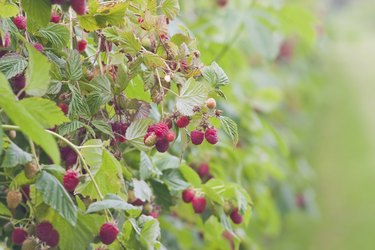
Teas marketed specifically for pregnant women, such as red raspberry leaf, may or may not be safe in pregnancy; some practitioners suggest its use only in the last trimester of pregnancy. Midwives often use red raspberry leaf to decrease the length of labor and to prevent labor from starting too early or to prevent a pregnancy from lasting too long after the baby's due date. Stinging nettles, found in numerous pregnancy teas according to the American Pregnancy Association, is rated as likely unsafe by the Natural Medicines Database. Ask your medical practitioner before taking herbal teas marketed for pregnant women.