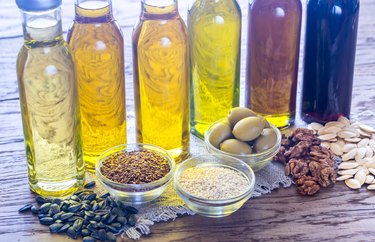
Corn oil and canola oil are often mistaken for the same oil. While both have a mild flavor and are commonly used in baking, frying and as a base for salad dressings, they are different and canola oil benefits may be greater than those of corn oil.
Corn Oil vs. Canola Oil
Video of the Day
The simplest difference between corn and canola oil is that the former is processed and extracted from corn, while canola oil is produced from an edible version of the rapeseed plant. The latter received its name from the Canadian scientists responsible for creating the edible version of the rapeseed plant. The name is a combination of "Canada" and "ola," which means oil.
Video of the Day
The majority of canola crops are genetically modified to have a resistance to herbicides. According to the Canola Council of Canada, most canola crops grown in the U.S. fall into this category.
Corn and canola oil are very similar when it comes to cooking. Both are neutral in flavor, which makes them versatile in baking and frying food. They are also liquid at room temperature due to their low saturated fat content and contain no carbohydrates or cholesterol since they are plant-based oils.
Canola and Corn Oil Nutrition
When it comes to the nutrition profile of each of these oils, they offer about the same amount of calories —120 per tablespoon, but their fatty acid composition is quite different. The breakdown of fat is important because while both oils contain a large amount of polyunsaturated fat, which is considered healthier than saturated fats.
Some polyunsaturated fats, such as omega-6s, are pro-inflammatory, though. Others, like omega-3s, have anti-inflammatory properties. Maximizing the nutrition in these oils comes down to the amount of anti-inflammatory omega-3 fatty acids each oil contains.
Canola oil is low in saturated fat and contains healthy mono- and polyunsaturated fats. Specifically, it consists of about 5 percent saturated fat, 65 percent monounsaturated fat and 21 percent polyunsaturated fat. When looking at polyunsaturated fat, it provides 21 percent of omega-6 fatty acids in the form of linoleic acid and 11 percent omega-3 fatty acids in the form of alpha-linolenic acid.
This cooking oil also provides 8 percent of the daily value of vitamin K per tablespoon. Furthermore, it boasts 16 percent of the daily value for alpha-tocopherols. This is a form of vitamin E with antioxidant properties.
In contrast to canola oil, corn oil has a slightly higher saturated fat content and more pro-inflammatory polyunsaturated fats. It is made up of 13 percent saturated fat, 26 percent monounsaturated fat and 60 percent polyunsaturated fats.
This oil contains much more linoleic acid, anywhere from 54 to 60 grams per 100 grams, making it much higher in pro-inflammatory omega-6 fatty acids compared to canola oil. Corn oil also contains trace amounts of vitamin K and 13 percent of the daily value for alpha-tocopherols (vitamin E) per tablespoon, which is far less vitamin K and slightly less vitamin E than canola oil.
Canola Oil Benefits
When evaluating the fatty acid profiles of canola and corn oil, the former comes out as the clear winner given that it's predominately made up of monounsaturated fat.
According to the American Heart Association, monounsaturated fats may help reduce your risk of heart disease and stroke. These nutrients have also been shown to reduce LDL (bad) cholesterol, which is the substance that can cause blocked or clogged arteries. They also help develop and maintain cells in the body.
Canola oil also has a higher amount of omega-3 fatty acids compared to corn oil. MedlinePlus notes that omega 3-fatty acids may lower inflammation and improve heart health by reducing blood pressure and plaque buildup in the arteries.
According to the Mayo Clinic, omega-3 fatty acids are unsaturated fats, which when substituted for saturated fats in the diet, may lower cholesterol levels. In addition to using canola oil, adding fatty fish to your diet is a great choice.
Like monounsaturated fats, omega-3 fatty acids fight inflammation in the body. This may lower the risk of damage to blood vessels, protecting against heart disease and stroke.
In addition to using canola oil, eating one to two servings of fish each week is recommended to get adequate amounts of omega-3 fatty acids in your diet.
Read more: Canola Oil Vs. Sunflower Oil
Healthiest Cooking Oils
Canola oil is the clear winner for cooking when compared with corn oil. It has a high smoke temperature, so it's safe to use when sautéeing or frying foods. It also boasts a neutral flavor, so it will not affect food taste as some other oils do. There are other plant-based oils that can also be used for cooking in addition to canola oil.
Avocado oil, for example, is a great substitute for canola oil when sautéeing or frying foods due to its high smoke point. It's also high in monounsaturated fat.
While avocado oil is great for cooking and has a healthy fatty acid profile, it can be far more expensive than canola oil. It's costly because it takes a lot of avocados to create a small amount of oil. If your budget allows, go for it.
Extra virgin olive oil (EVOO) is the highest in monounsaturated fats of all oils. It's one of the main components of the Mediterranean diet, which has been shown to benefit heart health. This oil is best used at medium or low temperatures.
You should not use EVOO for frying foods as it has a much lower smoke point than other cooking oils. It also boasts a stronger flavor, which makes it a great base for salad dressings.
Read more: Canola Oil vs. Vegetable Oil
When comparing canola and corn oil, canola oil is the clear winner nutritionally speaking. It is high in heart-healthy monounsaturated fats and omega-3 fatty acids, has a high smoke temperature and provides a neutral flavor that's perfect for cooking. Canola oil does come mostly from genetically modified plants, but you can find brands that come from non-GMO source as well.
- MyFoodData: "Nutrition Facts for Corn Oil"
- Canola Council: "History of Varietal Development"
- Zeitschrift für Naturforschung C, A Journal of Biosciences: "Some Rape/Canola Seed Oils: Fatty Acid Composition and Tocopherols"
- MyFoodData: "Nutrition Facts for Canola Oil"
- American Heart Association: "AHA: Monounsaturated Fat"
- Corn Refiners Association: "Corn Oil"
- MedlinePlus: "Facts About Monounsaturated Fats"
- MedlinePlus: "Omega-3 Fats: Good for Your Heart"
- Mayo Clinic: "Omega-3 in Fish: How Eating Fish Helps Your Heart"
- Nutrients: "An Increase in the Omega-6/Omega-3 Fatty Acid Ratio Increases the Risk for Obesity"
- Cleveland Clinic: "3 Reasons You Should Give Avocado Oil a Try"