Protein plays a crucial role in a bodybuilder's diet, as its molecules (aka amino acids) are the building blocks for new muscle tissue. But eating the same high-protein, low-fat foods such as chicken, canned tuna and eggs can get boring, and it's important to get variety in your diet.
Tip
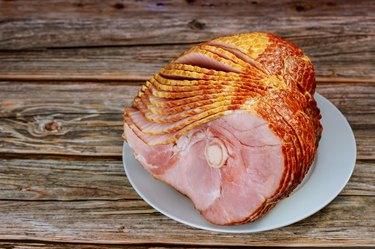
Ham doesn't tend to be a bodybuilding staple, but there's no reason you can't include ham in a muscle-building or fat-loss diet.
Video of the Day
Nutrition Information for Ham
Bodybuilders are often most concerned about the calorie and macronutrient content of their food above all else. While the nutrition for different types of ham varies, the U.S. Department of Agriculture (USDA) lists a 3-ounce serving of ham cooked from frozen as containing 130 calories, 16 grams of protein and 6 grams of fat. This makes ham a relatively lean protein.
Video of the Day
It isn't as lean as turkey breast, which has just over 1 gram of fat for the same amount, per the USDA. But it has a higher protein-to-fat ratio than 85-percent lean ground beef or an oily fish such as mackerel, which have 16 grams of protein and 13 grams of fat, and 16 grams of protein and 12 grams of fat per 3 ounces, respectively.
Ham Health Concerns
Relying too much on processed meats such as ham could be a recipe for disaster. According to Harvard Health Publishing, processed meats such as ham are high in salt and nitrates, which could lead to problems with cholesterol and blood pressure and raise your risk of heart disease.
A bodybuilder looking to optimize body composition and performance should be looking to limit potentially unhealthy foods as much as possible.
Meat in Moderation
Although ham might not quite stack up to the quality of a grilled chicken breast or a free-range egg, it's an option when no other protein sources are available. In his book, Built for Show, personal trainer Nate Green says ham isn't as good as an unprocessed, fresh protein source, but it's much better than a fast-food burger.
Moderation is the best approach, with Harvard Health Publishing advising a maximum of two 2- to 3-ounce servings per week.
Quality Control and Diet Suggestions
Whether ham is a good choice for bodybuilding or not does depend on the quality of the ham you buy — avoid cheap or deli-style ham and opt instead for a joint of ham you've cooked yourself with nothing added to it.
It also comes down to your goals and your diet. Whether you're looking to bulk up or trim down, ham can play a role in your diet. When cutting calories to burn fat, use ham as a protein source on salads, or if you're trying to eat more calories to build muscle, have it in a sandwich with some avocado and tomato or scramble it with some eggs for a protein-packed breakfast.
- Household USDA Foods Fact Sheet: "Ham, Fully Cooked, Frozen"
- USDA Nutrient Database: "Turkey, Breast, From Whole Bird, Non-Enhanced, Meat Only, Raw"
- USDA Nutrient Database: "Beef, Ground, 85% Lean Meat / 15% Fat, Raw"
- USDA Nutrient Database: "Fish, Mackerel, Atlantic, Raw"
- Harvard Health Publishing: "Avoid These Foods for a Healthier Heart"
- Nate Green: "Built for Show"